Author: KaylaMarie

DIY Thrush/Antifungal Hoof Spray

There are SO many products to treat thrush and/or fungal issues for horses feet. Some are caustic (bad!), some stain hands (yuck!), some work great and some don’t work at all. At the recommendation of my farrier to use copper sulfate for a specific issue, I found and purchased a copper sulfate spray solution and a copper sulfate clay from an online source. I won’t say where, I don’t want to take away from their products as they worked great, but it was EXPENSIVE. I was in a rush for literally anything that would help at the time and I wanted something ASAP so didn’t really take the time to research. Since it did work so well, I wanted to come up with something more budget friendly but still effective.

The ingredients on the purchased product label were: Copper Sulfate, Vinegar. That’s it? Really?? I paid $30 for a 16 oz bottle and $40 for the 16 oz jar of clay. I thought, “There’s got to be a better LESS EXPENSIVE way” so I took to google AND discussed with my farrier and here’s what I’ve come up with for the spray: 1 cup Copper Sulfate Crystals (Amazon- 5 lbs for $27) to a gallon of vinegar. Microwave or heat mixture until crystals dissolve. If not heated, the crystals don’t incorporate with the vinegar very well and are not as effective.

Pour into a spray bottle and spray on the bottom of the hoof. Obviously, pick/clean the hooves first! I loved the clay too, but I haven’t tackled coming up with a DIY version of that (yet!) but maybe later. The spray is super easy to use so I’ve just been using that.

  • 1 cup Copper Sulfate (crystals or powder)
    • I used this product: Copper Sulfate ($27 from Amazon)
    • Per google, there’s approximately 9.5 cups per 5 gallons of crystals, but I have not verified.
  • 1 Gallon White Vinegar (5% acidity) ($4.00 from the grocery store)
  • Spray bottle (I reused the one from the previously purchased product, but assuming you need to buy one, maybe $5)

BAM, about 7 bucks for a GALLON of solution. That’s 128 ounces, or 8 spray bottles of the purchased product, which would have cost $240 if purchased individually with the spray bottle included each time or the company has a gallon refill jug for $175. Talk about ROI/markup, WOW! Some people might be happy to spend that and NOT mix their own, but that’s too rich for my blood. I’ll spend that nearly $170 I am saving on a months worth of feed, thank ya!

How to Prevent Blanket Rubs

Do you have an impossible horse to fit a sheet/blanket to, but still want or need to use one for some reason or another? A wonderful suggestion from a friend of mine has eliminated Duke’s awful rubbing. Shout out to Emily and her Mom for this tip! Duke is either the worst to fit, has super sensitive skin, or maybe both? Earlier this year (somewhere around the end of June, beginning of July), he broke out in bumps all over his body due to biting flies and/or mosquitoes. To try and fix it, I went out and got the latest and greatest Ultrashield Gold fly spray. It was supposed to be great, as I’ve read and heard great things. Well, it gave Duke massive welts all over his skin ON TOP of the bug bites. Poor thing was miserable and after feeding him zyrtec at the suggestion of my vet, I broke down and purchased each horse a Rambo Protector Integrated Hood (meaning it doesn’t detach) fly sheet. My bank account hates me. It’s always something. Don’t mind me while I go make a withdraw and light it on fire and that’s about how things go around here.

By the way, the Ultrashield Green, their Natural Spray has worked pretty good for us this year during training, doesn’t do squat for turnout though-nothing seems to last for turnout.

Anywayyyy the Rambo sheets fit pretty nice and it was working well without rubs for a few weeks, I was so happy! Then one day I brought them in and noticed it had started rubbing too. Once it started rubbing, within a few days his shoulder was basically raw. I wanted to scream. I may have yelled profanities out loud in the barn. I can put literally anything on Fizz and he is fine. He could wear a garbage can and not have any problems. I could put a billion dollar cashmere and luxury silk sheet (or whatever fine expensive soft fabrics are out there, I’m really no fashionista) on Duke and he’d be rubbed raw within a few weeks.

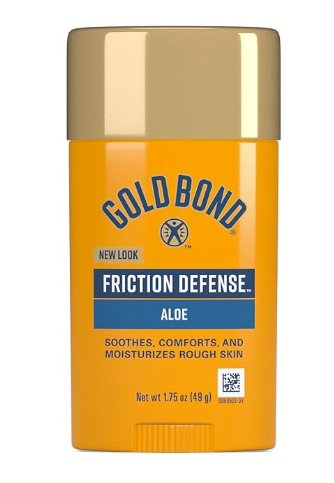
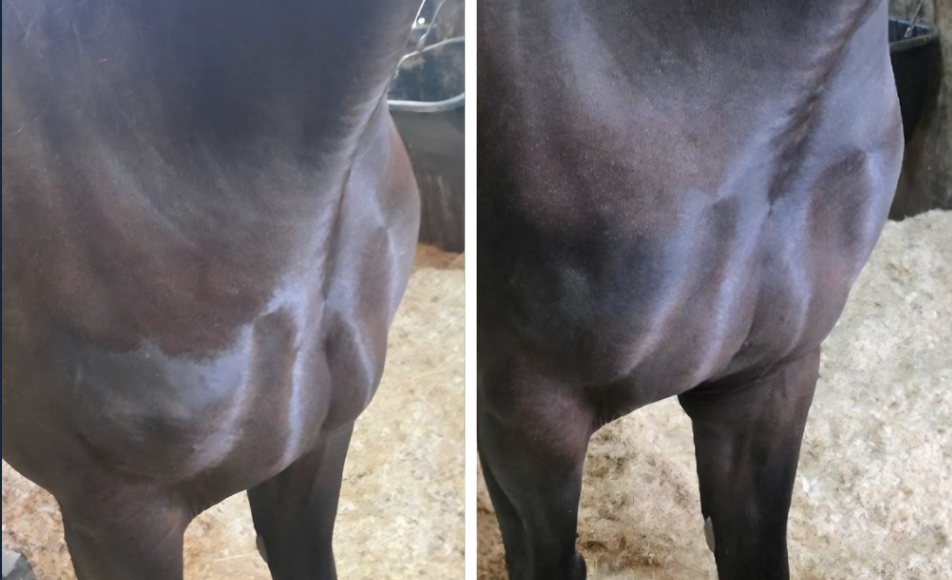
Enter this little stick of awesome. Just rub it on like you would deodorant in the spot(s) being rubbed and voila! I put it on once daily when I put the sheets on in the morning before turnout. They are usually outside sunrise to sunset. His hair started growing back within a week. After a month, it’s fully grown in. It looks a little weird being as the rest of his hair is bleached from before getting the sheets and the patch grew back unbleached black, but there is hair! Hallelujah! It is 9/18 and I’ve used 2 whole sticks at this point from August 8 to now, but that 13 dollars is worth every penny. I might as well buy a few cases of these things at this point.

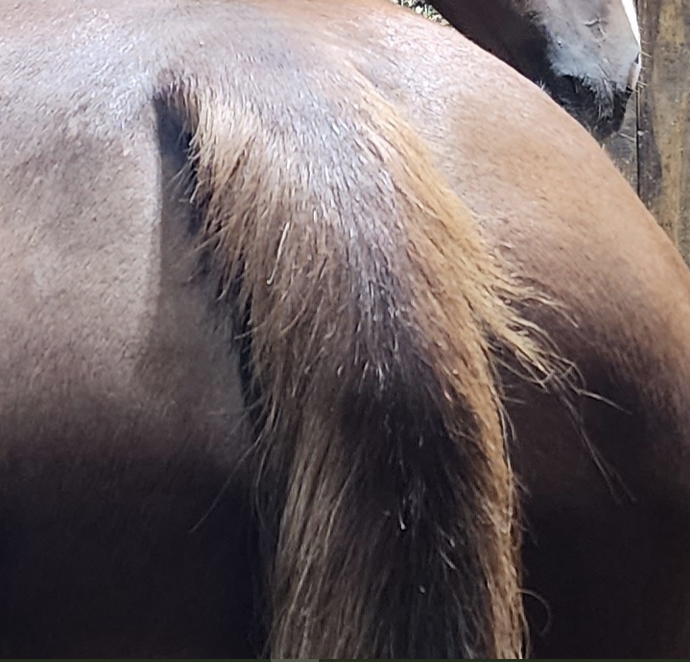
The photo on the left was taken August 7th. The one on the right was taken Sept 6th. The hair has completely come back in.

Just putting this out there, maybe someone somewhere will find this and it will help them and their horses from getting terrible blanket rubs!

Old Pleasure Cart Seat Revival!

I am working on refinishing an entire pleasure driving cart. I’m working on a post to cover that through to completion (which, who knows when that will actually be), but there are a few projects within I want to document separately. Here’s the first (and easiest) one: The seat. It makes me really happy to have spent $9 on a bottle of dye instead of $250 on a new seat! Saving where I can gives me more room to purchase the things that I really do need.

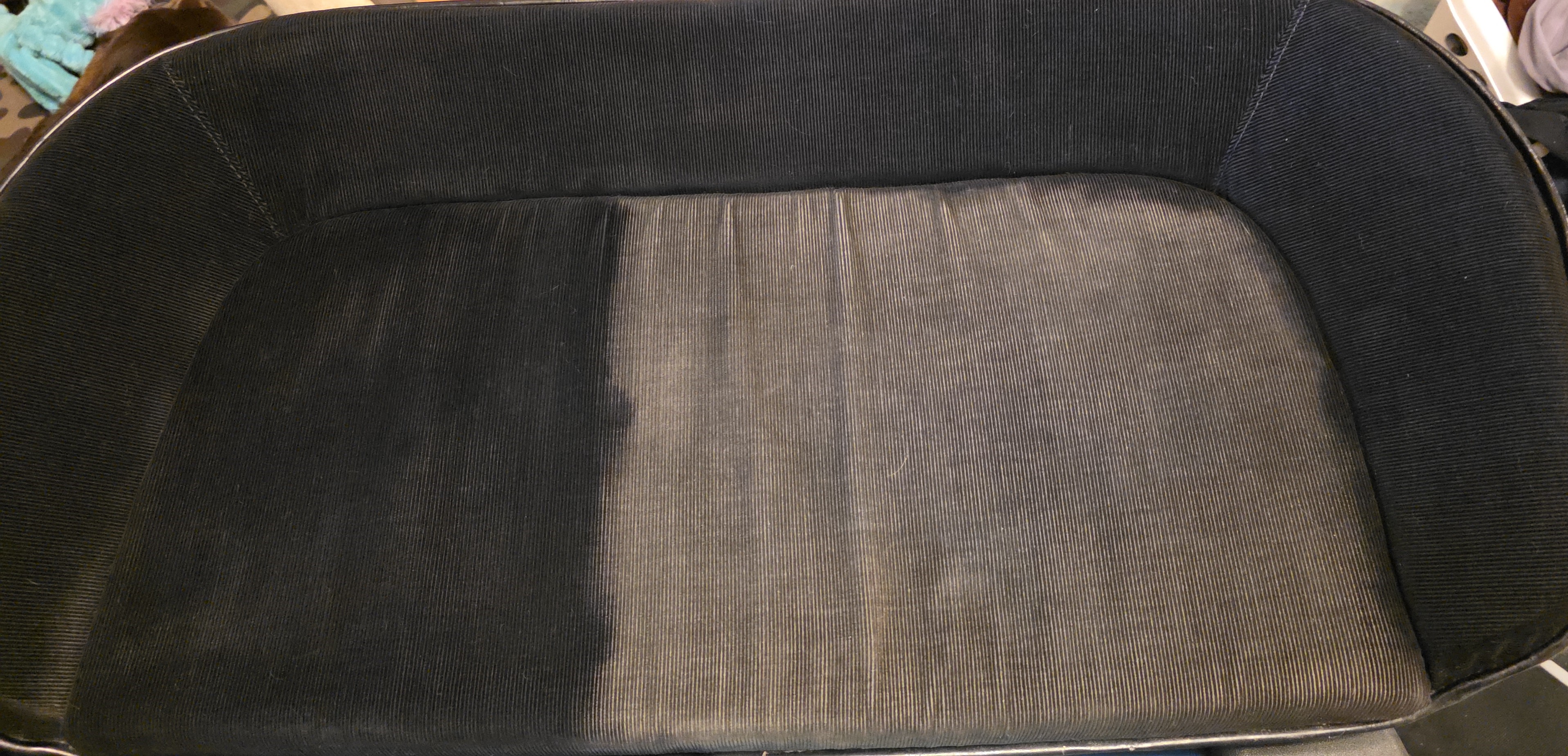
First off, the seat is actually in pretty nice shape. No splits in the material and no major flaws to the leather. The snaps and snap straps are still intact and there are no tears anywhere. It was just faded and a little dingy looking, not new looking. What should I expect for a seat that is likely 20 years old give or take. I don’t know what kind of material this thing is made of, some kind of velvety something or another, but I chose a suede shoe dye to bring it back to life.

The kind I purchased is shown below and the lid came with a little dobber applicator attached to it so it was really easy to just paint the dye on. First, I sprayed the dust off the seat with the air compressor. Then just went to town with the dye, and left it to sit for a few hours to dry. SUPER easy! I love little projects with BIG results. The photos speak for themselves.

This is the seat BEFORE.
During the dye process. I swear it didn’t look THAT faded just looking at it before, but wow what a difference!
Finished product!

A side by side of the before/after

Tail Boot: A Review

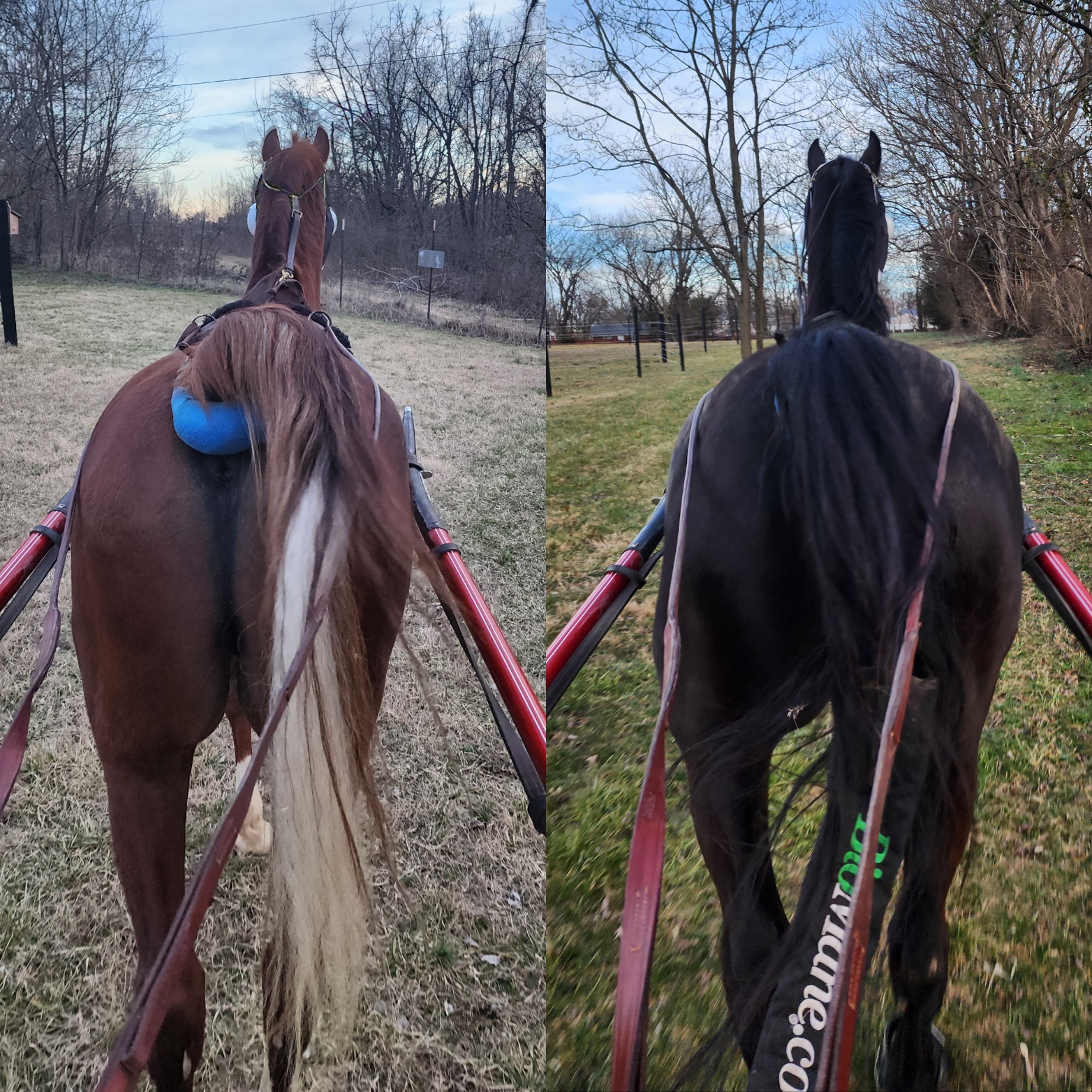
Pretty tails… the bane of my existence. I love a long, thick, beautiful tail. However, I have struggled to grow one with the horses I have!! Fizz has finally started to grow a longer tail since I brought him home in 2022, but a lot of it grows WHITE. And, well…it doesn’t stay that way. No one likes a pee and dirt stained tail-send help. Duke’s tail grows like crazy, but he so angrily swats at flies he has ripped a lot of it out having it put up. The nice long part is so thin I want to cry every time I take it down and more hair falls out.

I have used many different style tail bags and even sewed my own and NONE of them have been great. The 3 strand ones, the lycra ones, biomane ones, generic canvas ones, I’ve put them up using a sock, using panty hose, using vet wrap, I’ve tried so many things. Props to you if you can get any of the aforementioned things to work really well, because I simply cannot seem to figure it out.

Being about at my wits end, I ordered the “Tail Boot” because why not, I’ve tried everything else!!

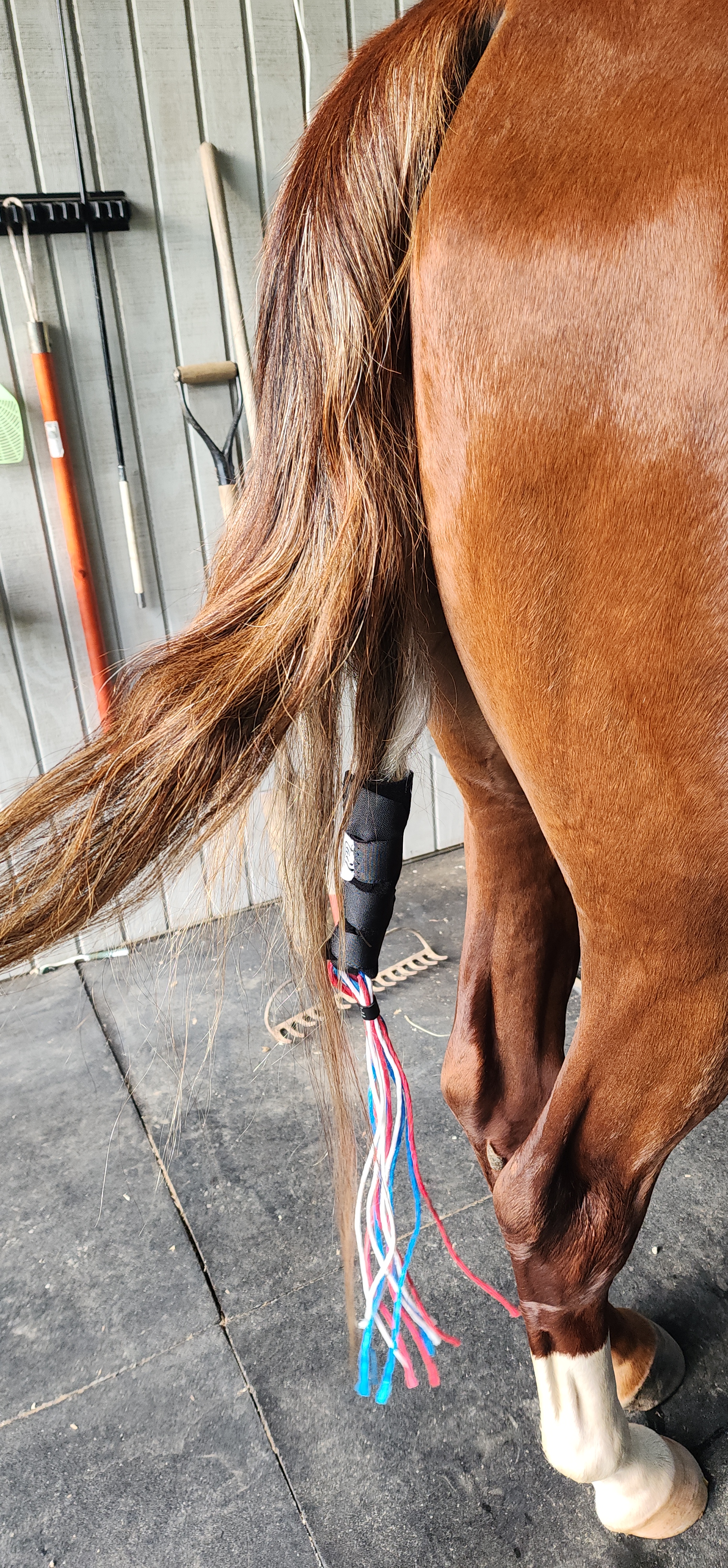
They arrived in short order and I set off washing tails. Let me just say, I might be a little slow because I had to watch the tail boot video a few times before I figured out the real life application of these things. It wasn’t (for me) a “plug and play” deal BUT, they’ve been on for several weeks now and I have had ZERO issues. No broken hair. The boots have not fallen off. No ripping, tearing, etc AND they have “swishers” so Duke can angry swat at every real and imaginary fly in existence.

The construction is really nice. The outer layer is neoprene with velcro to secure it. They swishers are made out of what appears to be baling twine. They are replaceable (you can purchase different colors from the tail boot website) or honestly, I figured if these got damaged I could just make about 12,000 new ones from all that hay string I hoard because I am so unhinged I think I may need it for something one day. There is an inner pouch attachment that holds the braided hair to help secure the boot onto the tail. They come in different standard sizes or they have an option to buy custom sizes, which would be nice for someone who has a horse with a really long, super thick tail or something that may not fit into a standard size category.

I ordered one size small (for Fizz’s shorter, not super thick tail) and one size medium (for Duke’s super long but pretty thin tail). Below you can see the difference in sizing. I almost needed to size Fizz’s up to the medium, but the small works for now. The medium was perfect for Duke, and has some room to spare if I am able to get his tail thicker.

The hardest part for me was figuring out how to get the tail in the little pouch inside the neoprene outer layer. Again, I might be a little slow. Despite any struggles I had with application, this is the feature I actually loved the most about these! It wraps over the braid to give the tail an extra layer of protection and helps secure the boot to the tail. It really is a very well thought out design.

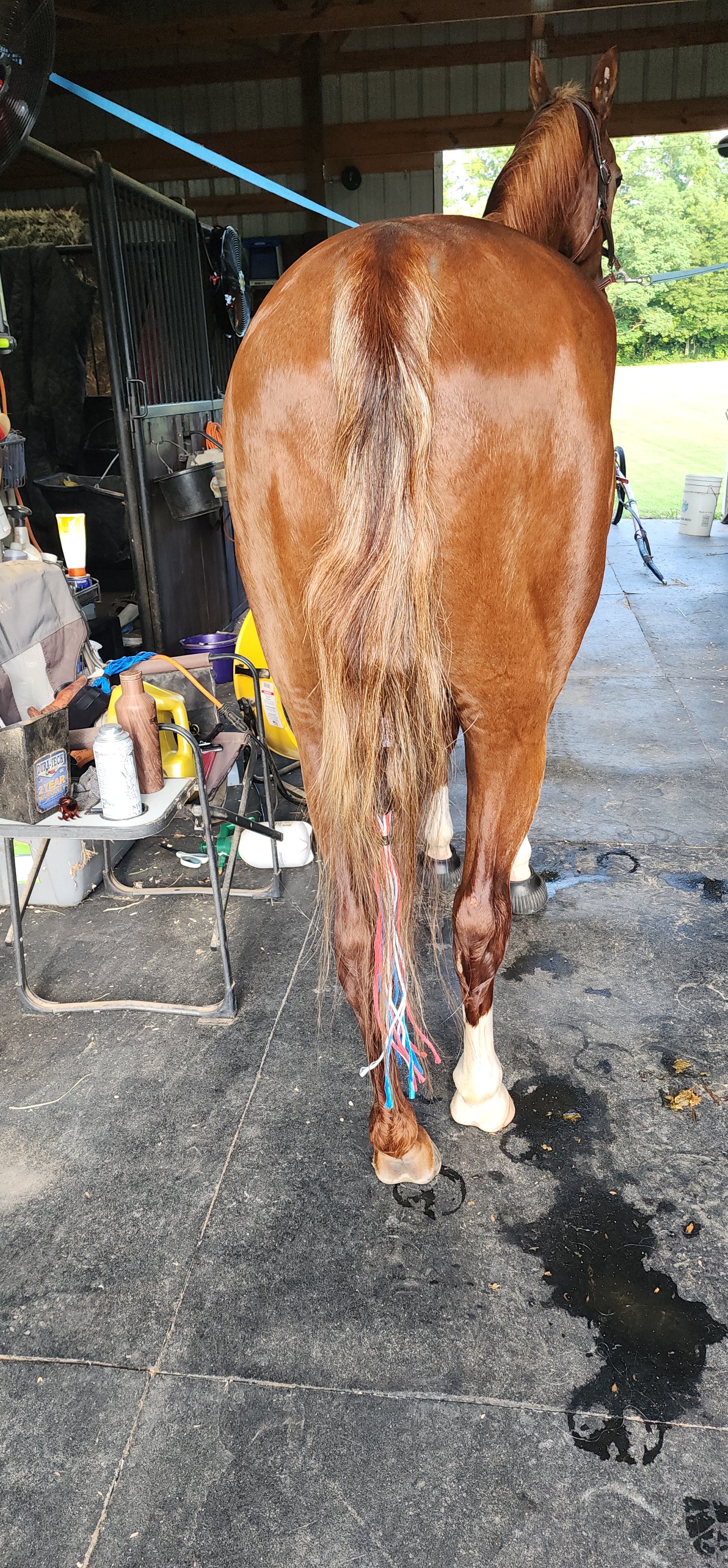
The natural tail (no boot) to how the boot looks once I applied it.

On the tail boot video, it shows braiding up the hair without leaving any feathers out. This goes against everything I’ve ever been taught about braiding tails and I just couldn’t bring myself to do it, so I only braided and put up the “bottom” part of the tail, the same way I’ve been doing since I was a little kid in 4-H. I’m not saying the other way doesn’t work, I’m just saying I am a creature of habit and leaving feathers out of a tail braid is one of the things I’m not capable of changing as a 40-something year old human.

Overall, big thumbs up to these tail boots! I really really like the design, they have (so far) held up really well, and they’ve kept the boys tails dry and clean even when I’ve been having to hose them down a lot due to the KY summer heat we’ve been experiencing lately. A word of advice though, try to steer clear of the swishers; I did not personally like being smacked across the face with a wad of hay string. But whatever, you do you!

Comparison is the Thief of Joy

Do you ever look at your horses and think “you could have been so much more, if you weren’t just stuck with me?” Do you ever compare where you and your horses are to where other people and their horses are and think “we aren’t doing enough” and get a little upset at that?

So many times I flip through magazines and I see all these people and horses in tip top shape doing all these big things and I get a little down. I lose motivation and I lose some faith at times. I look at my knowledge and skill level for training, I look at the talent and natural ability of my horses and I think, they could have really gone to the top. I look at them in awe of their natural abilities, in awe of their tolerance and forgiveness for me, and I wonder what they could have done under a compassionate, more skilled teacher. I look at other horses that maybe aren’t as naturally talented working and showing under very talented trainers and doing big things and I think “that could have been my horses” if it weren’t for me. If only I had more money to pay someone to help them, to help me. If only I had more skill, more talent, more, more, more. It is so easy to feel guilty in the horse world, to feel like you’re not enough, you don’t have enough, aren’t doing enough. It’s so easy to downplay your accomplishments because you are too busy judging them against others.

But, isn’t that part of the problem with the horse world anyway? Isn’t this supposed to be FUN? Sometimes I have to force myself to take a step back. Maybe even a lot of steps back and look at my horses; Horses no one wanted because they were labeled “problematic” among other things, due to being under the direction of people who didn’t believe in them, pushed them too hard, had expectations beyond the horses skills, didn’t have enough time for them due to other responsibilities, etc. I have to look, I mean really look at how far they’ve come with only an amateur to teach them. I have to look at myself, where I started to where I am now and the skills I didn’t have in the beginning that I have learned over the years. When I really look at all I have learned since I began my AOT journey, not only out of necessity but also out of sheer determination, then I can see my horses have overcome so many hurdles and proved so many things people have said about them wrong. I have done the same myself. These horses have excelled because I have not given up on them when others did. I have made it a point to learn from anyone I can, find answers any way I can, and I have kept that “try, try again” attitude through setbacks, through failures, through all the highs and lows that come with working with horses. I have to meet them where they are, praise them as they stand, and be proud of how much we have done with so little.

At the end of the day, the horses don’t care. They are happy to stand in a field and eat grass and hay and they are happy to be loved and fed and cared for. THey could care less if we go to a horse show. They could care less what anyone thinks. They are happy to have someone kind to help them learn skills they didn’t even know they needed. They are truly and honestly GOOD boys who try so hard. So what if they could have done more? Others with more skills than myself could have done more for them, but they didn’t. They could have ended up in bad situations but instead, they landed with me: The determined amateur. And I won’t stand for ANYONE to talk poorly of my good boys, even if we accomplish absolutely NOTHING. So, why would I stand for myself looking poorly upon our accomplishments? I need to learn to use that at motivation as we ramp up into show season. There’s always things to learn and always fun to be had.

Comparison is the thief of joy. Learn to be happy as you are, and if you want more, go WORK FOR IT!

In A World of Yes or No, I vote OTHER.

If you are a Saddlebred enthusiast, own a saddlebred, or have any involvement in the saddlebred industry whatsoever, you have at least heard some rumblings of the mess going on within the ASHBA (American Saddlebred Horse and Breeders Association). That is, unless you’re living under a rock somewhere very remote, then maybe you’re actually better off. I try to keep my distance from drama, but if you’re at all involved, you can’t really ignore everything that is happening. The board, the members, everyone from the “elite” to the “nobodies” and all in between are ready to throw hands over who is right and what is to be done about it. This is, in my opinion, the boil finally coming to a head after many years of festering infection below the surface.

In 2024, the KY State Fair decided USEF should not be the governing body over the World Championship Horse Show, even though the ASHBA had a contract with USEF for the prize programs held within the World Championship. However, the ASHBA does not own the rights to the World Championship Horse Show, the KY State fair does. And so, the Ky State fair did what they do, and said to hell with ASHBA’s contract with USEF and went with another governing body for the show. ASHBA responded by moving the prize programs to the Indianapolis Charity Horse Show in Sept 2024. Many big barns didn’t attend WCHS as a result. From there, it has just spiraled. Some big breeders, one in particular, are calling out the ASHBA on their standard practices and demanding more transparency. As part of that uproar, new bylaws for the association were proposed. I’m not an attorney and I don’t really understand a lot of the lingo or the process, but now it’s coming down to membership casting votes on “keeping things as they are” (NO) or “doing something new” (YES) at the annual meeting in February 2025. Some trainers have posted videos stating their reasons for voting NO, the association has sent out documentation encouraging people to vote NO, and I’ve seen a lot of breeders and members speaking out that things need to change so voting YES is the answer. Both sides make very good points and arguments for their reasoning.

I’m over here thinking everyone looks ridiculous and this is pathetic. It’s all absurd and it is a really bad look for our breed as a whole that the people running the show are all fighting with each other. It makes us look like fools. ALL of us. Worse yet, NO ONE wins. What is most critical is, no matter what, the horses are the ones who lose. The horses, who someone chose a mare and stud and intentionally chose to bring them into the world. The powers that be in the association are too oblivious to even realize all of this bickering is hurting everyone and helping no one. Both sides are so focused on the “who’s who” and the “world champions” that they could give a rats ass about anything or anyone else.

Every chance the Association (and/or the Saddlebred museum-which is yet another conversation) gets they send solicitations wanting donations or for you to attend some exorbitantly priced fundraiser or go to a convention or event in some fancy place hundreds of miles away. And if you can’t? Well, you’re a nobody and you’re part of the problem. Or at least, that’s how it feels.

The other side has been caught stating if there’s not a world champion in every one of their foal crops, it’s considered a failure. Imagine saying those lives, who didn’t ask to be here, are failures because they are not in the top 1% of their breed. That sounds a lot like if humans were to say kids who don’t grow up to become president are failures. That everyone else is useless.

Will the “new” board and “new” bylaws change any of that? I’m still not convinced.

As an AOT who has seen the best and worst of this industry and the people in it in the last 35 years, I don’t even know what to think anymore. In some ways I feel like I should stick with the devil I know, but in other ways, I think a change might be for the better. I love the breed.  Some of the people I have met in this industry are the best I’ve ever met.  Some are literally the worst.  The upper echelon of this breed and the association seem not to want me, people like me, horses like mine.  It’s frustrating and disheartening and there are so many times I just want to give up, but I love the saddlebred and somehow that’s always managed to be enough for me. Even when every turn has an obstacle, every show has politics, many shows come with a price tag I can’t afford, and it gets worse year by year. 

Not to mention the price of a saddlebred coming out of a show barn these days.  Imagine paying for one individual horse what some people don’t even pay for their entire home (over the course of a 30 year mortgage). Then imagine people having one of those for every division for themselves, or their kid, or both and they are paying $1200-$1500 per month each for training, not to mention any other associated costs (shows, vet, farrier, chiropractor, massage therapist, magnawave, and the list goes on and on and on). Hello! The training bill for one horse alone is more than my monthly mortgage payment on a home that didn’t cost a fraction of what one of those horses did. THOSE are the people this industry wants. Those high dollar horses are what this industry wants. The resounding feeling I get is if they aren’t those, they are not good enough. And if they aren’t good enough, they’re thrown away. Shunned. Frowned upon. Thought as “less” and worst of all, forgotten.

Let’s be honest here. The “less than” horses are probably about 75% if not more of the entire population of Saddlebreds walking this earth, and therein lies the problem. Preach you want to grow the breed. Preach versatility. Preach your love for the saddlebred. But then ignore every person and every horse who isn’t showing and winning at the top breed shows and at the World Championship level. Remember, this is the same “World Championship” for this breed promoted as so versatile, where people had to fight tooth and nail to get ONE western class (qualifier and championship) and ONE hunt seat (qualifier and championship) flat class. Then, the same horses show in both qualifier and championship because they take so few they don’t need to eliminate anyone. THEN, “they” act like that was such an accomplishment when there are saddleseat classes of all types and age groups for DAYS. It’s so difficult for the western and hunt horses to even qualify to go there that you basically have to kill your horse, yourself, and your bank account by trotting through every open gate you can get to at every show in the country to even stand half a chance. But that’s yet another conversation.

Something needs to change. I’m not saying the proposed “new” bylaws are the change that’s needed, but over and over again, people have spoken up and over and over again, the ASHBA has changed… nothing. They have continued to cater to the elite people, the elite horses, and “forget” everyone else. People are feeling it and that is where the conflict is.

This past year has been very eye opening and as I said before, it’s not a good look for the breed as a whole from any side. Considering the controversy surrounding our breed, our training practices, the “look” of our horses, how we treat and more importantly how we educate people about our breed matters. As someone who has been involved with the saddlebred since I knew what one was, I still feel like an “outsider” and feel unwanted in the industry I’ve been a part of for the better part of 3 decades. The conflict and divisiveness just pushes me further away.  What do you think that does to people who are looking at the Saddlebred as a potential breed to become involved in? What taste do you think that puts in their mouths? It probably tastes like the soap my mom used to wash my mouth out with as a kid when I said something ugly. Infact, it probably tastes worse.

It’s so sad for the horses. Ultimately losing people like me only hurts the horses in the end. People like me are the majority, and the elite are a fairly small group if we’re being honest. People like me give that 75% a place to go. People like me can’t afford top horses, but would go hungry any day of the week just so some of that 75% could eat well. People like our rescue and repurpose organizations who take in the “not good enough” ones and repurpose them into someone’s best friend, someone’s best lesson horse, someone’s favorite trail mount, the next great eventer, or the fanciest dressage mount, despite those horses being thrown away by their breeders and trainers and despite them meaning nothing to those whose opinions “matter” in this industry.  It seems like the well being of the horses, and having a place for everyone, would be good for everyone. The feeling I get though, is “everyone” isn’t “someone” to the ASHBA and every horse doesn’t deserve to be represented if it doesn’t cost 3 normal people mortgages to buy.

So don’t mind me over here. I am just a measly little AOT, a nobody, sitting here in my modest home with my small personal barn where my 2 throw away horses I train myself live because I can’t afford any different. Myself and my husband have sacrificed and continue to sacrifice a LOT to even afford that, and I realize it’s a privilege. One I am very grateful to have. However, I’m still patiently waiting for the governing association that holds the registration papers for my two “lesser than” saddlebreds to get their shit together; To be better, do better, and practice what they preach. Include us. ALL of us. The world champions down to the throw aways. Embrace all disciplines and encourage everyone. We ALL matter and it’s time that is realized, otherwise, I fear the future for this wonderful breed.

Here’s where I stand, outside looking in at the ASHBA: Look down on “us” if you want, but you know what? That says more about you than it does about us. Ignore the crazy ramblings of a nobody: You’ve been doing it for as long as I can remember. Exclusivity has put your numbers on the decline for years, but isn’t that what you wanted? To be exclusive? To exclude people like us? If that wasn’t the intent, it sure was the result. If you want that to change, inclusiveness is something you should consider. Whatever changes or bylaws supports that, that’s where my vote goes.

All that to say, I vote “OTHER” and why can’t that be an option?

Cavallo Hoof Boots – UPDATE!

If you’ve been following us for a while, you may have seen our Cavallo Simple Boots: An Initial Review back in 2016 when we got our first pair of hoof boots for Fizz. We have been a customer of Cavallo, Inc and a buyer of their products since! I have not ventured out to other brands because I have been happy with these so I really haven’t needed to.  Cavallo is now offering their customers incentives for referring others to their brand.  Since I am still a user of and believer in their product, I signed up for my own link to the incentive program!  As a benefit, if you purchase from my link, you get 20% off your purchase! Just click here: Referral Program Link

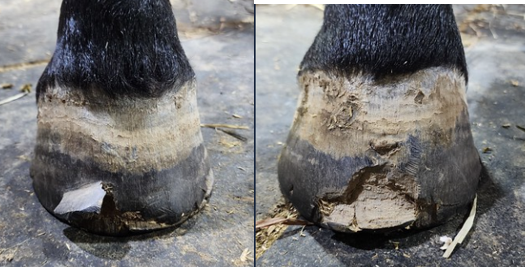
Fizz and Duke both have their own sets of 4 cavallos to wear when they are barefoot. While we don’t typically turn them out wearing them or work them in the round pen using the boots because the ground is usually pretty decent and the round pen sand is soft, there are times when we choose to use them consistently. We do always use them on any unshod foot when trail riding to protect their feet from this kind of disaster that happened a few years ago to Duke while trail riding with no protection on his rear feet.

After the above happened, that’s when both boys got new sets of cavallos for their rear feet. Duke’s “sports” when they were brand new!

A few weeks ago, we had a massive snow storm, followed by a massive ice storm, followed by more snow, and then it was frigid temps for several weeks following that. There was jagged ice everywhere, but I couldn’t bring myself to make the boys stay inside because I was scared for their safety. During this time, I opted to let the boys wear their cavallos on their front feet to protect them where they put the most weight and my hope was the treads on the boots would give them more/better traction and the pads would offer them some comfort/support on the hard surface. Incase you didn’t know, a horse carries approximately 60% of it’s body weight on the front feet.

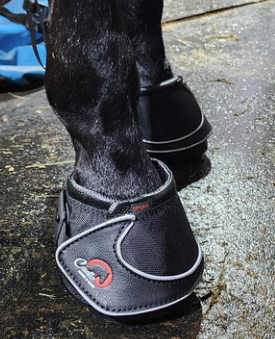
Both boys have different setups and sizes. Fizz wears simple boots on the front and treks on the rear. Duke wears simple boots on the front and sports on the rear. Overall, I like the trek and sport closures better, but I bought the simple boots first and have not really had a reason to change them out. When (if) these things ever wear out (so far they’ve been really sturdy!) I will likely get treks or sports for their fronts as well, only because I think the closures are easier than the simple boots. You can see the differences in the image below. The treks are my personal favorite of these 3 if I’m being completely honest.

I also want to note, we have used them both barefoot and over shoes. You may need different sizing for either type of application (barefoot/over shoes) so make sure to measure to be safe before ordering. Fizz especially likes to be a wild man and he will overreach and clip his front shoes with his rear feet and bend/loosen/rip off his front shoes and he has damaged his heels this way too. If I notice a shoe is loose, bent, or otherwise in danger of getting ripped off in any way, I will stick his cavallos on to protect his feet and the shoes until the farrier can come fix the shoe. If you do this, make sure to put them on both sides (left and right) so the horse is able to stand/travel evenly. Just fronts or just rears should be OK as long as there is one on the left and right side on the same “end” of the horse so they don’t have to stand crooked. This should be common sense, but you know, sometimes we don’t think of things and just get in a rush to put a bandaid on something because, horses, so I feel like it’s worth mentioning. In instances where he has lost a shoe, I just add a few pad inserts to the inside of the boot going on the foot without a shoe and leave them out of the other to make up the height difference.

Both boys in their full sets of Cavallos! Happy as can be to go to work.

As for accessories offered by Cavallo: Both boys wear pads in their boots, front and rear (because I like the idea of some extra cushion) and we use both the pastern wraps and comfort sleeves. The pastern wraps I find a little more difficult to use, but they hold up better and in my opinion are better when there is moisture involved. If you’re trail riding where there will be a creek or mud, the neoprene pastern wraps would by my choice. They hold some moisture, but it seems to be more wicking away from their skin and they keep their nice sturdy form around the foot. The comfort sleeves are more like a cotton sock. They are so easy to use and very convenient while still offering protection for the pasterns and heel bulbs. It’s just when they get wet, they get soggy like wet socks. I personally don’t prefer wet socks so I don’t like them on my horses either. The protection is the same and the horses don’t care, it’s just my personal preferences based on the experiences I’ve had with both items! I use the sleeves when it’s dry, I’ll be riding in dry places, and I know they won’t get wet. Take that with a grain of salt and do with the info what you will. You can see the differences in those items in the image below.

So, after 9 years of using Cavallo hoof boots, I can say with confidence that these are boots I would recommend and here are some of the reasons why, among many others that I am probably not thinking of right now.

There are so many different styles to meet your needs and preferences in style

They are well made

They are durable

They are easy to use

They help keep the horses comfortable and protected

They are economical

They save money on farrier bills

Muck Rake Replacement Tines?!

You guys, I have a confession. I am a muck rake destroyer. I am hard on things-muck rakes included. I use the muck rake (and many other things) in ways they are not intended. I tried to stab a mouse with one the other day-I was unsuccessful, but dangit, get out of my barn my guy – this is not your home. I scratch my horses with them. I pick poo from fields with them, and I have been known to use it as a “hiking stick” around the paddocks. I have nicely level, deeply bedded and fully matted stalls, but in 2 years I have broken tines off at least 6 or 8 muck forks somehow. The entire head isn’t exactly cheap to replace depending on the ones you like, but it’s horribly annoying to use one with a tine missing. I just cannot make myself use one that isn’t whole. I know, plenty of people can, but I am not one of them.

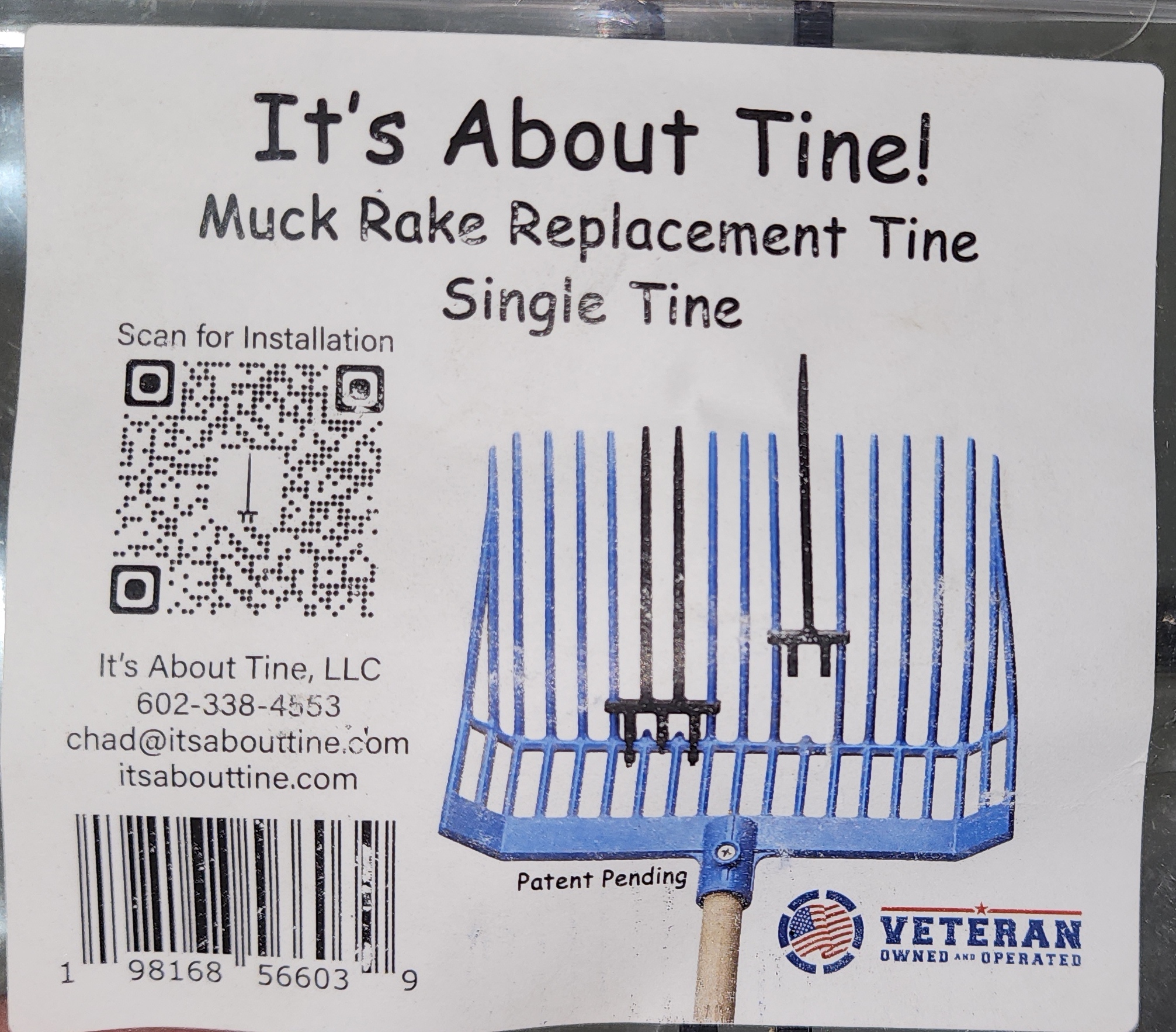
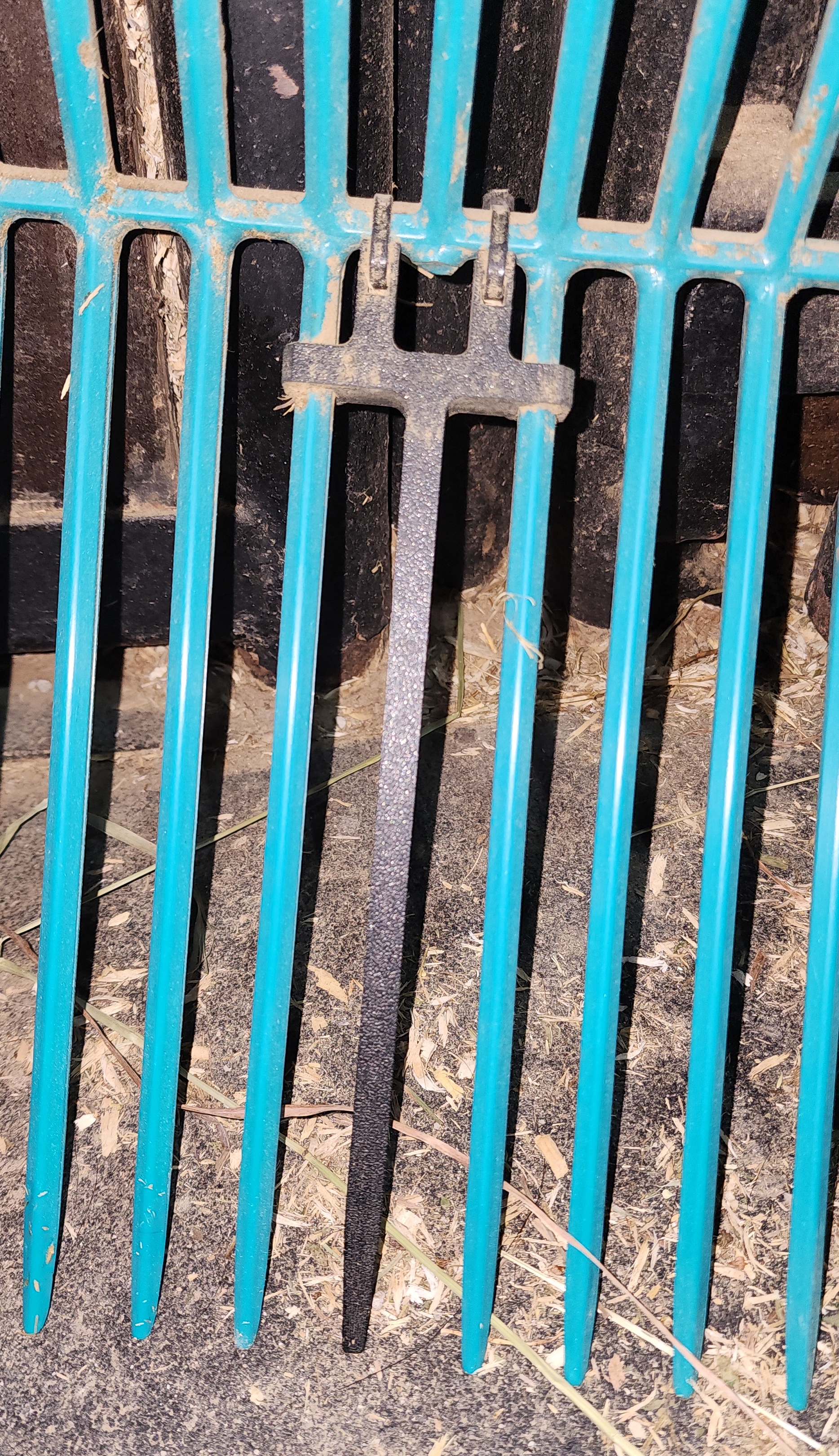
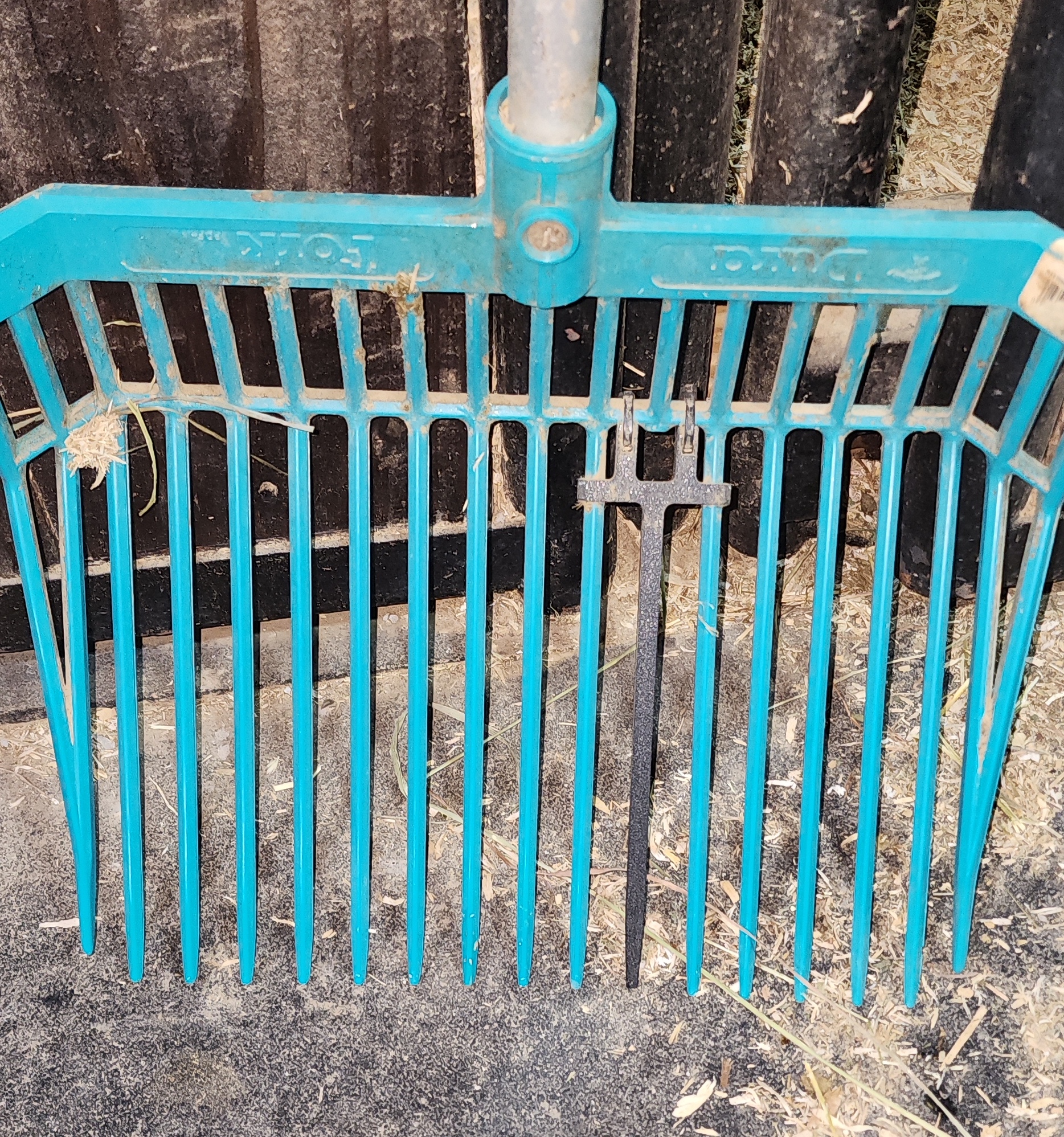
Enter the It’s About Tine! muck rake replacement tines. Manufactured by by It’s about Tine, LLC, they are (at least for me) a game changer!!!! As usual with the reviews here, I am not affiliated with nor compensated by this company or product, but I do feel compelled to share my experiences with my followers so you guys can see how products have worked for us.

It is exactly what it says it is. A replacement, for your individual (or double) broken tines on your muck rake. I saw these shared on facebook somewhere, so I got a few to try and added them to 3 different muck rakes. I have used one of those every single day for several months now. It is just like using one that isn’t broken, and the replacement tine has also stayed intact! They are easy to install and work like a charm, so satisfying not to have to replace the entire head.

Do yourself a favor and check them out. Bonus, they are a USA veteran owned company!! This company especially pulls at me to support them since my husband is a United States Marine, but it doesn’t hurt that their product is useful, inexpensive, and WORKS. Ooh Rah!

https://www.itsabouttine.com/

Back to Work

Before I started on my AOT journey many years ago now, I didn’t know all the details surrounding actually working a horse. I understood things like ground work, long lining, driving, riding, etc. But I didn’t know a lot about when to do what and how much was enough, or when was too much. Since having my horses at home, I’ve walked the fine line and in the end, the horses always tell you what they need. At least if you have opinionated dragons like mine! I have also made it a point to give them some down time after show season is over. This gives them time to be a horse, to get dirty, to play, to have fun, to rest, and many things that I feel are good for their bodies and brains. We may do a little ride here or there, a trail ride thrown in on a random weekend. Some fun stuff, but no serious work. 

Now that it’s the new year, and the icepocalypse and snowmageddon that beat us down the first part of January is finally starting to melt, it’s time to start thinking about our upcoming show season. For us will probably start in April or May. When you’re starting a horse back to work, you can’t just go full blast back the way you were at the end of last season if they’ve had a lot of down time. Think about your own athletic ability. Say you run 6 days a week for 8 months (Feb-Sept), then decide to take 4 months off (Oct-Jan) and enjoy your extra lavish holiday meals with minimum exercise. How do you think you’re going to feel when you pick running back up again at the end of that 4 month hiatus? You’re not going to have the same stamina you had after all those months of running consistently, right? The same applies for your horse(s). You have to build them back up slowly when bringing them back to work. Otherwise, you risk injury, among other things, causing setbacks you don’t want or need. 
So, how do you do that? It’s easy. Same as you would do for yourself. Take the things you want to do, and start slowly by doing shorter, easier works at first. Gradually increase time and intensity as the days and weeks progress. Now, each horse will be different, the same as people. It could take one horse 2 weeks to get “back in shape” while another takes 2 months or even longer. Age, diet, attitude, and how they are kept day to day all play a role in how long it will take them and you have to treat each one as an individual. I like to start by doing mostly walk, a little bit of trot works on the lunge line for the first few days to get them back into the routine of doing something, but give them something that isn’t very hard to do at first. Next, I will add in long lines and work on bending, steering, body awareness, and contact. Once they are going nicely in lines and listening well to basic commands, I bump up the intensity and length of the sessions. Then I will add jogging with a cart to the mix a day or two a week (more on that below). Lastly, I will mix in full training sessions in the saddle once I feel they have built back up a nice amount of stamina and strength. I may saddle them up before that and try to do a light work, or a trail ride, but it’s not going to be intense 3 gait training.

Once they are going under saddle again, I like to remind them of leg aids and voice commands. My horses know these things, but it’s easy for them to forget when they haven’t been doing them consistently every day for months, so they deserve a little leniency when they don’t respond immediately, or they respond incorrectly and need a reminder of what the aid means. Practicing kindness and understanding goes a long way with the rapport you share with your mount. Rest assured, they will remember, you just have to give them a chance. It may not be on the first try, or the tenth, or the 50th, but keep your consistency and they will come around. My guys usually take several weeks of “reminders” to get back to what I consider appropriate responses and times.

I will also add in ground poles (at the walk) and trot work (on their aids) and do lots of transition work between walking/trotting, poles, and backing up. If you have access to hills, those are great at building strength and stamina and promoting proper movement, even if all you’re doing is hand walking them. I like to long line all around my property and the various terrain, as it gives my horses AND me a workout. Let’s face it, I could stand to have some exercise too after the holiday season and all the snacks my Mom made and I was forced to eat. Ok, fine, forced may be a little bit exaggerated but they were there and I just couldn’t let all her hard work or delicious treats go to waste, OK? Don’t judge me! 

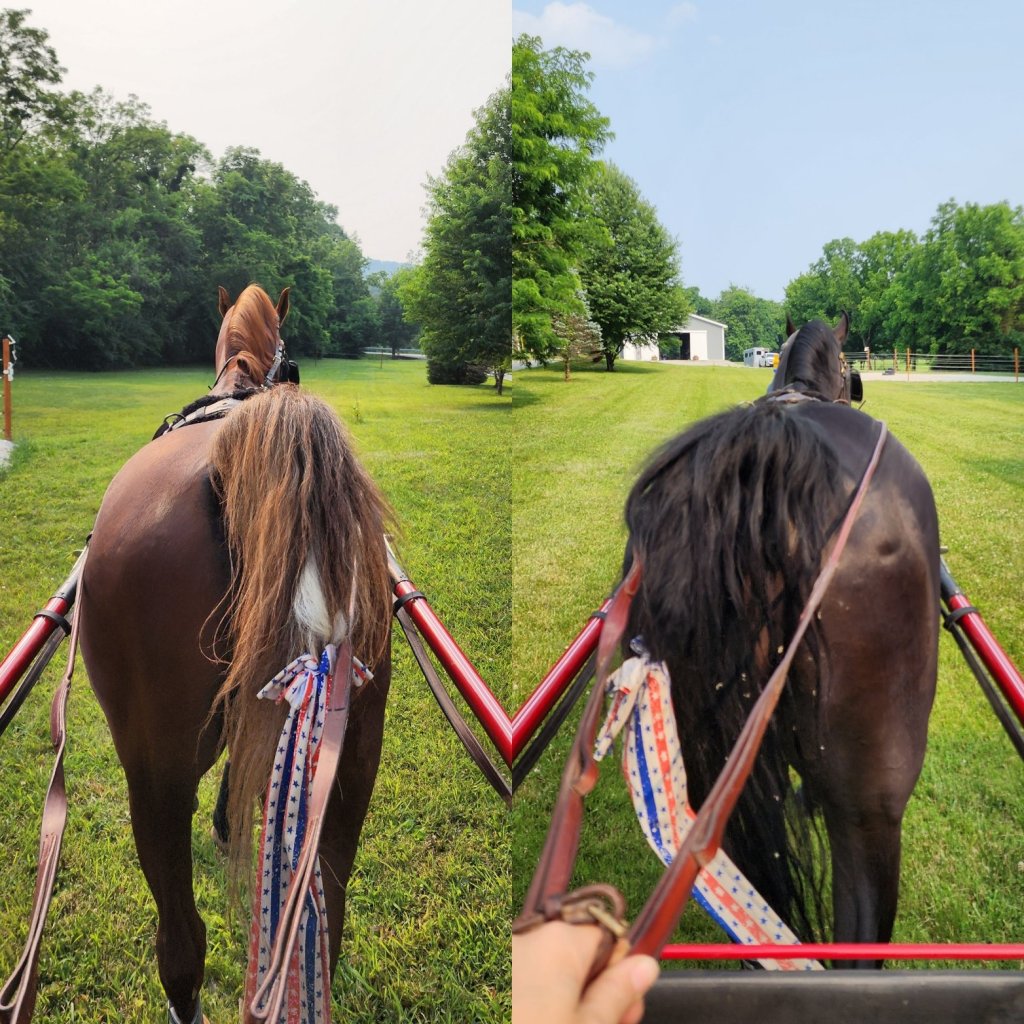
If you have access to a jog cart and you and your horses know how to drive, pulling a cart is excellent for fitness and maneuverability. Plus, it helps to save their backs from so much riding, which I like. When my horses are in full work, I do drive them multiple times a week. Fizz knows how to canter pulling a cart, and it’s really helpful for him to still practice it without the weight of a rider. At the end of last season, I started teaching Duke, but then show season ended and they were turned out so I guess I’ll pick back up when we go back to work this year! My horses do prefer less riding sessions and more of other work, so I try to stick to their rules so that they are also enjoying our sessions. Fizz in particular gets really angry if all you do is ride. Duke is less particular, and will accept more days riding, but not until he’s been fully reminded of everything he knows via lunging, lining, and driving otherwise he will make your life a living hell.

Overall, I like to give them at least 60 days of consistent work to get back “in shape” before taking them to a show. Consistent work meaning 4-6 days a week. Now, sometimes this is possible and sometimes not, but that’s my goal.

DIY Insulated Water Trough

I very much dislike being cold. I do not appreciate cold weather, below freezing temperatures, snow, or anything related to winter time. As such, I needed a solution to the frozen water trough debacle I dealt with all last winter. I was miserable. The horses weren’t drinking as much since the water was so cold, which we all know isn’t ideal. It was just not fun for anyone. The pasture is about 200 feet from the barn, so running extension cords for a tank heater isn’t really safe and we don’t have the budget to install electric for trough heaters all the way down there. In an ideal world where we had endless money, we would have automatic heated waterers, but we don’t have a money tree so we needed an option that didn’t require running water lines and/or electric or both to the pastures.

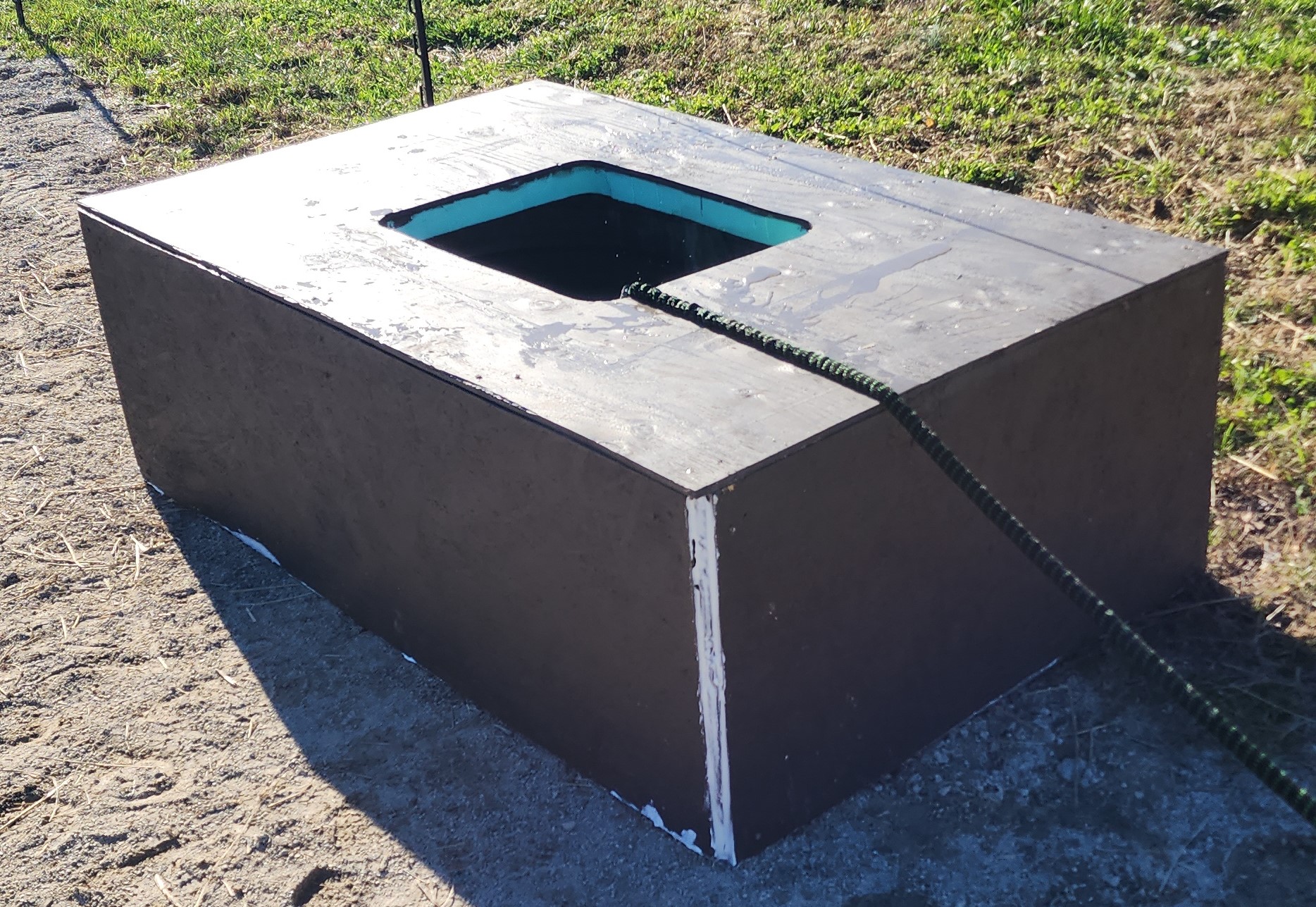
So, this summer I asked my husband to help me build an insulated water trough. Bless the horse husbands/partners in this world who didn’t ask for these creatures but still do things for them anyway. He got to building straight away. And let’s be honest here, he didn’t HELP me built it. He built it. I stood there “supervising” and probably making things more complicated than they needed to be. But like, I put most of the insulation in it and painted it, so I was kinda sorta helpful. Anyway, the box was finished and put out about a week before the temps went down below freezing and bless it, IT WORKS.

I know there are a zillion different things out there on how to build these things so feel free to google if you ended up here somehow and think our design sucks. In typical fashion, we didn’t look at or follow any tutorial or other design because we were working mostly with free/cheap materials we had on hand and didn’t have to buy. The horses eat all our money, so we have to make due, OK? Is it kinda ugly, yeah, but does it work? Also yeah. So there you have it. Do with that what you wish.

Materials:

  • Water Trough (we used a 50 gallon one)
  • 2×4’s
  • Plywood
  • 1 4×8 piece of 2 inch Foam Board Insulation
  • Bubble insulation
  • Construction adhesive
  • 2 Handles
  • Screws
  • Waterproof caulk
  • Outdoor paint

The box was framed out and covered with bubble insulation, then the sides and bottom were put on over that. My husband gets bubble insulation free from his place of employment, so we had plenty on hand. He brought home a metric ton of it when we were finishing the barn and we never used it all. Since we didn’t have to buy it, why not use it? A little extra can’t hurt, right?

Once the sides were on, the foam insulation was cut and placed in the sides and the last piece reserved for the top of the box. We stuffed bubble insulation in all the crevices on the bottom (in between the ” support joists” at the bottom of the box that the trough sits up on so it isn’t directly on the ground) to fill the space. Then we did another layer of bubble insulation all around the inside. I painted the wood with outdoor paint to try to help it last longer out in the elements. We did not use treated wood. While you certainly can, we can get free untreated 2×4’s and sometimes free plywood, so it’s more cost effective for us to use what we can get for free instead of purchasing treated wood.

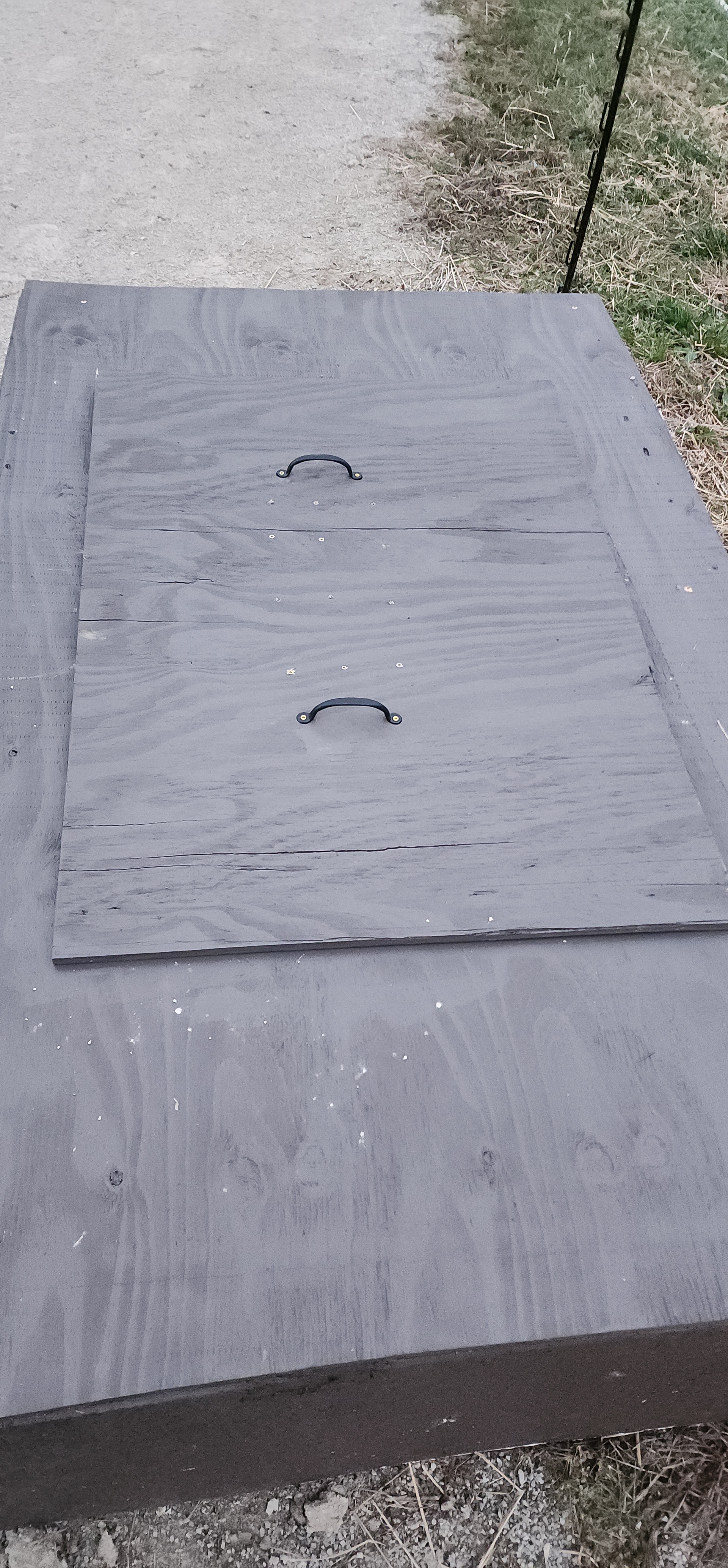
Once that was complete, we used construction adhesive to glue the foam board to the top of the box. The next step was to cut the “watering hole” for the horses to access the water. We used a plastic tote bin as a template and a skill saw to cut the hole. Once that was done, the hole piece was attached to a slightly larger piece of scrap wood so the lid could be lifted on/off when the horses are in/out of the field. The corners were all caulked with waterproof outdoor caulk as an added barrier from the elements. Probably not necessary, but we had it laying around and my husband likes using his fancy battery powered caulk gun so he went to town.

I wish I had taken more “in process” photos now, but I didn’t so here’s what I do have!

Below is what it looked like “in process”. (Note the top wasn’t screwed on at this point and the trough was not inside the box yet)

It’s being filled up for use!!

Here’s what the lid for the water hole looks like installed.

And this is what the lid looks like underneath when taken off. Just a tip: Don’t leave it where horses can get to it, they might try to eat it. At least these turds did.

For the last 2 weeks we have had lows in the upper teens and lower 20’s at night. The last several days, it hasn’t gotten above freezing. Since the horses are not outside at night, I put the lid on the box once I bring them in and take it off when I turn them out the next morning. There has not been any morning so far where there was any ice at all on the water when the lid was removed! Last year, I would have for sure been out there with a sledgehammer already busting ice. This right here might be one of the best projects we have done so far!!

I am interested to see if it will help with Algae growth in the summer, as this thing is too big and awkward to keep moving around. It’s here to stay, until it falls apart, then I guess we will build another one!

Track Systems For Horses

I guess it was about 3 or 4 years ago when I first heard of a track system for horses, or a paddock paradise as some may call it. I thought it was an interesting concept, but didn’t really look much into it as I didn’t have horses at home at the time and had never really had experience with anything other than traditional turnout. Fast forward through 2023 where my 2 horses had promptly trashed both “rotating” pastures we had built. I mean literally, they destroyed them. Despite my rotating, despite fertilizing, despite reseeding, they were trashed to the point that most of what still grew was weeds. Early 2024, I had nothing but mud on at least half of both turnouts. GROSS. No one likes mud. Especially the boot sucking KY clay kind. No thanks.

Something had to be done, there HAD to be a better way. As I thought about potential remedies, I remembered seeing the “track system” or “paddock paradise” so I started to research. Turns out, there is a LOT to creating a horse oasis track system, BUT, it can make land management a lot less of a struggle. Especially for those of us not able to afford plenty of acreage suitable for horses. We have a total of 6.5 acres here, however as it turns out, not a lot of it is suitable for horses. Toxic trees, sink holes, flooding when it rains hard among other things plague part of our land but we do have a nice area that’s just big enough to give them room to run. And really, that’s all they need. Freedom, friends, and food.

So, basically the idea of a track system is to mimic the way horses would live in the wild. Roaming/moving constantly, foraging, moving over different terrains and having forms of enrichment they wouldn’t get in a traditional type of turnout. As I do with basically everything I’m interested in, I went down a rabbit hole of research looking into this and as with most things horses, there are die hard crazies, half-assers, and people somewhere in the middle. It’s enough to make a person lose their mind, but I’ve been around the horse industry long enough. I know how to ignore the loonies that scream “ABUSE!” at everything from bits to shoes to stalls and pretty much everything people do with horses, so I have been able to dive into this track thing and find my middle ground. Side note, no matter what you do with horses there are always going to be people out there who will tell you you’re wrong, you should/shouldn’t do this or that, etc. Well look here Karen, you do you mkay? We’re all doing the best we can with what we have. Move along.

Once I decided I’d give it a go, off to tractor supply I went to get a bunch of those cheap step in posts and put up a temporary “inner” fence. Since I had plenty of electric rope and accessories leftover from our last turnout build, I was set there. My husband was absolutely convinced these horses would NOT respect these, since they are much shorter than their (5 ft) permanent pasture fencing. Low and behold, they DO in fact respect it and it WORKED. I have kept it up all summer and it’s worked really well! Even when I wasn’t able to work the boys consistently, they never really lost much of their fitness level because they kept busy walking and running around outside instead of standing in one spot gorging themselves on grass.

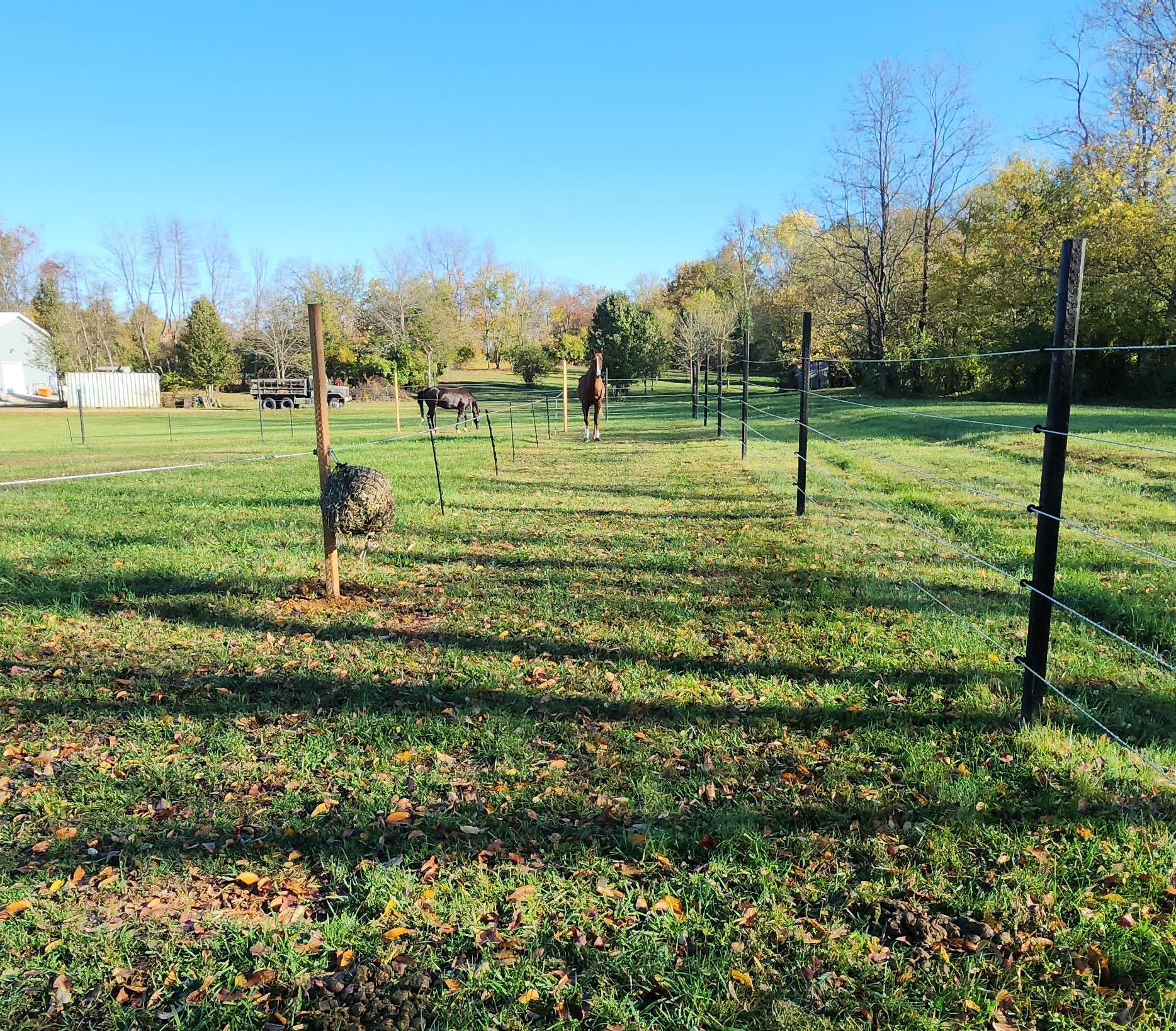
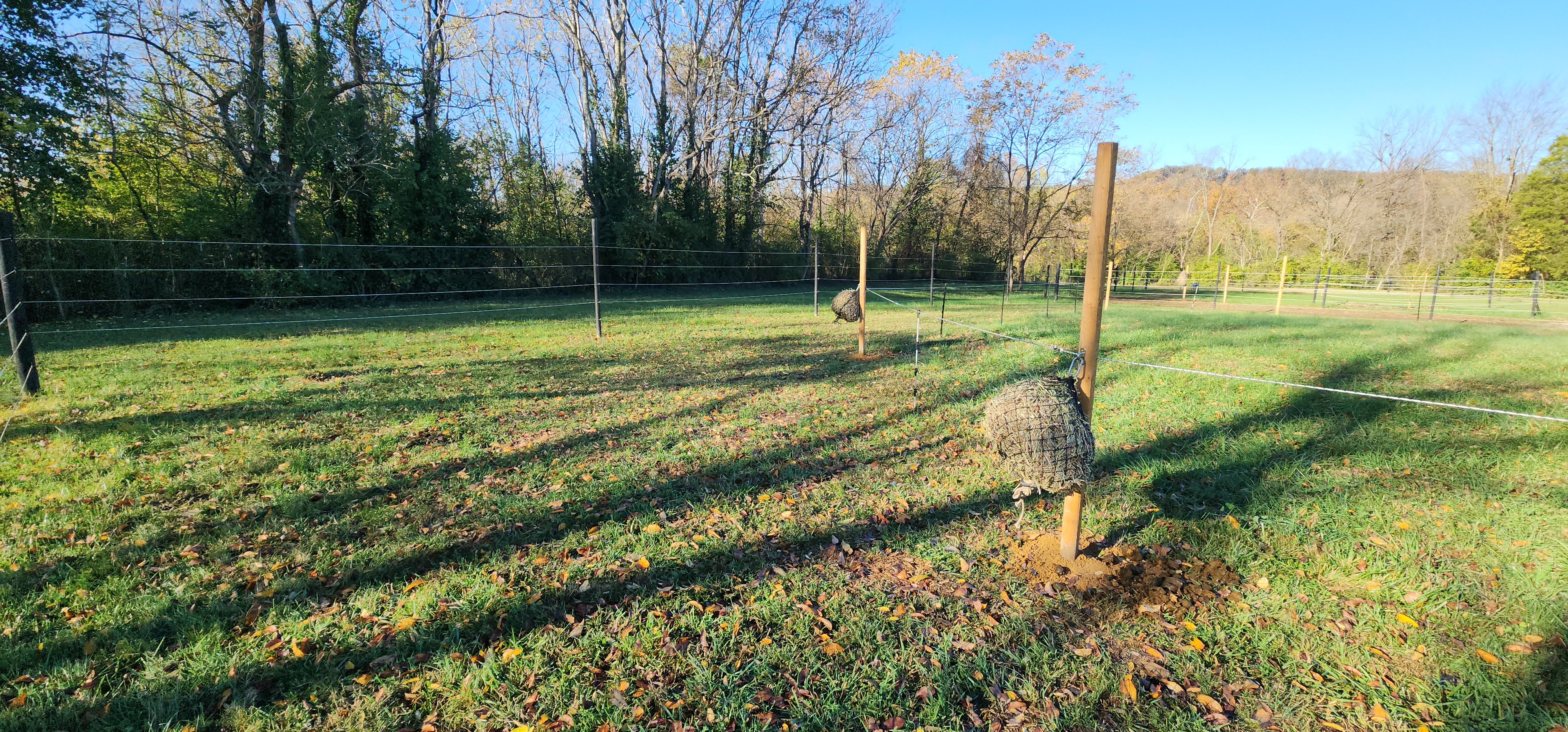
After having the temp inner fence up all spring and summer and seeing the benefits, we finally put in some permanent corner posts so the cheap step ins can just serve their “line post” purposes. Just to note, the temp posts aren’t without issue (they bend and then deform, badly, from the tension and sun and whatever) but they have served their purpose from early March to now (October). However, they worked really well to establish where I did want the more permanent fencing to be. Now that we have the permanent posts up, I was able to install electric gates to open/close as needed/wanted. Another added benefit to this is that I will be able to hang more hay bags from the new posts to encourage even more movement! I would love to add more features to the track, but for right now, we have what we have. With time and money, I’m sure more will come.

What are the benefits of a track system? Well, for starters:

  • Increased movement leading to better fitness even without work
  • Restricted grass intake (great for horses with cushings, history of laminitis, and other similar diseases)
  • More like the “natural” environment horses bodies were built for (more varied food sources, more long stem dry forage, less lush pasture)
  • Encourages natural behaviour (constant movement, foraging, herd environment)
  • Discourages vices (cribbing, weaving, etc)
  • Creates a stimulating, more interesting environment for the horses
  • Has many health benefits

While there are people who keep their horses out on their tracks 24/7 and swear their horses hate stalls and people who stall their horses are the devil, that’s great, I just don’t have the right land setup and facilities at this time to be able to do that. Would I like to one day? Maybe, but now isn’t that time. The boys are on track from sun up to sun down on all possible days, meaning it isn’t raining, isn’t icy or super slick, isn’t actively snowing, or otherwise garbage weather. There is no shelter in the fields/on the track and there is no good place they like to rest, so for us currently, bringing them in to their stalls at night is best. Unless someone out there stating I abuse my horses for “locking them up” wants to sponsor them a nice cushy shelter for their track so they have something, anything to block the sun/rain/wind, etc so I’d feel OK leaving them out. Until then, they will be in the barn in the shade under their fans during the hottest parts of the day, in their insulated stalls on the coldest nights, and out of the muck on the muddiest days. The rest of the time, they’ll be enjoying “track” life!

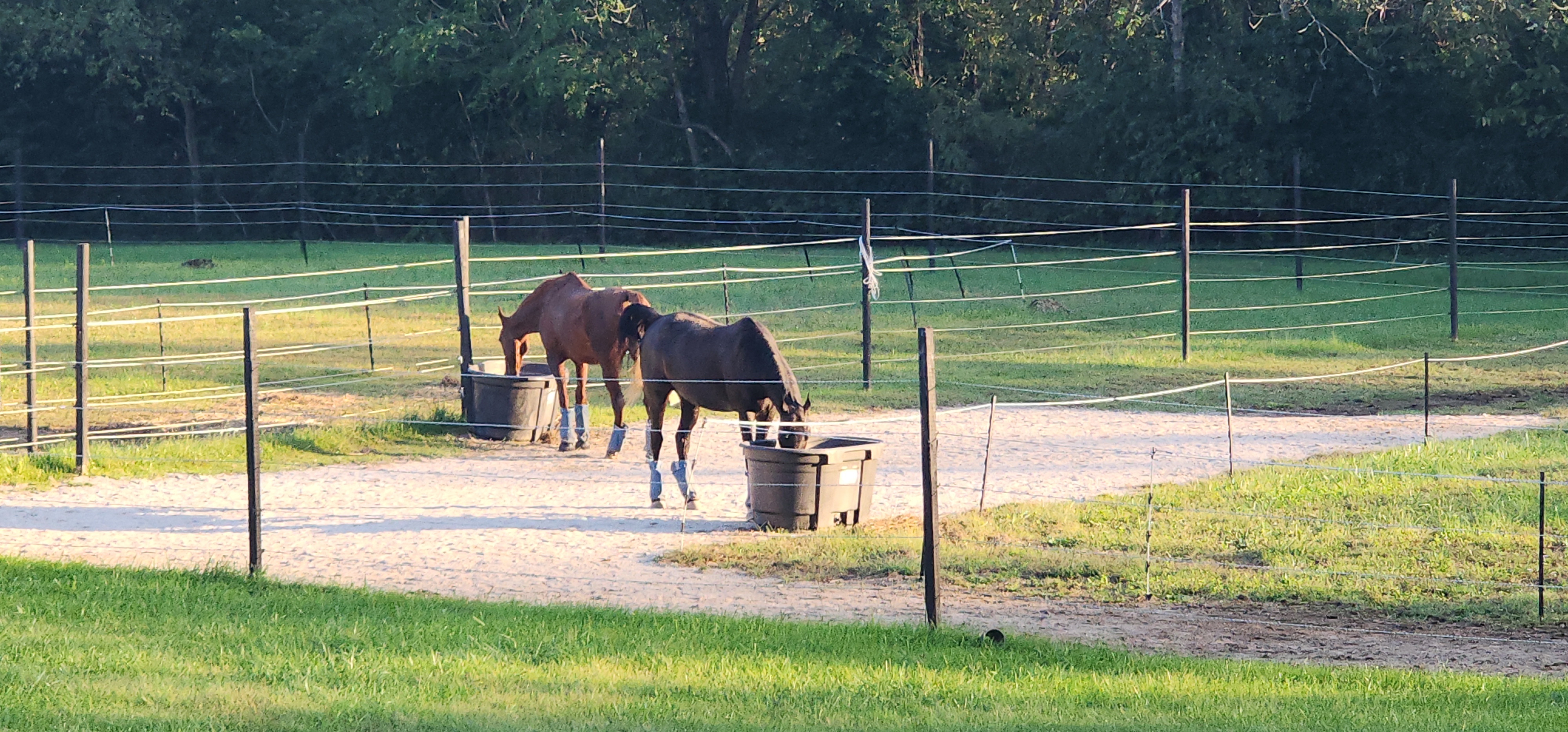
An overview map of the layout

Here is a video and some photos of the boys enjoying their track. A few shots of them grazing the “middle” selectively where we have been able to grow much nicer grass than with them on it all the time! As you can see, the track portion has become pretty bare in a lot of spots, which is great since restricting the amount of access they have to lush grass is kind of the idea here.

Here are a few photos since putting in the permanent posts this week!

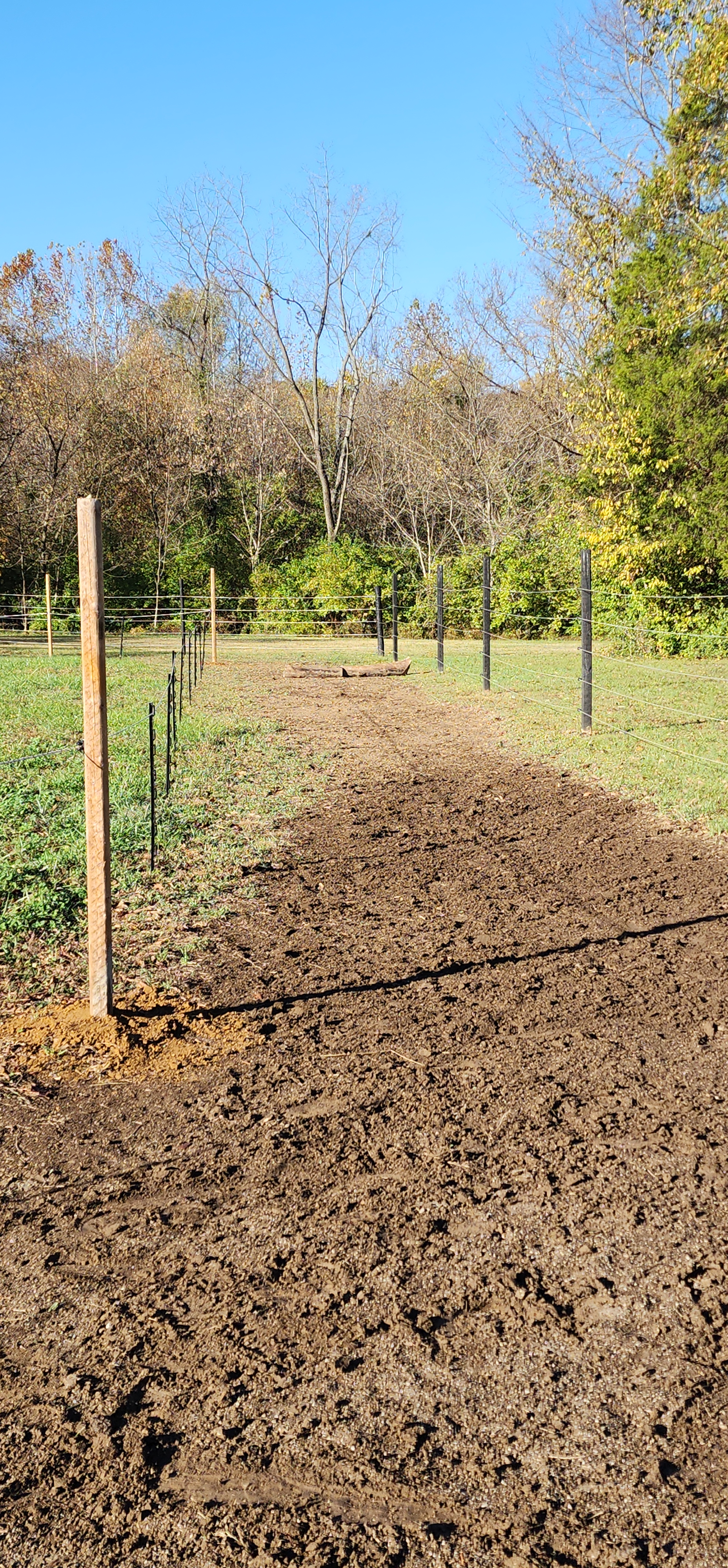
Here are some improvements including surfacing on the “front side” and a sand pit at the end of the hardatanding “square” plus some logs for them to navigate.  Next up is a scratch post going in very soon!

DIY Bit Butter

As a person who is constantly seeking knowledge and new ideas to try, I ran across “bit butter” or “mouth butter” when going down a rabbit hole about bit fitting, bit choices, and helping a horse be more comfortable in the bridle. I’m guessing since long established companies like Effol have this option, that it isn’t a new concept, but here I am just learning about it for the first time.

Also as a person who is horse poor, I obviously don’t want to spend anywhere from $12 for a measly 2 ounces on up to 20+ for 4 ounces. Instead, I just spent $50 in materials to make, well, a LOT. I’ll have bit butter for YEARS.

Bit Butter purpose/use: To moisturize the horse’s mouth, prevent rubbing of the bit, and encourage acceptance of the bit. It also helps to heal any existing dry or split areas. Basically, it’s chapstick for horses.

To use: Apply to corners of the horses mouth directly. Can also be applied to the bit where it comes in contact with the corners of the mouth.

Ingredients:

  • 2 oz Beeswax
  • 2 oz Shea or Cocoa Butter
  • 3 oz Mango Butter
  • 2 oz Jojoba Oil
  • 1.5 oz Sunflower Seed Oil
  • 1 TSP Vitamin E
  • Peppermint Essential Oil and/or Peppermint Flavoring

Notes: I chose peppermint flavoring, from the cake making section in Hobby Lobby. I also purchased the other ingredients from Hobby Lobby, because I am an impatient human and decided I was not willing to wait 2 days for Amazon prime although the same ingredients may have been cheaper there.

Directions:

Melt the Beeswax, She/Cocoa butter, Mango butter, Jojoba and Sunflower oil in a double boiler. I used a regular stock pot with a candle making pitcher. It’s aluminum with a handle, so it’s easy to pour your melted ingredients into a jar or jars. If I didn’t have the pitcher already, I’d probably have just stuck the ingredients into a jar and put it in the stock pot with some water. Then, once it’s all melted/blended, you’re already done! You could also use a microwave, heating 1 minute at a time until fully melted using a glass or ceramic container. I used a kitchen scale to measure the ingredients.

Tip: I would not personally use something I cook with to mix this up because the wax is pretty hard to get out once it’s there and honestly who has time to work that hard cleaning? I mean, as a horse person who has time to cook either, but whatever! You do you.

Once melted, add the vitamin e oil, peppermint oil/flavoring and stir. I used a wooden kebab stick that I found in the pantry, among all the other sad kebob sticks that never kebab-ed because I guess I had good intentions to make delicious kebabs that never came to fruition because, horses.

Anyway, just pour your combined ingredients into a container that will withstand high heat, I used an empty shea butter container and a glass jar. I prefer the glass jar, but who am I to throw away a perfectly good container with a lid? You can see the finished product in the picture!

Another tip: Have dogs? You can use a variation of this same recipe to make Paw Balm to moisturize their paw pads! Just leave out the peppermint flavoring. FYI peppermint essential oil is TOXIC to dogs. If you choose to add any essential oils to either the bit butter or paw balm, make sure it is safe for the animal you intend to use it on. I actually don’t hate the way my hands feel after using it on my dog, and all ingredients are human safe so if you want to use it as a heavy duty hand cream, by all means go for it.

Attitude and Personality

Is a horse born with a certain attitude/personality? Do people shape it? Can it change over time, and/or due to environment? Yes, Yes, and YES.

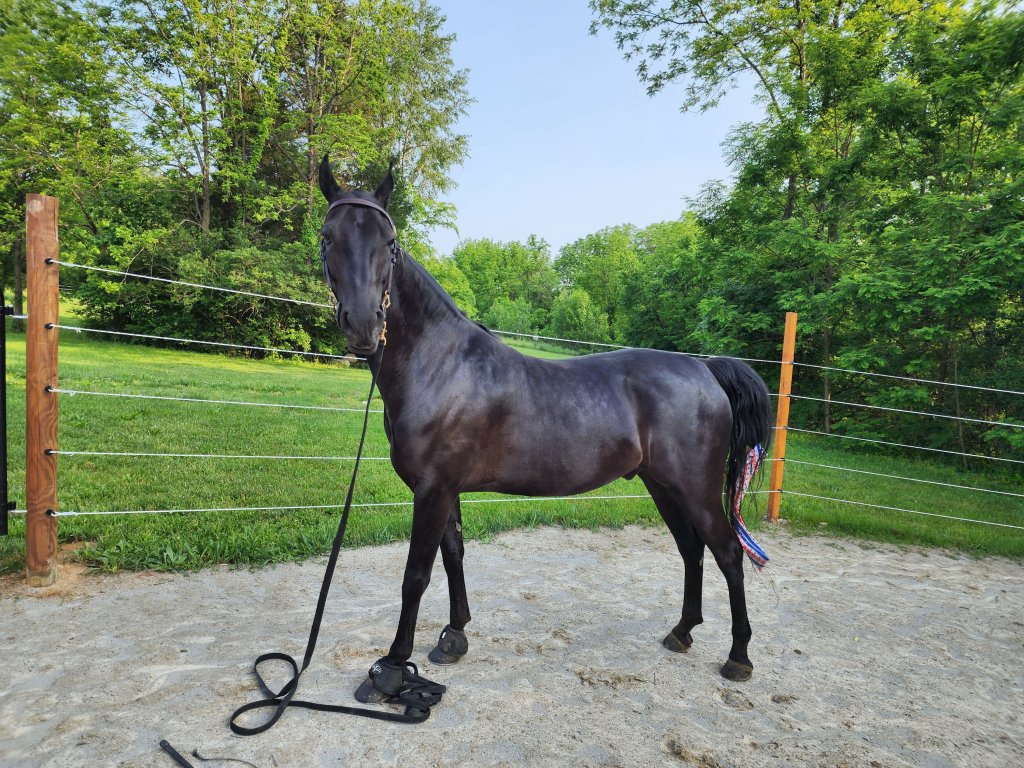
How do I know this? This face is how.

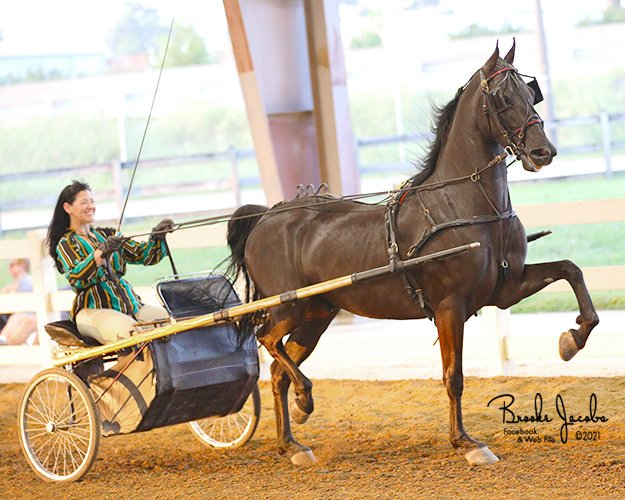
When I first met this horse (~2018) he was a fiery 3 year old who someone told the owner prior to me “how are you going to stay on that thing?” when she bought him. He would pin his ears and turn his butt to you if you walked in his stall. His personality was, well, hateful dragon-esque? As someone who likes a friendly horse with a lot of personality (Ahem:FIZZ) I didn’t pay this horse a lot of attention for several years. Fast forward to late 2020, when I was asked by his trainer at the time to show him in his debut driving class. I tend to never turn down a fun opportunity to show, so I agreed. I fell in love with this horse that day, but I didn’t even know it. He was a BLAST to show-hit the show ring and turned ALL show horse, and I remember thinking “OH SHIT” because I was completely unprepared for that switch flip as soon as we hit the show ring gate. It was like he KNEW. Over the next year, I continued to show him for his previous owner and we had a lot of fun in the ring together-he earned my trust as a solid driving horse. But still, his personality… He had come a ways from hateful dragon through the care and attention of his trainer during that time, but he still wasn’t super friendly. He was just indifferent, and so was I.

His trainer at the time was just SURE he was coming to live with me, and I kept saying no. I said no to this horse so many times. I refused to believe he was what I needed. Then, his previous owner called me and begged me to take him, and it was either that or probably lose him for good so I agreed. Summer of 2022, he and Fizz came to live with me.

Those of you who know Fizz, know he’s always been full of personality. He’s as friendly and kind as they come (as long as you follow his rules) and he never meets a stranger. That is what made me bring Fizz home, even though he wasn’t what we expected when we got to Alabama. He walked up to us, curious and interested, ears up and happy to meet us. Those are the things I love about him, but since I’ve had him for so long and he has always been that way, I didn’t know how I was going to adjust to having a horse who was just indifferent to people. Regardless, since I was taking him, I vowed to love Duke anyway for who he was. For the first 6 months he was here, I wouldn’t clean his stall with him in it. I wouldn’t go into his stall to fill his hay with him in there. I was very careful around him because he’d nip you if you weren’t watching and he would kick at you over any kind food.

I vowed to love him, and love him I have (and do), despite the challenges along the way. I forced my love on him-didn’t give him a choice. I groomed him and scratched him and spent time with him without expectation and low and behold, a personality started to form. A bond. TRUST between us. He was given to me with warnings, and I heeded them, until I didn’t need to anymore. Over the last year, he’s totally turned around and now has personality for DAYS. In some ways, he’s got an even bigger personality than Fizz does now. He’s still not super friendly to just anyone, but he believes in me now, and I believe in him-and it shows. Is he perfect? No. Do we still have bad days? Yes. Doesn’t everyone though?

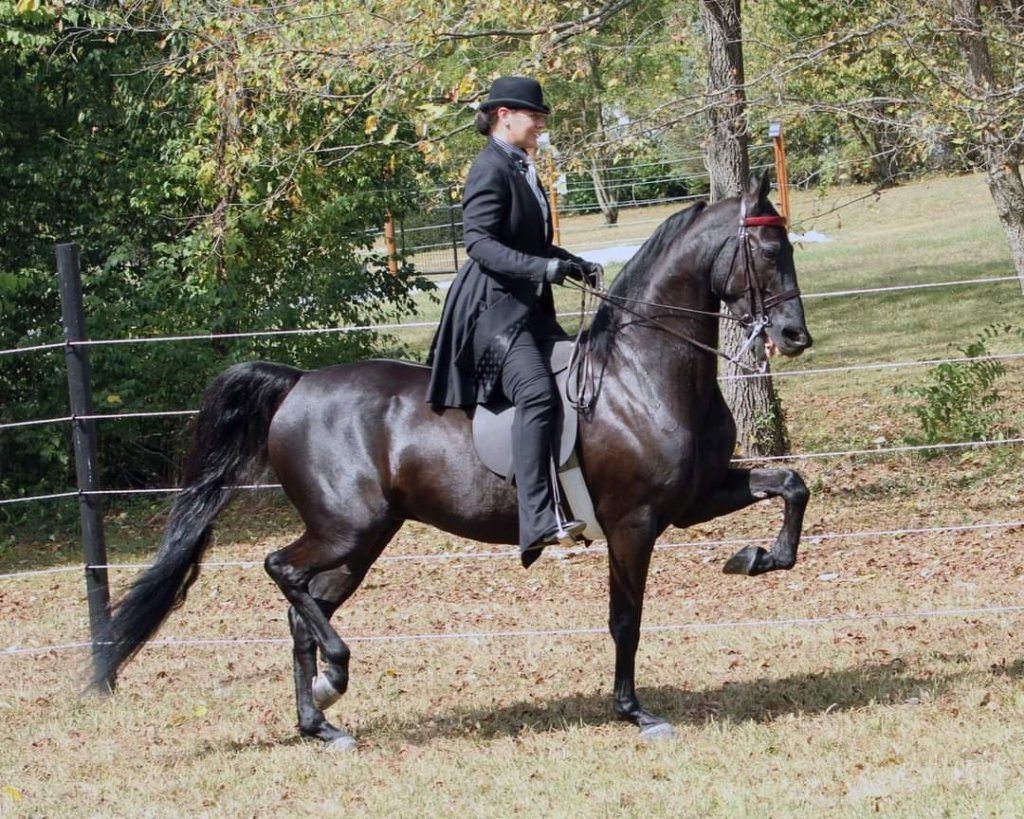
So can horses personalities change? Yes, they can. They can change from completely shut down to incredibly goofy and fun. Duke did. Also to note, I have taken this “wild useless beast” to shows in harness and under saddle, we’ve been trail riding on some fairly difficult trails, I’ve ridden him bareback, ridden him in a halter, played with him at liberty, all the things people think “crazy saddlebreds” can’t do. I can’t speak for ALL saddlebreds, but MINE, they do it all and they mostly do it without complaint. For who they are and who they aren’t, I’ll love them to the ends of the earth anyway and they’ll live with me until the day they leave this earth, hopefully many MANY years from now.

Don’t Tell Us We Can’t

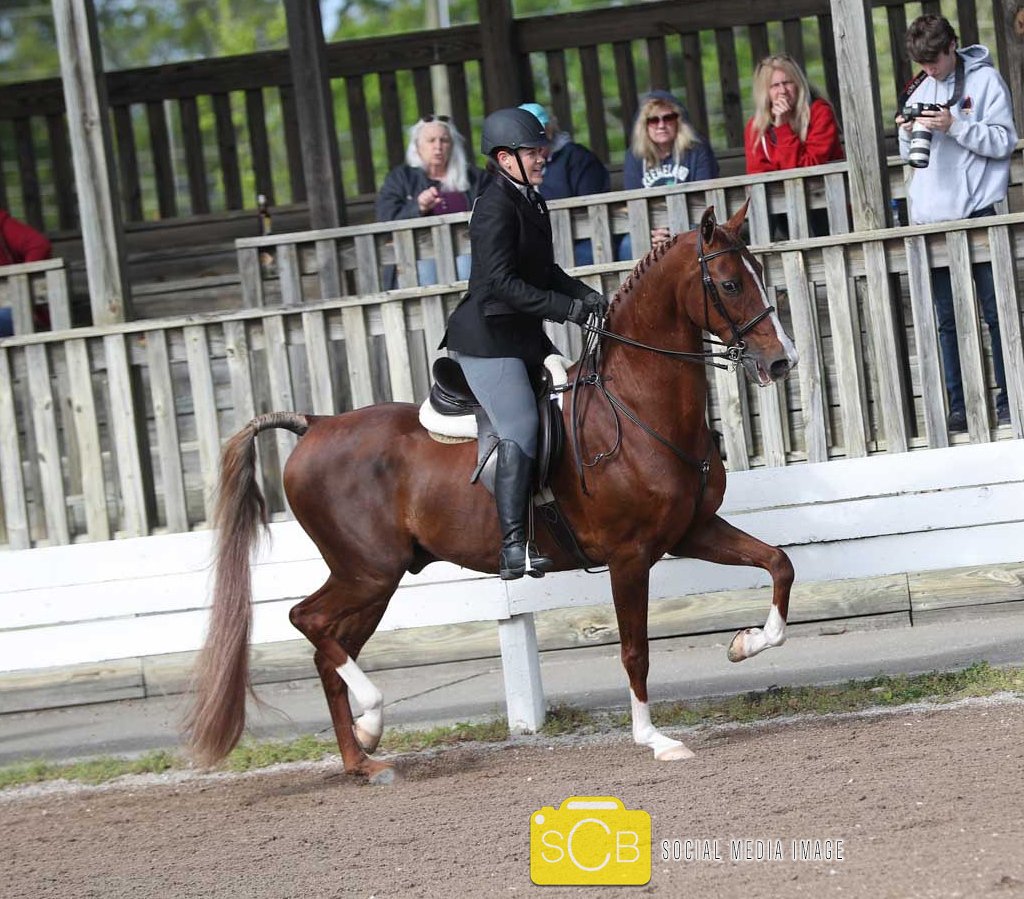
I’m not sure who is more stubborn, me, or the horses. I have heard so many “you can’t” do this or that with show horses, with my horses specifically, etc. You can’t turn them out during show season, you can’t work them twice a day, you can’t get on from the correct side or from a mounting block (Duke), you can’t ride him bareback, you can’t ride him just in a halter, you can’t run barrels, you can’t trail ride show horses, especially saddlebreds, they’re too spooky. Excuse me, what? No. We can do anything we want. Don’t tempt me with a good time trying (even if we fail). Which we won’t. Because we’re awesome. And we’re too stubborn to stop trying until we figure it out. Saddlebreds are smart, resilient, brave, and versatile. Despite what people think, they ARE multi purpose. At least mine are. I don’t really give them a choice not to be. 

Many years ago when Fizz first came into my life, I was determined to give him a well rounded education. What I didn’t know is that I would be educating myself along the way. Over the years, I have learned many things outside of the saddleseat background that I grew up in. The key is to take knowledge from any and all places, no matter if you agree or disagree or like or dislike the discipline. There are principles of training in literally every discipline that you can use to make your horse better. Contrary to popular belief, I don’t believe that teaching them things outside of their intended use is going to make them less good at their primary job. 

From saddleseat to dressage, to jumping, to reining, to barrels, to trail riding and everything in between, there’s something in each and every one that can help build your horse. I do the same exact job every working day and it makes me bored as all hell. What makes us think our horses don’t like variety? I know from my experience the happiest my horses are, is when they aren’t asked to do the exact same things every single day. The least happy they are (or at least Fizz was) is when I was doing the same thing day in and day out hoping to make a saddleseat horse out of him in the very beginning. That is all I knew. The best thing I ever did for him and for me is to open my eyes and learn. Most importantly, HAVE FUN.

Am I saying you have to trail ride if you don’t want to? No. Am I saying you have to take lessons in dressage? No. Am I saying you should run out and set up jumps and jump them? Absolutely not. But certainly don’t discount the training principles of the disciplines other than yours and give some solid thought to the ideas behind them, how they can help your horse(s). You have the option to try, and if you don’t like it or it doesn’t seem to work well for you, the beauty of life is that you can choose to discontinue doing something whenever you want. True that consistency and repetition is how horses learn, but once the basics are covered I am a FIRM believer in that horses adapt very easily to different things. The consistency comes in your handling. You keep your contact the same in their mouth, your cues stay the same no matter what job they are doing, you have the same basic rules and they can adapt to any task at hand. It’s OK for them to question it but at the end of the day, they should rely on you and trust you to support them in the same ways you always do and they can overcome any obstacle.  

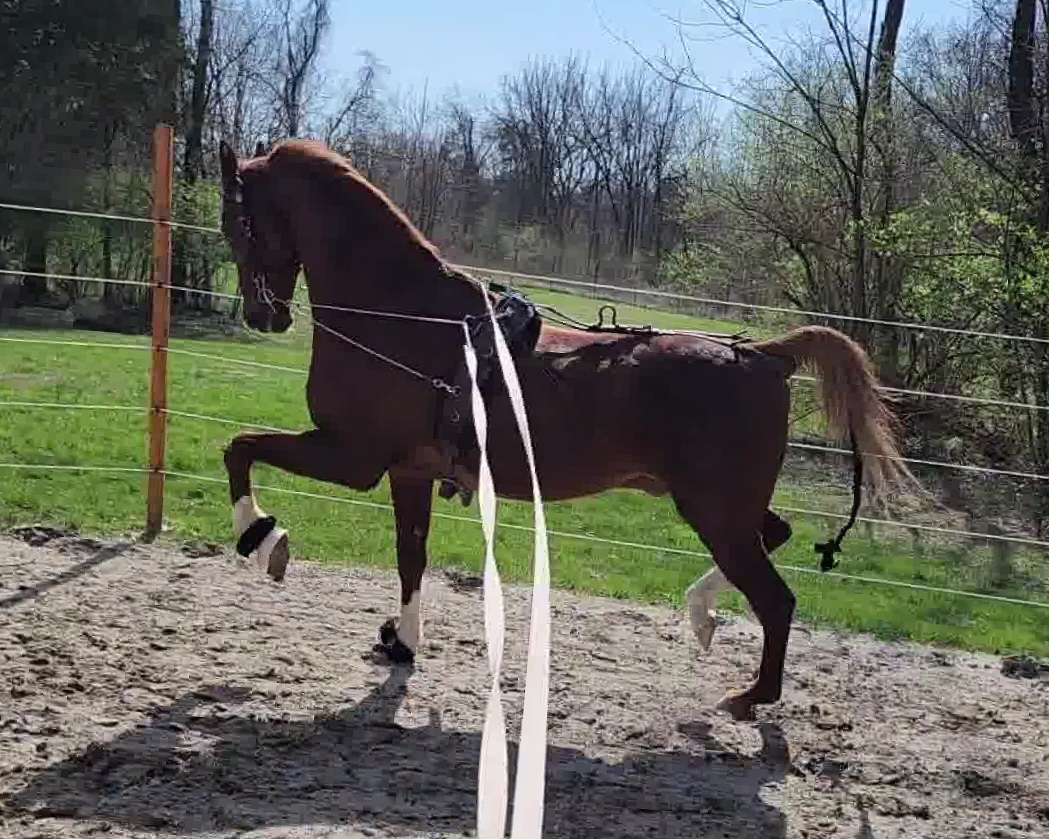
Enjoy these photos of the boys doing many different things. SUCCESSFULLY. 

Mane-ly Long – A Product Review

I will start this like most of my reviews.  I am not in any way affiliated with or compensated by this company (or any other companies I review) for saying the things I say. 

I follow a group on Facebook that pertains to grooming horses, show prep, coat, mane, and tail maintenance, etc.  There are a lot of folks on there with feathered breeds, who have long, thick manes and tails and I have seen them recommend this product many times.  I’ve seen their before and after photos.  And for a while wondered, “how could this product help my boys?” 

Fizz struggles with growing his tail.  I have owned him for over 10 years and his tail has barely gotten longer than it was when he was 4.  And he hopelessly rubs it, so his tail “feathers” are just… Sad.  I made my first order directly from the Mane-ly long website on Sept 4.  It came pretty quickly.  I only ordered small versions of their shampoo, conditioner, and polisher/detangler to get me started and try it out.  The stuff is pretty expensive after all, and I wasn’t sure how well I would like it or if it would work any better than anything else I’ve ever tried.

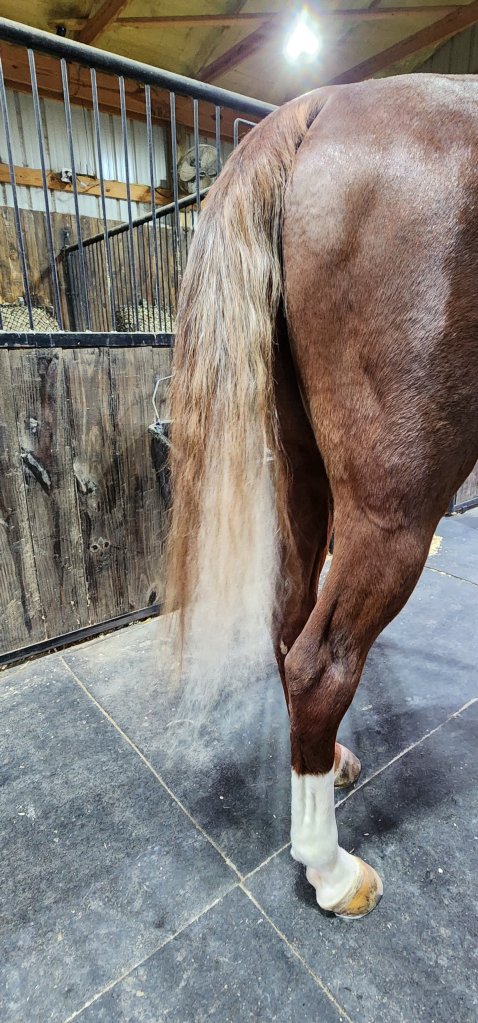
Day 1: Here is what Fizz’s tail looked like.  sorry I don’t have better photos, I didn’t really think I’d be writing a review.

I have since washed, conditioned, and detangled it twice.  Every few days, I rub in the “shock” treatment, which is a half and half mix of the conditioner and detangler/polisher. 

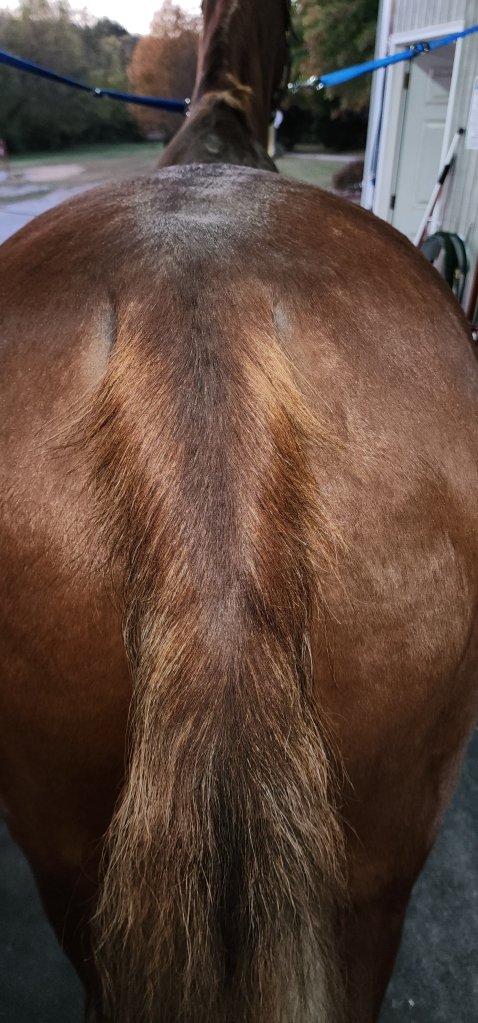
After using this product for the last 2-ish months, here is what his tail looked like on 10/20/23.  I have done nothing different aside from using Mane-ly long products in it.  It appears longer and thicker, and while he does still rub it here and there, he is not viciously rubbing it at every opportunity he gets.  I assume this is because the conditioner keeps it from being dry, so it’s less itchy? When he does rub it, the hairs don’t seem to break off nearly as bad. They ARE growing. Slowly but surely. And I consider that a win.

Over the summer (and I don’t have photos of this unfortunately) the top of his tailbone was almost rubbed raw he was rubbing so bad. The feathers on the tops and sides of his tail looked like I had shaved them. I wish I had taken photos of that!

I’m also using the products on Duke, who has a long, thick, pretty nice tail. I braid and bag Dukes tail, but he swats at flies and wrings his tail like he’s a dang helicopter about to take off. I was struggling to keep it unmatted at the top portion between the tail bone and where the braid starts. I spent so much time picking through it with other sticky detanglers with not a lot of success. The manely detangler is not super sticky, it seems to soak into the hair, and it works. I use the “shock” about every 3-4 days (about a quarter size drop, a little goes a long way) and so far, it’s kept it unmatted!

I’ll continue to take and post photos of the progress and post them here when I can, but so far, I am pretty impressed with these products. Expensive, yes. But they are working for us. And a bonus, his tail always smells really nice.