DIY

Old Pleasure Cart Seat Revival!

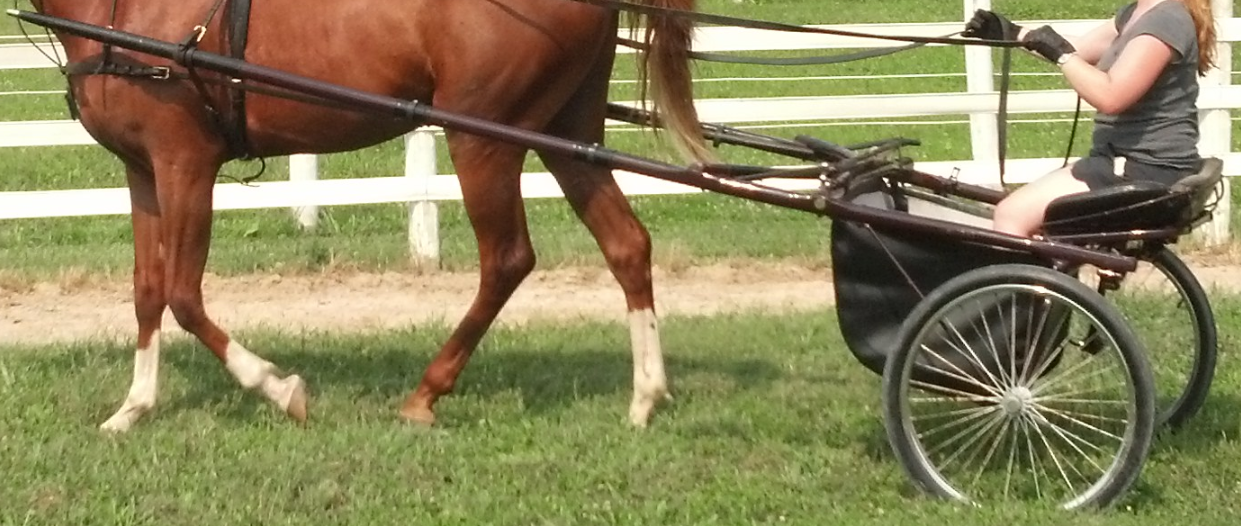
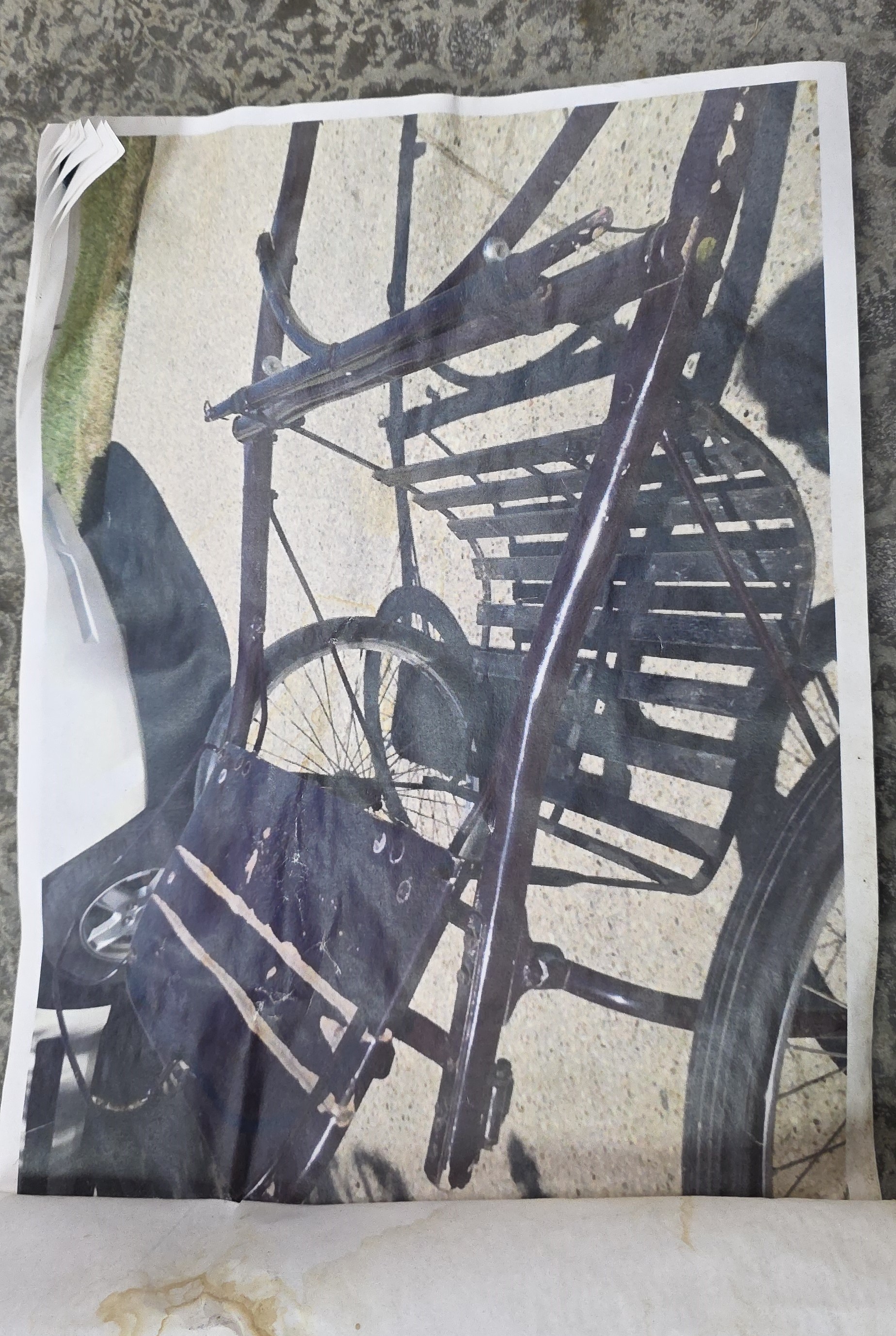
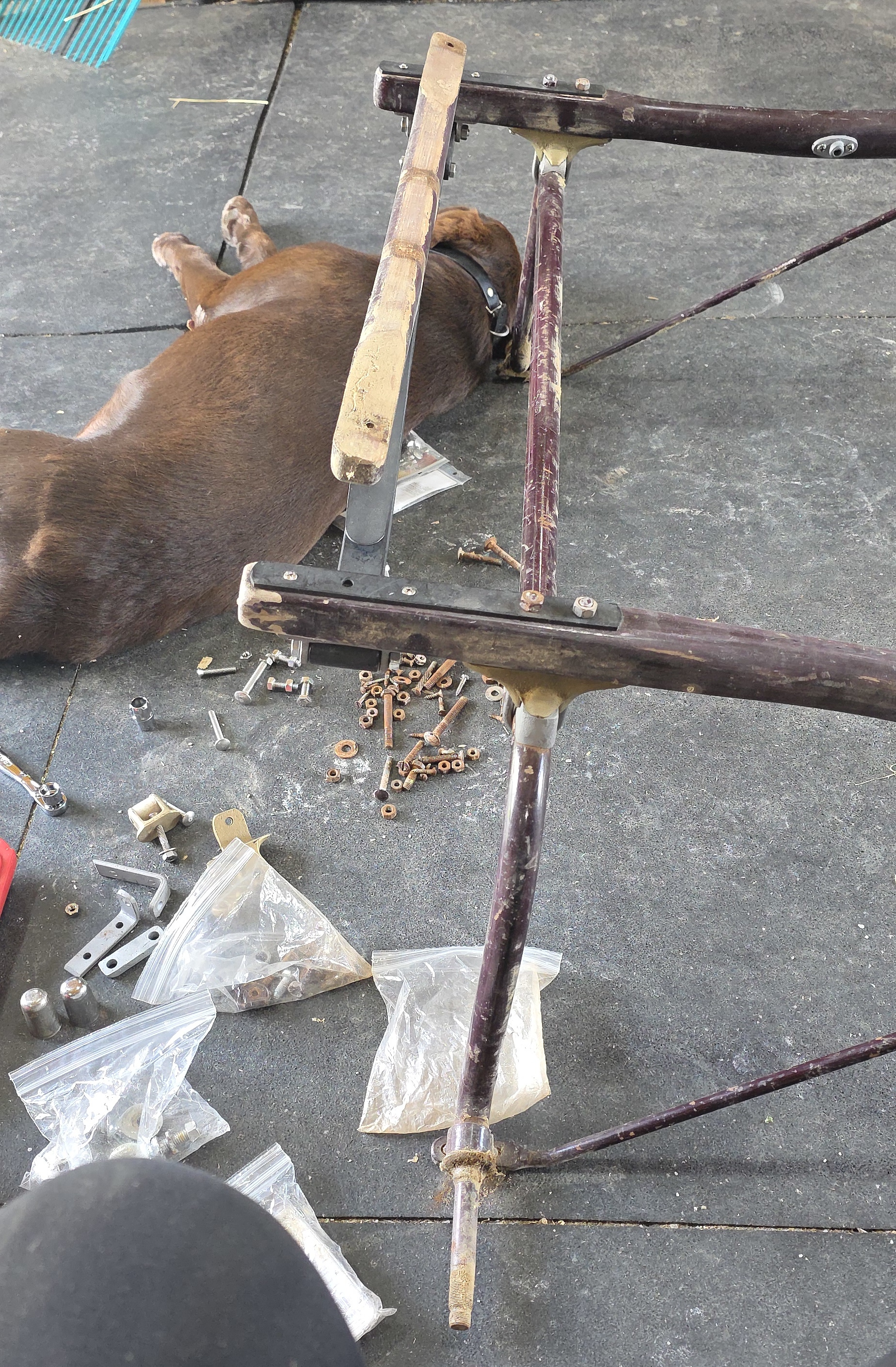
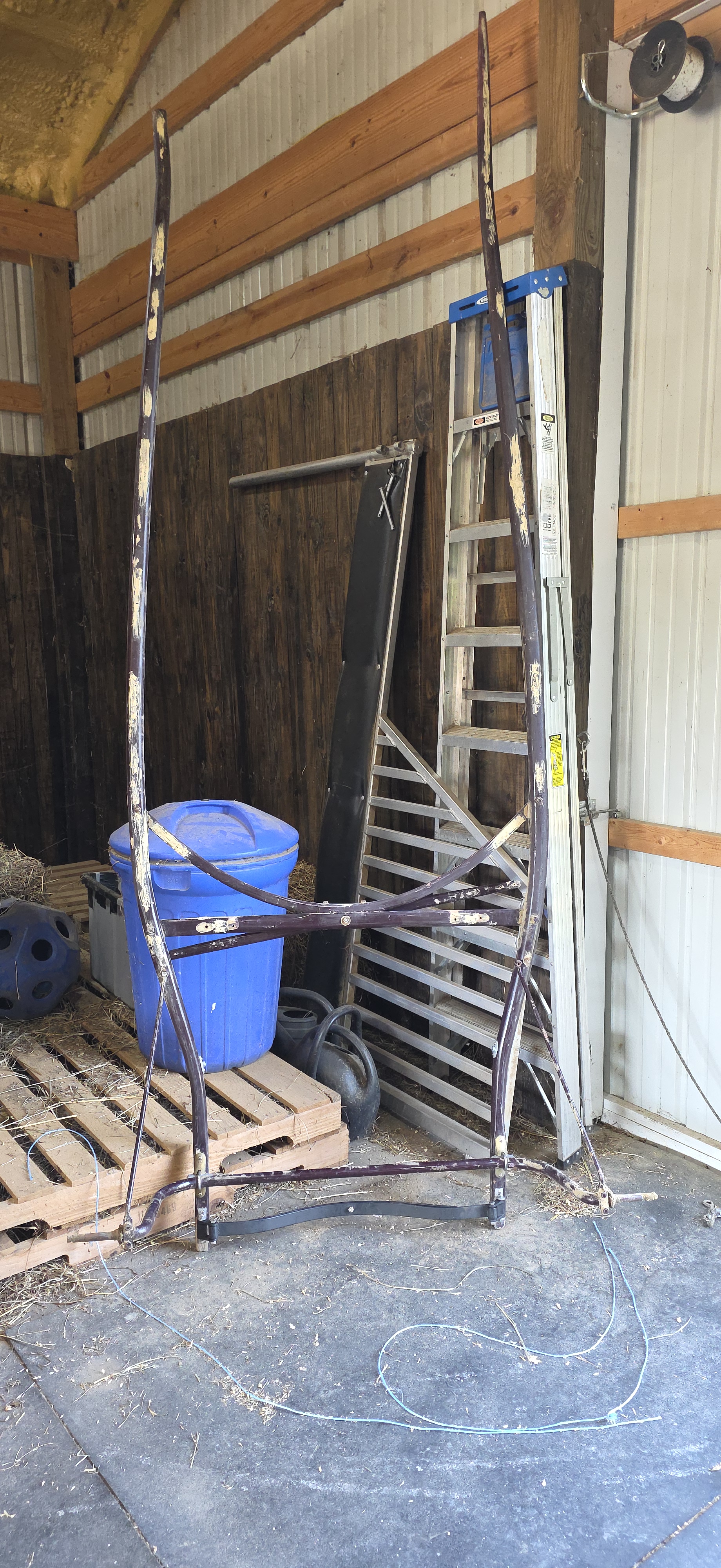
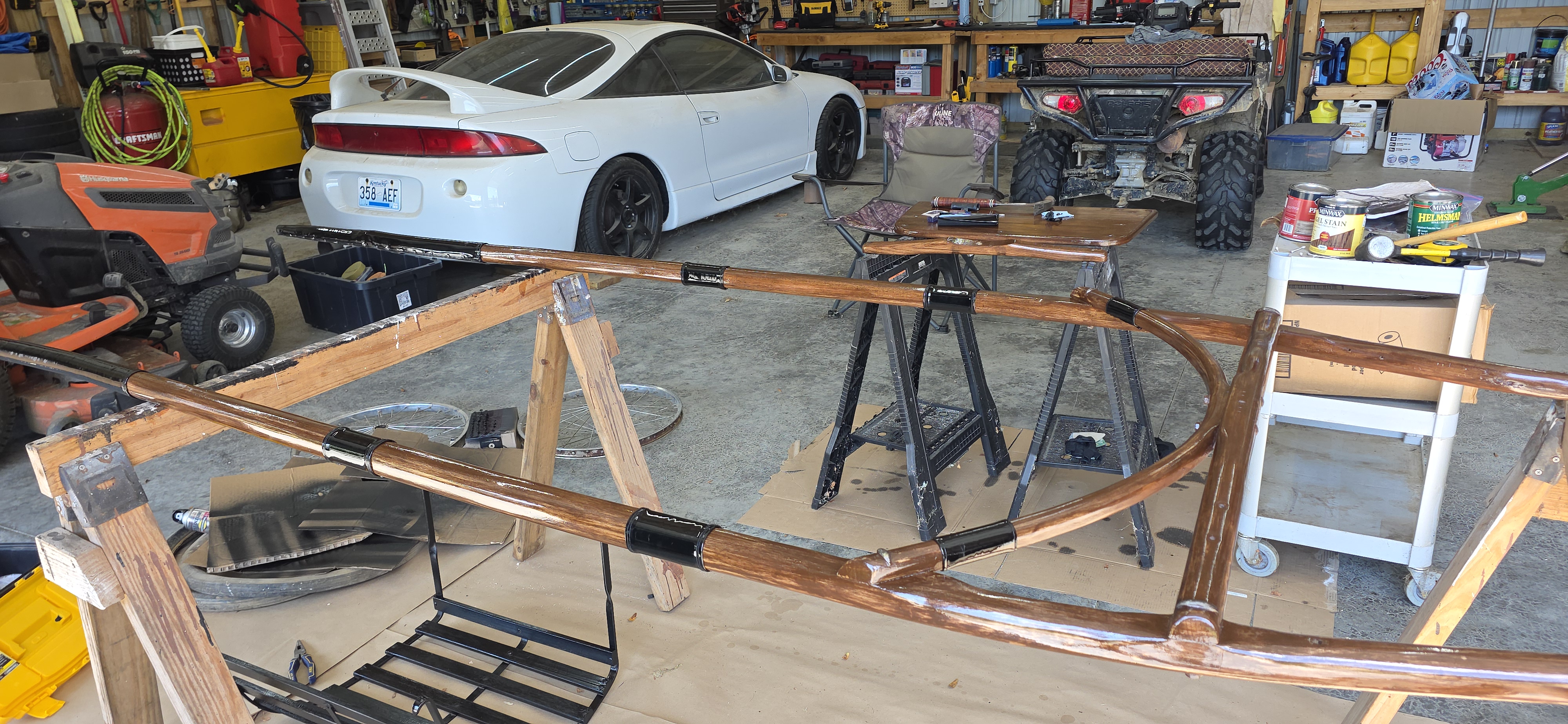
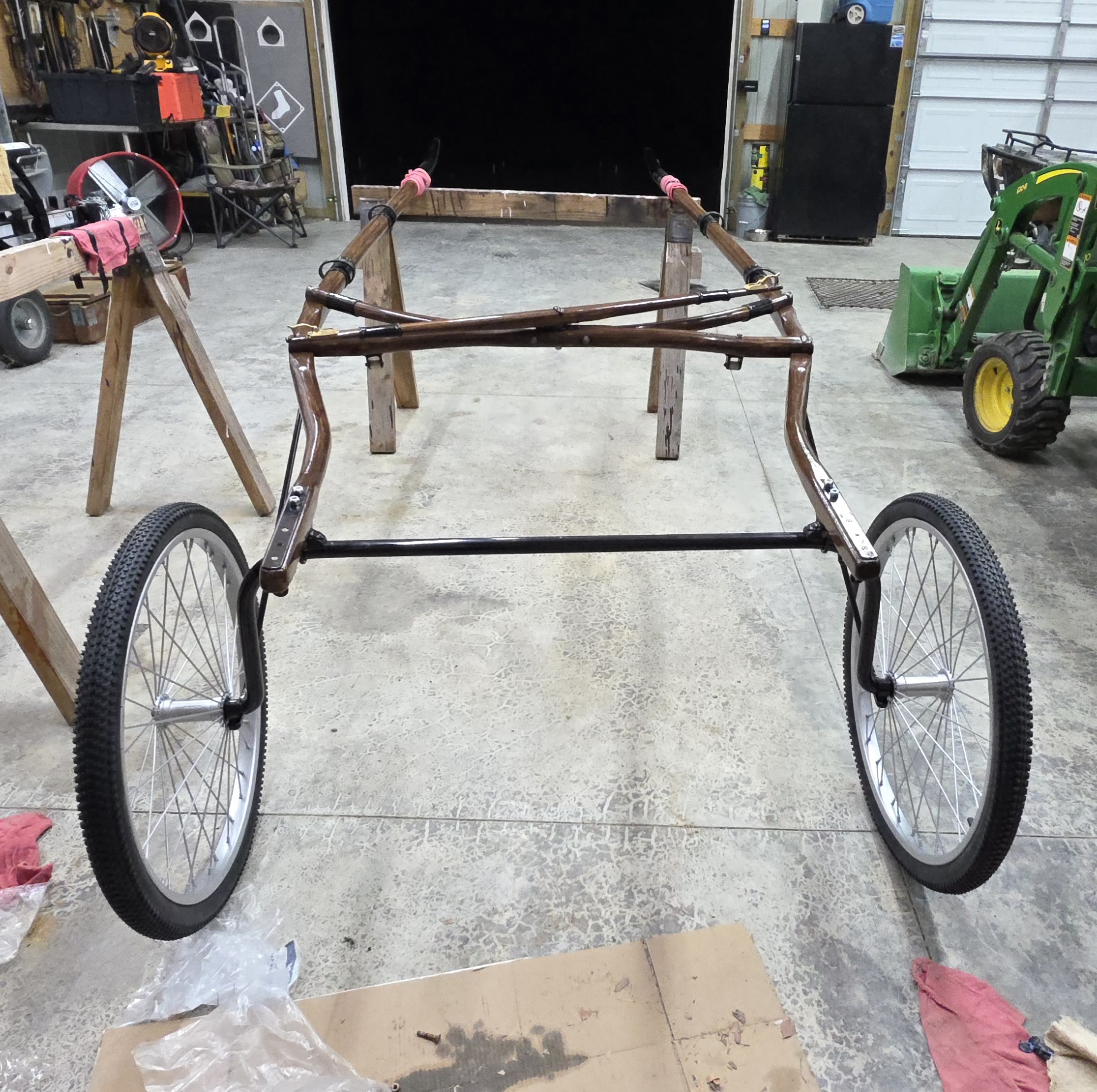
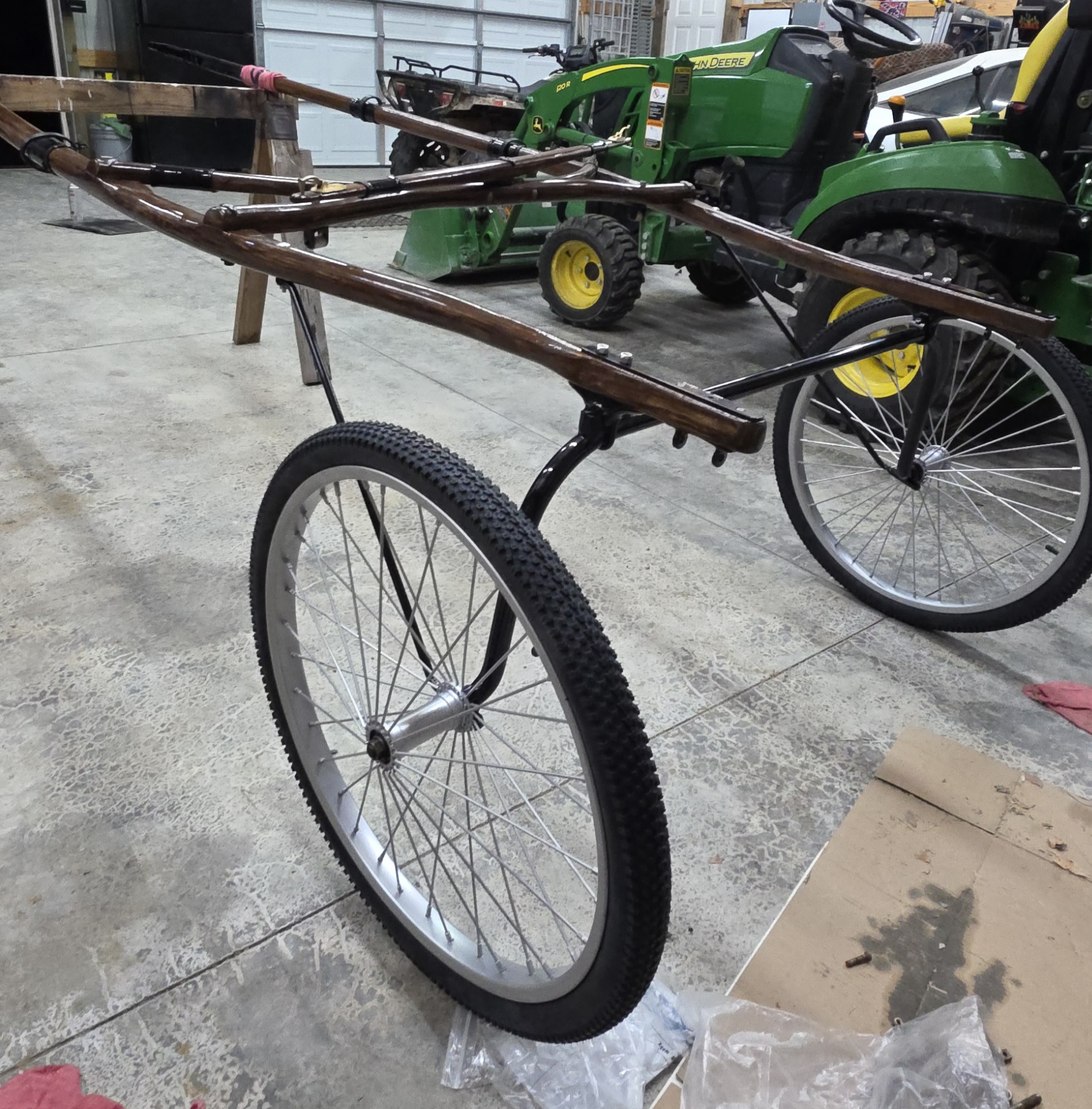
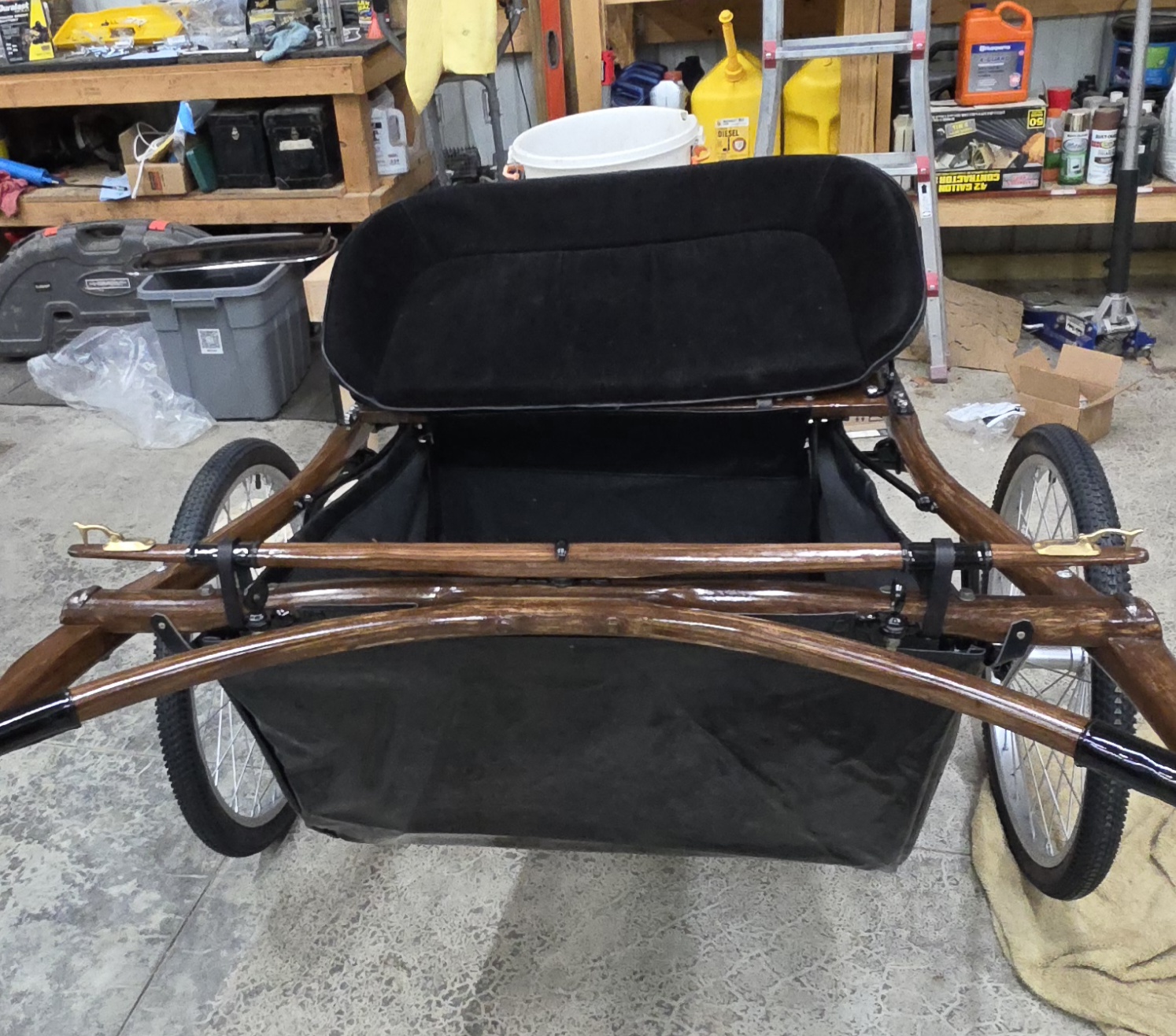
I am working on refinishing an entire pleasure driving cart. I’m working on a post to cover that through to completion (which, who knows when that will actually be), but there are a few projects within I want to document separately. Here’s the first (and easiest) one: The seat. It makes me really happy to have spent $9 on a bottle of dye instead of $250 on a new seat! Saving where I can gives me more room to purchase the things that I really do need.

First off, the seat is actually in pretty nice shape. No splits in the material and no major flaws to the leather. The snaps and snap straps are still intact and there are no tears anywhere. It was just faded and a little dingy looking, not new looking. What should I expect for a seat that is likely 20 years old give or take. I don’t know what kind of material this thing is made of, some kind of velvety something or another, but I chose a suede shoe dye to bring it back to life.

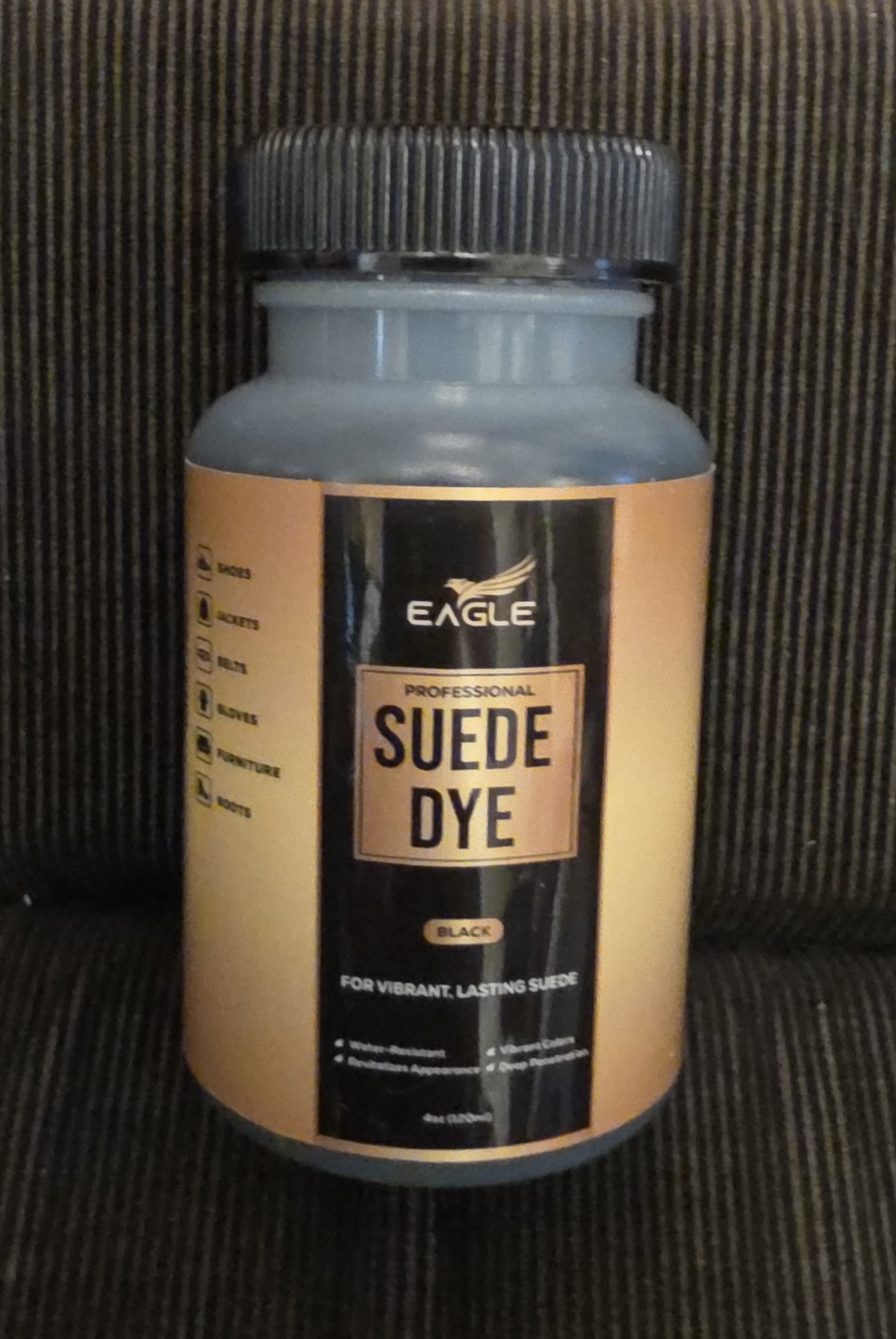
The kind I purchased is shown below and the lid came with a little dobber applicator attached to it so it was really easy to just paint the dye on. First, I sprayed the dust off the seat with the air compressor. Then just went to town with the dye, and left it to sit for a few hours to dry. SUPER easy! I love little projects with BIG results. The photos speak for themselves.

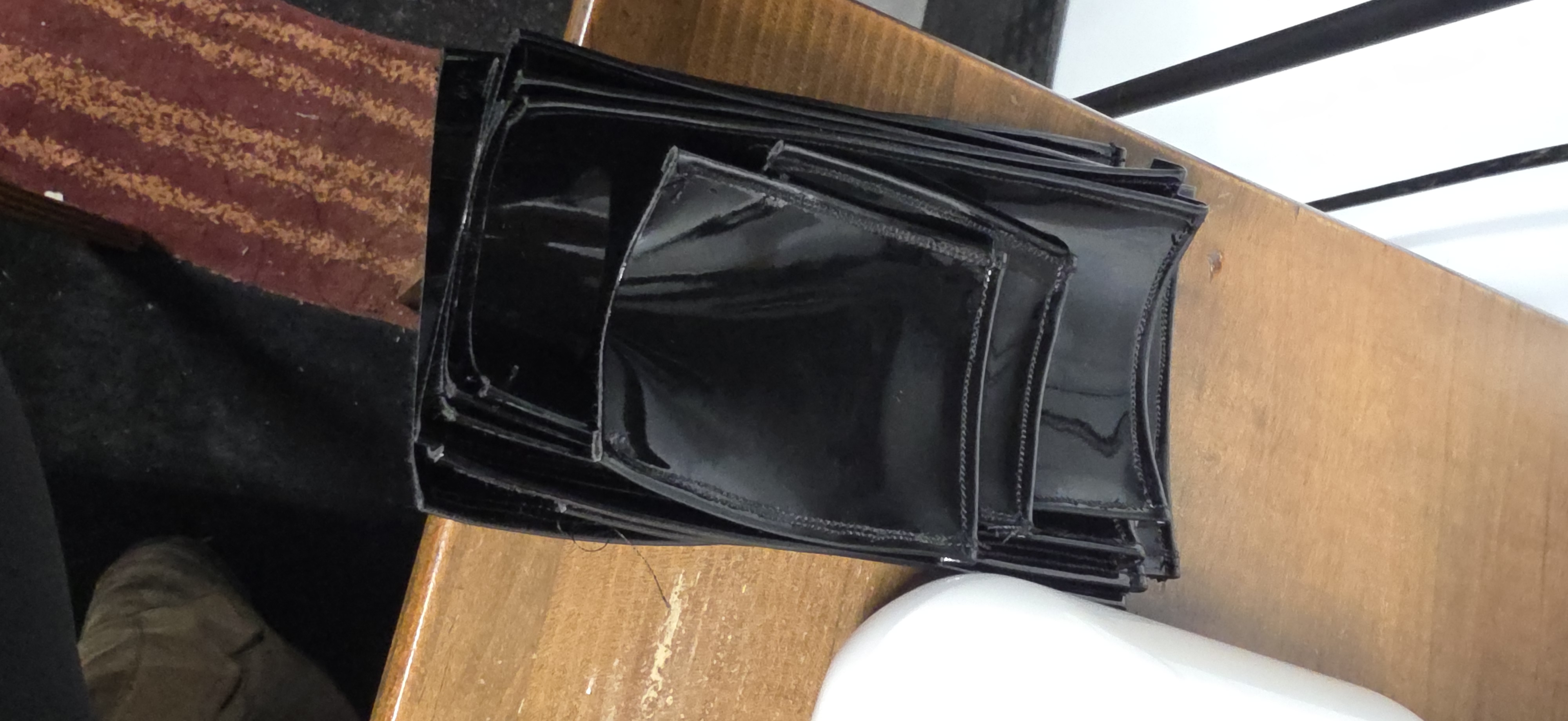
This is the seat BEFORE.
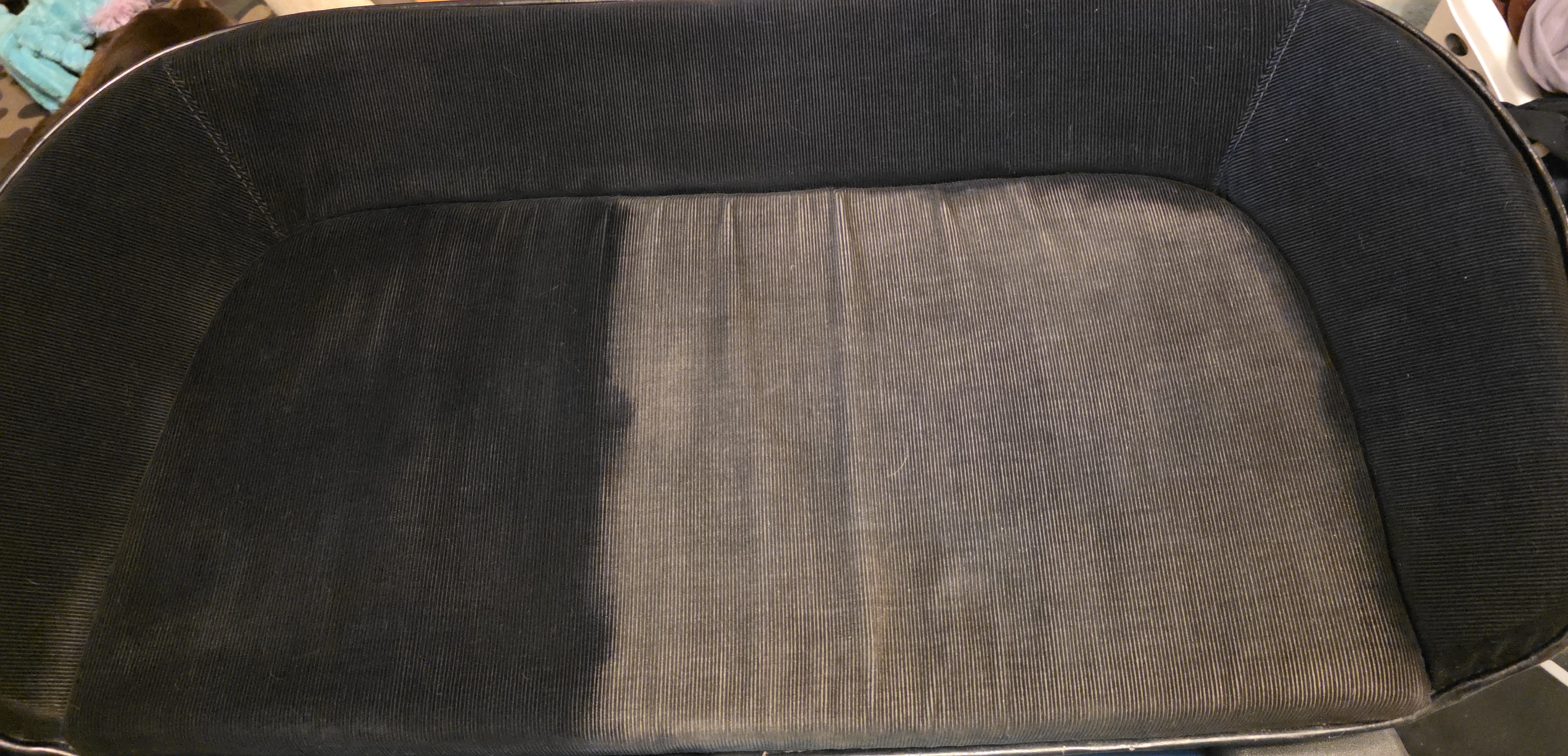
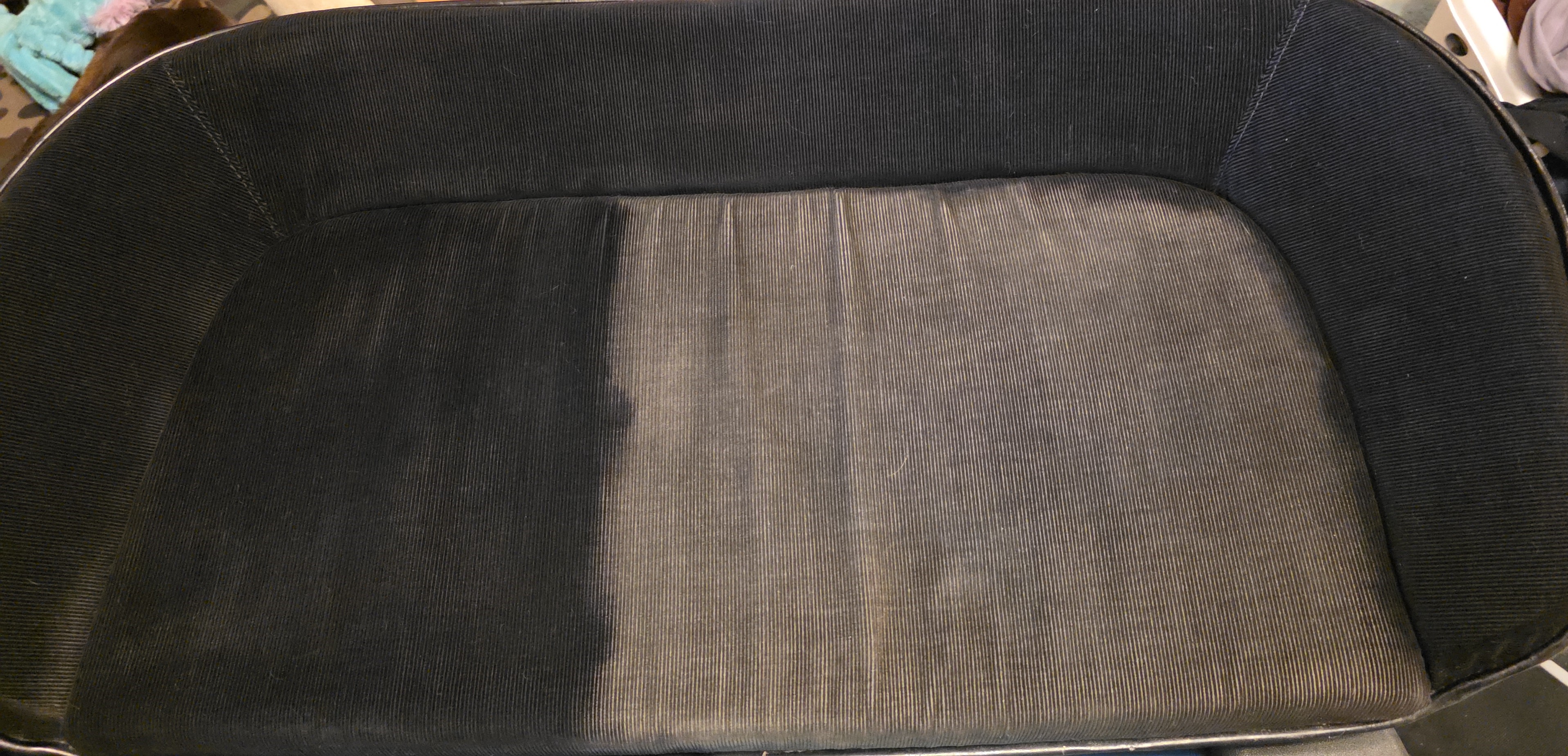
During the dye process. I swear it didn’t look THAT faded just looking at it before, but wow what a difference!
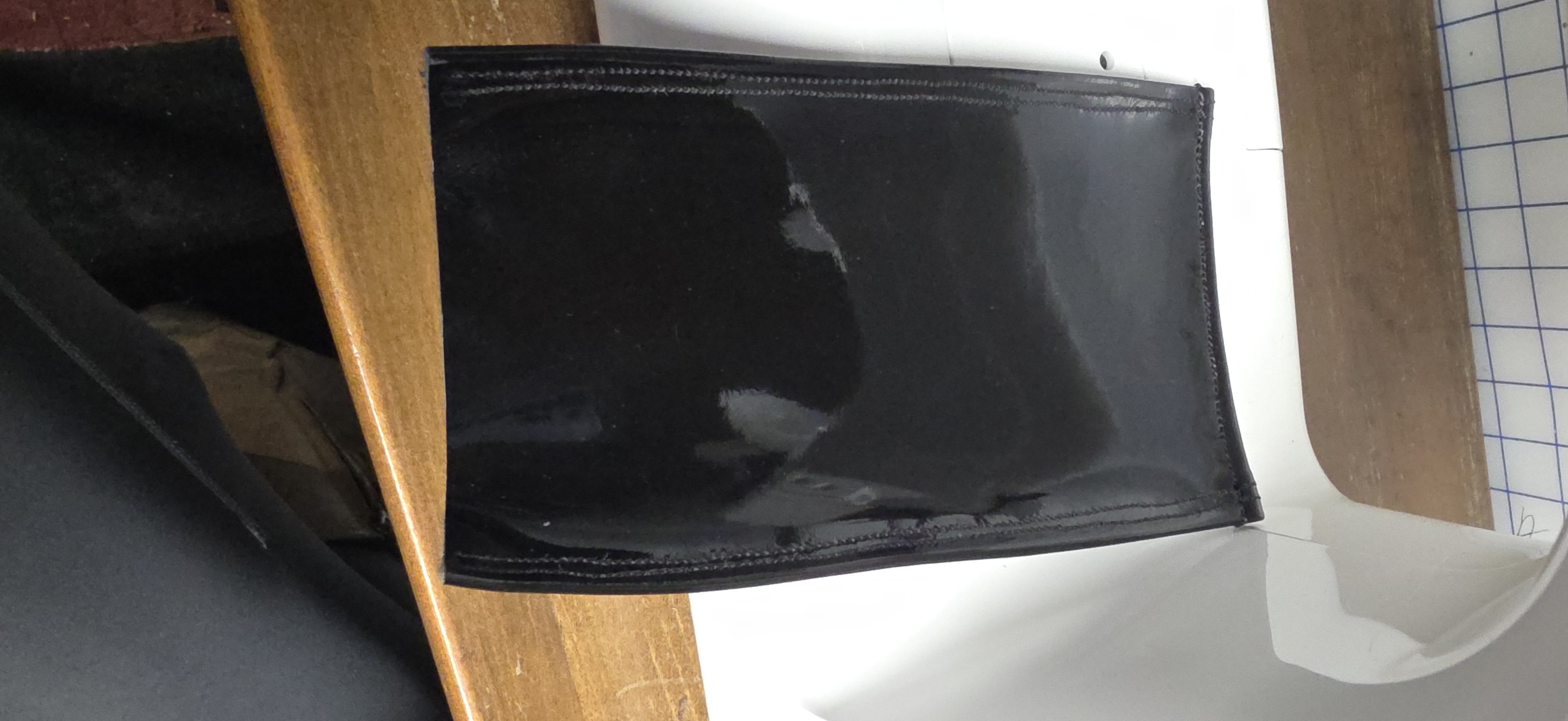
Finished product!

A side by side of the before/after

DIY Insulated Water Trough

I very much dislike being cold. I do not appreciate cold weather, below freezing temperatures, snow, or anything related to winter time. As such, I needed a solution to the frozen water trough debacle I dealt with all last winter. I was miserable. The horses weren’t drinking as much since the water was so cold, which we all know isn’t ideal. It was just not fun for anyone. The pasture is about 200 feet from the barn, so running extension cords for a tank heater isn’t really safe and we don’t have the budget to install electric for trough heaters all the way down there. In an ideal world where we had endless money, we would have automatic heated waterers, but we don’t have a money tree so we needed an option that didn’t require running water lines and/or electric or both to the pastures.

So, this summer I asked my husband to help me build an insulated water trough. Bless the horse husbands/partners in this world who didn’t ask for these creatures but still do things for them anyway. He got to building straight away. And let’s be honest here, he didn’t HELP me built it. He built it. I stood there “supervising” and probably making things more complicated than they needed to be. But like, I put most of the insulation in it and painted it, so I was kinda sorta helpful. Anyway, the box was finished and put out about a week before the temps went down below freezing and bless it, IT WORKS.

I know there are a zillion different things out there on how to build these things so feel free to google if you ended up here somehow and think our design sucks. In typical fashion, we didn’t look at or follow any tutorial or other design because we were working mostly with free/cheap materials we had on hand and didn’t have to buy. The horses eat all our money, so we have to make due, OK? Is it kinda ugly, yeah, but does it work? Also yeah. So there you have it. Do with that what you wish.

Materials:

  • Water Trough (we used a 50 gallon one)
  • 2×4’s
  • Plywood
  • 1 4×8 piece of 2 inch Foam Board Insulation
  • Bubble insulation
  • Construction adhesive
  • 2 Handles
  • Screws
  • Waterproof caulk
  • Outdoor paint

The box was framed out and covered with bubble insulation, then the sides and bottom were put on over that. My husband gets bubble insulation free from his place of employment, so we had plenty on hand. He brought home a metric ton of it when we were finishing the barn and we never used it all. Since we didn’t have to buy it, why not use it? A little extra can’t hurt, right?

Once the sides were on, the foam insulation was cut and placed in the sides and the last piece reserved for the top of the box. We stuffed bubble insulation in all the crevices on the bottom (in between the ” support joists” at the bottom of the box that the trough sits up on so it isn’t directly on the ground) to fill the space. Then we did another layer of bubble insulation all around the inside. I painted the wood with outdoor paint to try to help it last longer out in the elements. We did not use treated wood. While you certainly can, we can get free untreated 2×4’s and sometimes free plywood, so it’s more cost effective for us to use what we can get for free instead of purchasing treated wood.

Once that was complete, we used construction adhesive to glue the foam board to the top of the box. The next step was to cut the “watering hole” for the horses to access the water. We used a plastic tote bin as a template and a skill saw to cut the hole. Once that was done, the hole piece was attached to a slightly larger piece of scrap wood so the lid could be lifted on/off when the horses are in/out of the field. The corners were all caulked with waterproof outdoor caulk as an added barrier from the elements. Probably not necessary, but we had it laying around and my husband likes using his fancy battery powered caulk gun so he went to town.

I wish I had taken more “in process” photos now, but I didn’t so here’s what I do have!

Below is what it looked like “in process”. (Note the top wasn’t screwed on at this point and the trough was not inside the box yet)

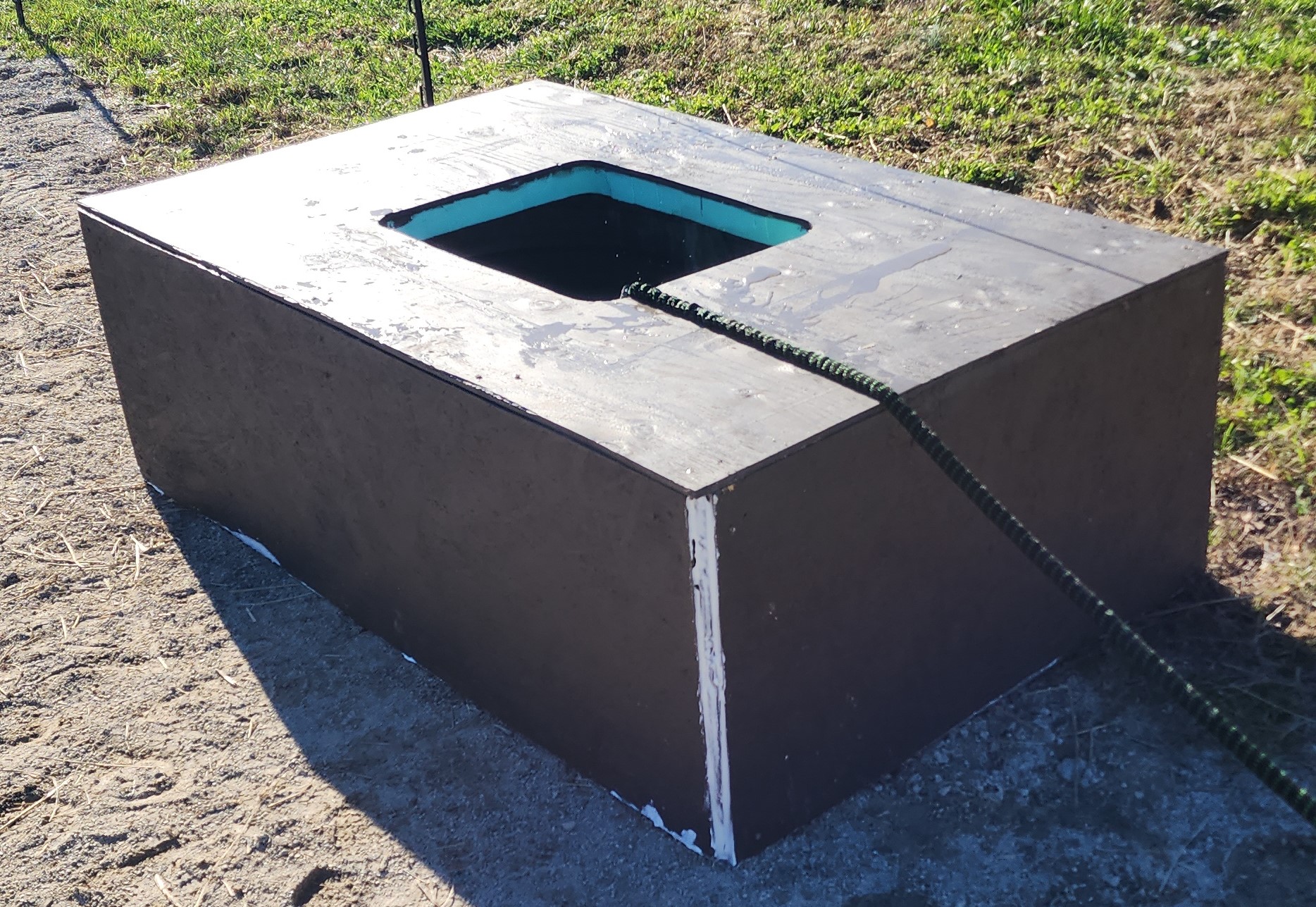
It’s being filled up for use!!

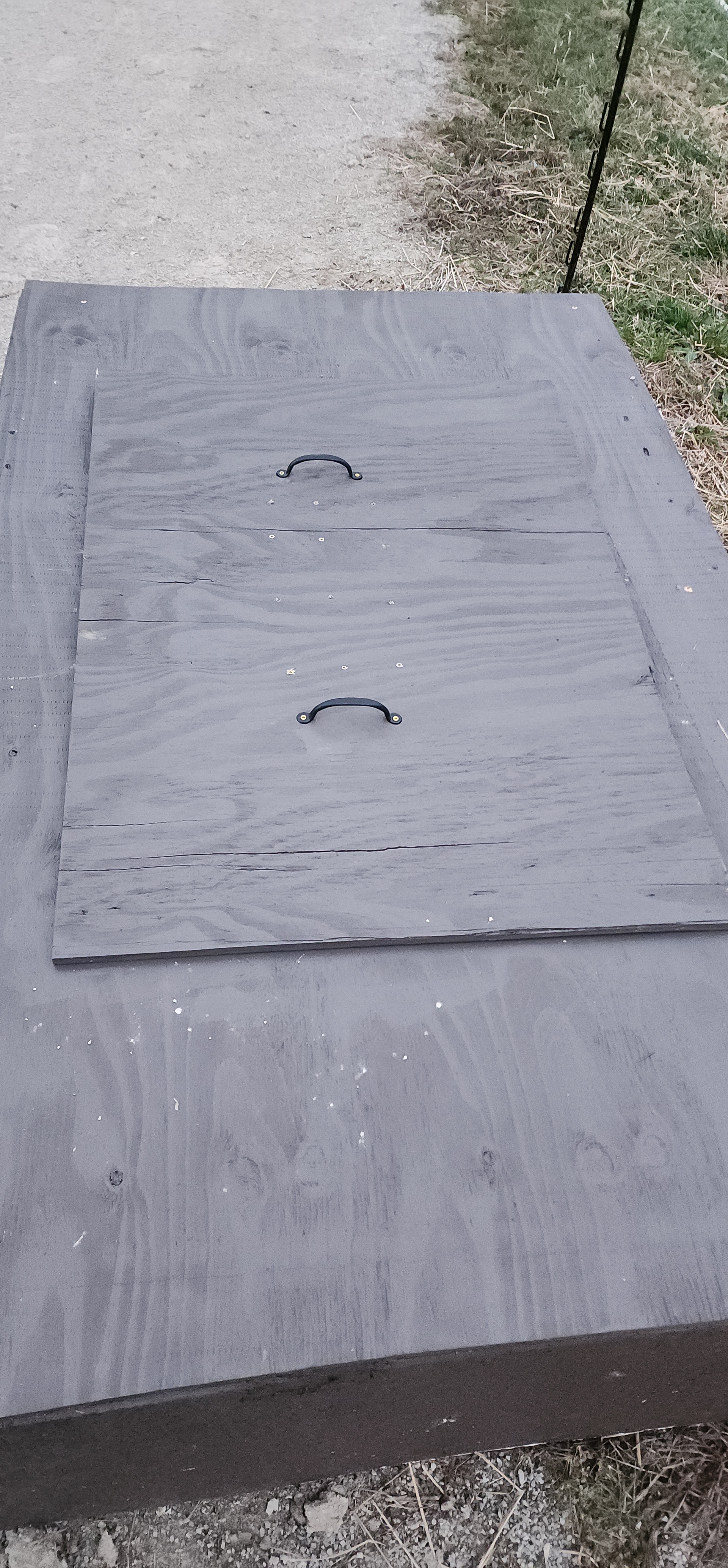
Here’s what the lid for the water hole looks like installed.

And this is what the lid looks like underneath when taken off. Just a tip: Don’t leave it where horses can get to it, they might try to eat it. At least these turds did.

For the last 2 weeks we have had lows in the upper teens and lower 20’s at night. The last several days, it hasn’t gotten above freezing. Since the horses are not outside at night, I put the lid on the box once I bring them in and take it off when I turn them out the next morning. There has not been any morning so far where there was any ice at all on the water when the lid was removed! Last year, I would have for sure been out there with a sledgehammer already busting ice. This right here might be one of the best projects we have done so far!!

I am interested to see if it will help with Algae growth in the summer, as this thing is too big and awkward to keep moving around. It’s here to stay, until it falls apart, then I guess we will build another one!

DIY Bit Butter

As a person who is constantly seeking knowledge and new ideas to try, I ran across “bit butter” or “mouth butter” when going down a rabbit hole about bit fitting, bit choices, and helping a horse be more comfortable in the bridle. I’m guessing since long established companies like Effol have this option, that it isn’t a new concept, but here I am just learning about it for the first time.

Also as a person who is horse poor, I obviously don’t want to spend anywhere from $12 for a measly 2 ounces on up to 20+ for 4 ounces. Instead, I just spent $50 in materials to make, well, a LOT. I’ll have bit butter for YEARS.

Bit Butter purpose/use: To moisturize the horse’s mouth, prevent rubbing of the bit, and encourage acceptance of the bit. It also helps to heal any existing dry or split areas. Basically, it’s chapstick for horses.

To use: Apply to corners of the horses mouth directly. Can also be applied to the bit where it comes in contact with the corners of the mouth.

Ingredients:

  • 2 oz Beeswax
  • 2 oz Shea or Cocoa Butter
  • 3 oz Mango Butter
  • 2 oz Jojoba Oil
  • 1.5 oz Sunflower Seed Oil
  • 1 TSP Vitamin E
  • Peppermint Essential Oil and/or Peppermint Flavoring

Notes: I chose peppermint flavoring, from the cake making section in Hobby Lobby. I also purchased the other ingredients from Hobby Lobby, because I am an impatient human and decided I was not willing to wait 2 days for Amazon prime although the same ingredients may have been cheaper there.

Directions:

Melt the Beeswax, She/Cocoa butter, Mango butter, Jojoba and Sunflower oil in a double boiler. I used a regular stock pot with a candle making pitcher. It’s aluminum with a handle, so it’s easy to pour your melted ingredients into a jar or jars. If I didn’t have the pitcher already, I’d probably have just stuck the ingredients into a jar and put it in the stock pot with some water. Then, once it’s all melted/blended, you’re already done! You could also use a microwave, heating 1 minute at a time until fully melted using a glass or ceramic container. I used a kitchen scale to measure the ingredients.

Tip: I would not personally use something I cook with to mix this up because the wax is pretty hard to get out once it’s there and honestly who has time to work that hard cleaning? I mean, as a horse person who has time to cook either, but whatever! You do you.

Once melted, add the vitamin e oil, peppermint oil/flavoring and stir. I used a wooden kebab stick that I found in the pantry, among all the other sad kebob sticks that never kebab-ed because I guess I had good intentions to make delicious kebabs that never came to fruition because, horses.

Anyway, just pour your combined ingredients into a container that will withstand high heat, I used an empty shea butter container and a glass jar. I prefer the glass jar, but who am I to throw away a perfectly good container with a lid? You can see the finished product in the picture!

Another tip: Have dogs? You can use a variation of this same recipe to make Paw Balm to moisturize their paw pads! Just leave out the peppermint flavoring. FYI peppermint essential oil is TOXIC to dogs. If you choose to add any essential oils to either the bit butter or paw balm, make sure it is safe for the animal you intend to use it on. I actually don’t hate the way my hands feel after using it on my dog, and all ingredients are human safe so if you want to use it as a heavy duty hand cream, by all means go for it.

Building a Cost Effective Round Pen

Since the horses got here a few months ago, we have been doing nothing but working in open space. Having never worked in totally open space before aside from trail riding, this was a new and different experience and I like some of the benefits of this, but also it has it’s disadvantages especially when you have a horse who you need to work on “slowing down” and open space to him means free for all to leave and you best just hang on for the ride.

For the past few months, we have been planning a round pen as a small controlled work area and also a small turnout since currently we do not have any of our pasture area fenced yet. Hand grazing several times a week has been very time consuming and not ideal. Since we are not white collar high class money oozing out our ears folk here, budget and cost is important and we needed a way to create an enclosure that would not break the bank but would contain my two (mostly) broke creatures and give us a safe space for them to have a bit of freedom.

I will explain how we built a round pen for under $400 in actual materials, not including tools which you can either buy or rent if you don’t have them. Considering corral panels are somewhere over $100 each and you need quite a few to make a round pen, and the lowest quote I got for someone to build a 4 board round pen was $2800, I think the $400-ish mark is a total win. Even with purchasing a hand held auger and a few other things to complete this task, we still came out WAY ahead of buying panels or paying a company to build something, and we have tools to help us work on future projects like a larger turnout space, which we will likely build the same way as we did this.

MATERIALS:

• 2 – 5 inch diameter, 8 Ft tall treated fence posts ($20 each from TSC)
• 8 – Treated landscape timbers ($5 each from Menards) These are a decent diameter, and although they are not round like line posts for fencing, they were much less expensive and still treated, so that’s what we picked to use. You could probably use T-Posts if you are comfortable with those, but that’s just not what I wanted.
• 6 – 60 lb bags of concrete ($4 each from Lowes)
• 2 – Rolls of Zarebra Poly Rope (I actually used the balance of a roll of electrobraid I scored for $60 second hand, and used 1 roll of the zarebra for the balance that didn’t cover. I like the electrobraid better, but at over $200 a roll new, I wasn’t going to buy it just for this considering this pen will not be electrically charged. (The Zarebra rolls are $58 each from Menards).
• 2 – Bags of Zarebra electric fence screw in insulators, 25 count. ($10 each from Menards)
• 1 – Bag of Poly Rope Fence Connectors (I got them off Amazon, much less expensive than the name brand ones at the local farm store ($21 for a bag of 20, I only needed 10 for this-1 connector for each the beginning and the end of each strand) Make sure these are made for the size of rope you are using, as there are different diameters and the connectors will only fit a certain size rope. The ones I got are for 1/4″ rope, which is what we used.
• 1 – 6 ft Gate ($139 from a local fence supply company)
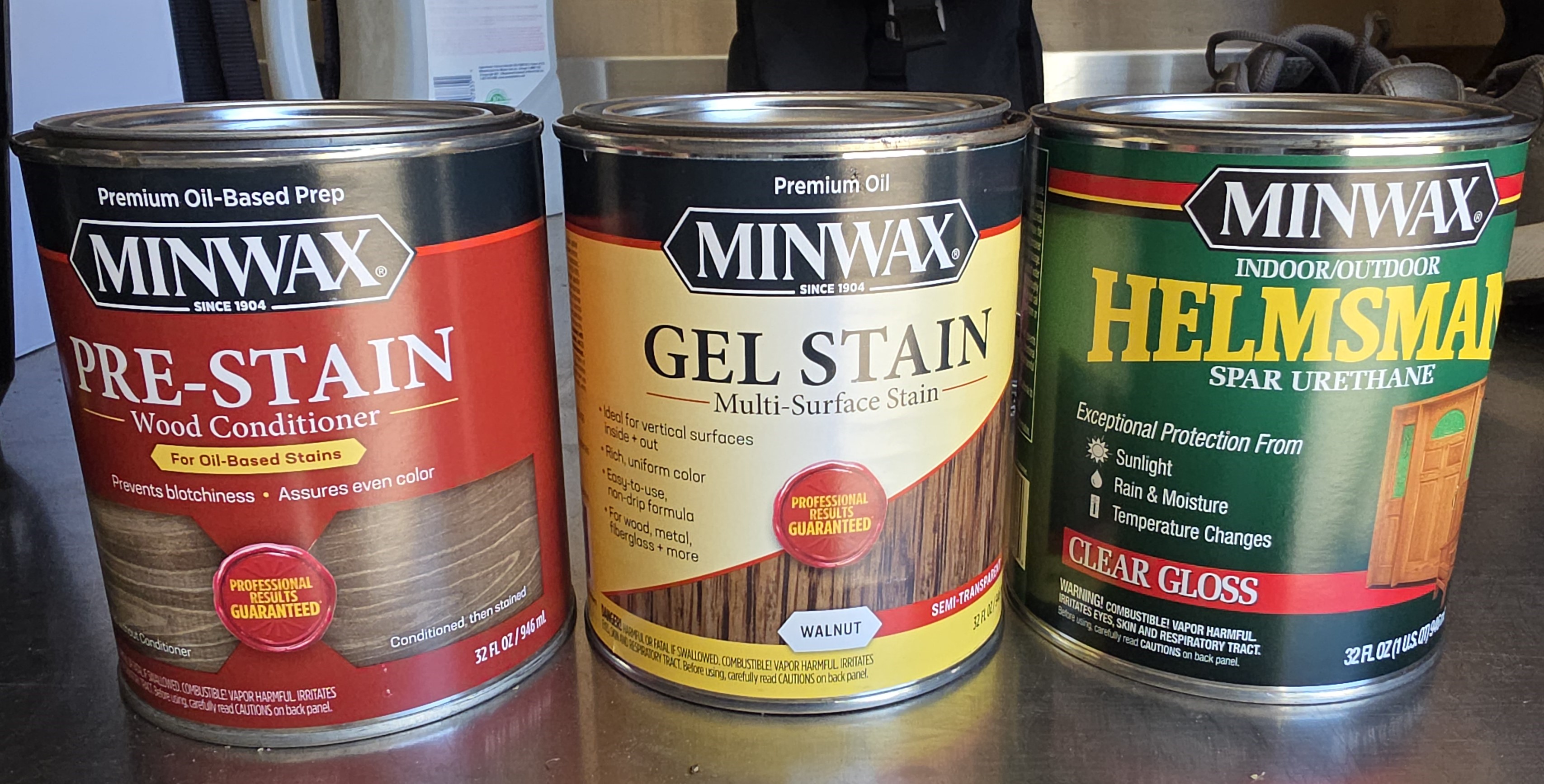
• Stain/Sealer (if desired) I used some leftover stuff I used on other projects around the house, it didn’t take a lot to do these posts. I would have chosen a different color had I bought something specific to this project, but this way I didn’t have to buy anything. You could choose to leave them natural.
• Footing if you choose to add any. We did lime dust around the edges just so they wouldn’t be a muddy mess when it rains. The center is grass since we wanted the option to use this as a small turnout here and there while we get enough money saved to work on actual pastures.

TOOLS

• Manual Post Hole Digger
• Tractor 3 point hitch auger or gas powered auger-we bought a gas powered hand held one, it was less expensive than the 3 point hitch one for a tractor.
• Pinch bar (we got this one, and couldn’t have completed the project without it due to hitting rock) https://www.tractorsupply.com/tsc/product/groundwork-18-lb-pinch-bar?cm_vc=-10005
• Adjustable wrench
• Drill
• Screwdriver
• Bucket (or wheelbarrow) to mix concrete in
• shovel or rod to stir concrete
• Stakes or spray paint to mark your post location
• Tape measure
• level

INSTRUCTIONS

  1. Start by deciding the size you want to make your round pen. I chose a 60 ft diameter, as this is standard for working larger horses and gives a space large enough to ride in a balanced manor. It’s also a big enough space to let 2 horses loose in.
  2. Mark the center of your circle and put a stake there.
  3. Divide your desired diameter in half and measure that far from your center to mark where your first post will go. Since we chose 60 ft, I went 30 ft from center and marked my first gate post.
  4. Measure out the rest of your posts and put a stake in each spot. I placed the 2 fence posts for the gate a little over 6 ft apart to accommodate the 6 ft gate. Admittedly the opening is a little wide, but it works fine for my guys anyway. The landscape timbers are each 20 ft apart. You could add more posts if you wanted to, but this distance is fine for the poly rope and worked for my pen.
  5. Start digging your holes. If you have nothing but dirt, the gas powered auger will make quick work of this. I am 5’8 and not the skinniest or the strongest person in America, and even I could use the one we bought without much trouble on just dirt. My husband did most holes, but I did one and it wasn’t bad to use. If you hit rock though… the auger is essentially useless. That’s where the pinch rod comes in. That’s also where I was about useless. My husband had to slam this thing into the holes we were making hundreds of times over the 5 holes we hit rock on. Bless his heart for loving me enough to do this. I tried also, but just couldn’t put enough power behind it to do a lot of good. He would bust rock, and I would use the manual post hole digger to dig the hole out while he took breaks from rock busting. Here you can see an example of one of the rocky holes we dug with this time consuming, tiring, frustrating method. If you have a better way, by all means do that. As first time “fencers” this is the only way we could think of. We spent about 3 hours digging 5 holes manually, and about 20 minutes digging the other 5 where we didn’t hit rock with the gas powered auger.
  6. Once all your holes are dug, you can start setting your posts. We concreted every post because with this being a circle each one was going to have at least some tension on it with the rope. Just mix up your concrete and add some to each hole. We filled the hole somewhere between 1/2 and 3/4 with concrete depending on hole depth. Some of the rocky holes were a little more shallow (18-ish inches) but the augered holes were around 2 ft deep or a little more. Make sure your post is straight using a level, and pack dirt in on top to secure it straight. This took both of us to do, I’m not sure 1 person could do this part successfully. We let ours set overnight before we did anything else.
  1. Decide the height you want and measure for your insulators. I put the top strand at 5 ft high and did 5 strands because I felt like this would be most secure. So, 5 ft, 4ft, 3 ft, 2 ft, and 1 ft on the post was marked with a dot on all posts first. Then I drilled a pilot hole on each mark so putting the insulators on would be easier. I used a screwdriver through the “hole” in the insulator as a handle to rotate it until it was all the way screwed in instead of screwing it in with my hands. I hope this makes sense.
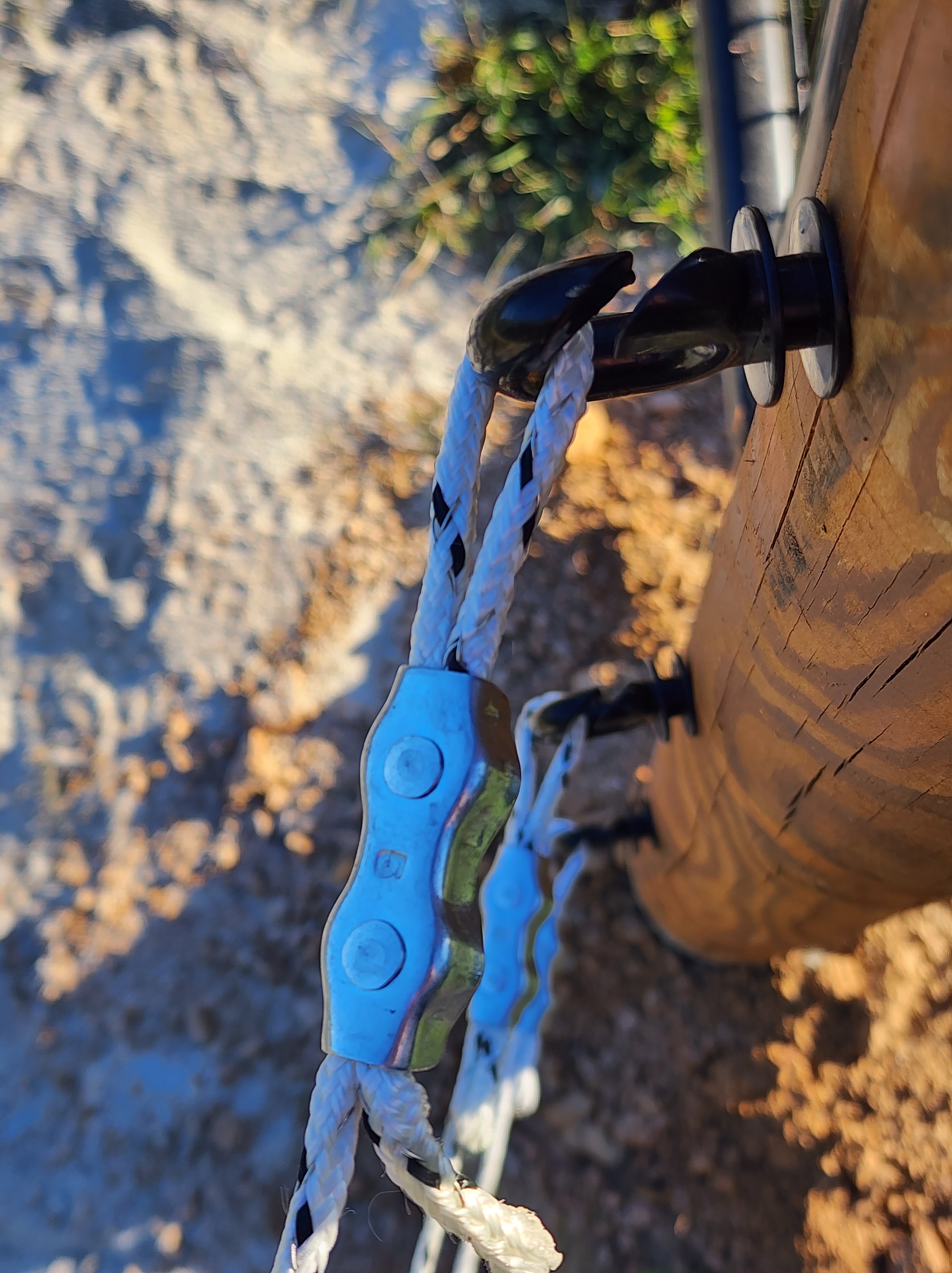
  2. Once your insulators are on, it’s time to string up your strands of rope. Start by making a loop at one end through the connector and secure the connector in place. Photo below of how this looks. Put this onto your first insulator and then run your strand all the way around. Pull it tight and add another connector with a loop the same way through the last insulator. Make sure the entire way around is pulled tight, and adjust your end connector to take up the slack. Repeat for every strand you run.
  3. The last step is hanging the gate. Pilot holes were drilled for the gate hinges, then used the adjustable wrench to rotate them until they were secure. The adjustable wrench was used to add the nut to the top hinge piece and tighten. We opted to tighten it until you have to push/pull on the gate to move it, but it could be left more loose if you prefer the gate swing freely.

And DONE! Sit back and enjoy the fruits of your labor. Ride in it. Turn out in it. Do whatever you want!!

Disclaimer: We are not a professional fence builders, or even close. We have never constructed fencing, a round pen, or anything prior to doing this method of making a fence/pen. This is just what we could come up with on a budget and within our personal capabilities. Will it hold up over time? I don’t know. Will it keep in wild mustangs? Probably not. Will something very determined be able to bust out of it? It’s likely. Will it work for our purposes for our particular 2 horses? Absolutely. Keep in mind your animals level of training and respect for fencing/boundaries when you are building a round pen or any containment area for them and build something you feel will safely contain them. If this will work for you, terrific! Just know I am under no illusion that what we built will work for everyone. It will work for us so I wanted to share incase it could work for someone else who is also needing a very budget friendly option.

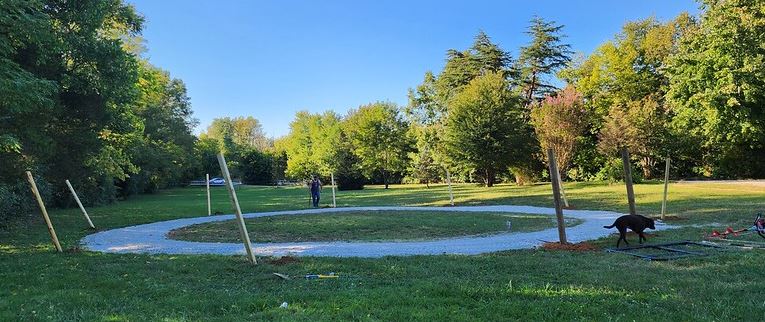
Check out the boys enjoying their first bit of freedom in this new space