As a horse owner, you are the advocate for your horses wellbeing. You are the person in charge of making decisions regarding their care and the providers for that care. You are the person in charge of their tack, their equipment, their wardrobe, their diet, everything. At the very minimum, you choose who is in charge of choosing those things (in a boarding/training situation) and you need to be able to trust that person or people. You are your horses voice. But, don’t they get a say?
If your normally well behaved horse suddenly starts throwing fits over something repeatedly, listen. Its easy when you have a golden child who you know inside and out to decipher when something is off and start investigating. If you have a sensitive, reactive horse however, it is easier to overlook things they’re trying to tell you as they’re just being dramatic, again.
But listen y’all. Dramatic horses still speak. I have a drama queen. He’s called Duke and he is the most sensitive creature. For the last year we have been fighting with his feet. His feet which had not been overly problematic before. If you recall, I made a previous post with a review for Keratex Hoof Hardener and how it had helped his crumbling feet. This was right after they came here. Then the stubborn abscess happened last fall. And we’ve been on again off again lame post shoeing since.
Let me tell you about Duke. He’s a Nervous Nelly. Anytime he’s nervous, he runs around shooting turds out like they’re some kind of ammo to ward off the things causing him to panic. It’s easy to laugh but at the same time, he’s speaking. He’s telling you that to him, something isn’t right, something is scary or he is otherwise uncomfortable. Based on the fact that since I’ve known him, he’s been afraid of his own shadow, I didn’t really blink an eye when he would immediately start the pacing/pooping process when the farrier showed up. He would proceed back to it after being shod and continue up until the farrier left. I just figured “another thing he’s being dramatic about” and moved on.
I had used the same farrier since the horses came home with me in July of 2022. From the beginning, Duke had on again off again lameness and hoof issues, which had been attributed to his sensitivity, poor hoof quality, genetics, etc. He’s been on a hoof supplement for the entire time he’s been here. June/July 2023 rolls around and the farrier reschedules 3 times. Dukes toes were crumbling by the time he finally came at a little past 10 weeks, and he was lame immediately after the reset. The farrier would not come back to check him. I was able to get a stand-in farrier to come remove the shoe and found there was a hot nail (dried blood in the nail hole on the lame foot). He showed immediate relief, and he was barefoot on that hoof until his next reset (about 4 weeks) since I was not able to get the stand-in farrier or regular one to come back before the next appointment. At the last appointment, the farrier insisted putting on a more expensive, heavier shoe on already compromised feet. He also attempted to put mesh and “hide” a piece of lead with it, knowing that is illegal for the division I told him we would be showing in. I seriously began looking for a new regular farrier at that point. I can forgive a lot of things, but putting my horses wellbeing in jeopardy is NOT one of them. Willingness to cheat/lie (and charge me more for it!) is also not on the list of things I am willing to overlook.
Enter NEW farrier. Pulls up. Checks out Duke. Reset. SOUND. And you guys. He stood there. BEFORE, DURING, AND AFTER, and he stood NICELY-which has literally never happened. He never once rocket launched turds or acted nervous in ANY way whatsoever while this farrier was at the barn. Excuse me new farrier. What voodoo magic sorcery have you used on this horse? Second appointment, same… Sound and happy.
We are now dealing with repairing the damage left by the previous farriers poor choices. Duke is barefoot. Again. Not by choice but by necessity. And hopefully his one “bad” foot can truly heal this time and all 4 can improve. Below, the top image is what forced us into going barefoot. The second image is what his feet look like barefoot. He’s currently wearing Cavallo simple boots (which I reviewed years ago here) any time he’s turned out or if he is being worked. He’s comfortable in them, with zero signs of any lameness.

Look, I’m not saying the previous farrier caused the abscess, abscesses happen. I’m just stating this horse did not have a history of abscesses. A years worth of one farrier working on him, he was lame after being reset almost every time, at least for several days and sometimes several weeks. I am not saying it was 100% his fault Duke was lame a lot. What I am saying is that he did not previously have a history of being lame post farrier work. Until he did, with this particular farrier. What I am saying is that he, twice now, has been sound post farrier work with someone new. I’m not saying Duke is an Angel nor a Demon, but he stood like a Demon for one farrier and like an Angel for another. He was nervous around one, but not the other.
Moral of the story, listen to your horses. Even your sensitive ones. Be an advocate for them, an advocate for change. Notice things and adjust to try for a more desirable outcome. Change care providers. Tack. Feed. Methods. ANYTHING you think might make a positive difference. At the end of the day, if no difference is made, you can always pivot back to where you started (as long as you behave in a professional manner and don’t burn bridges like a savage jerk).
Dear Duke, I am sorry it took me so long to listen to you. I wish I had done so sooner, but rest assured now changes have been made and we are moving forward. Thank you for tolerating me, humoring me, and relentlessly being “loud” to the point where I had no choice but to listen. Love Always, your loyal servant and supporter.
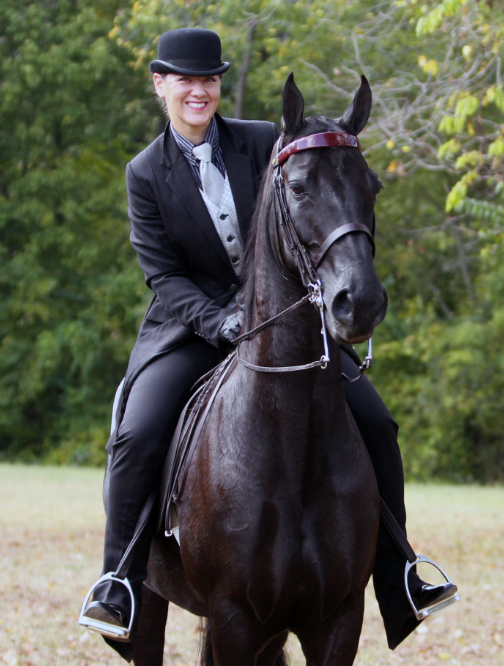


 Twisted Sisters Saddlebreds