Do you have an impossible horse to fit a sheet/blanket to, but still want or need to use one for some reason or another? A wonderful suggestion from a friend of mine has eliminated Duke’s awful rubbing. Shout out to Emily and her Mom for this tip! Duke is either the worst to fit, has super sensitive skin, or maybe both? Earlier this year (somewhere around the end of June, beginning of July), he broke out in bumps all over his body due to biting flies and/or mosquitoes. To try and fix it, I went out and got the latest and greatest Ultrashield Gold fly spray. It was supposed to be great, as I’ve read and heard great things. Well, it gave Duke massive welts all over his skin ON TOP of the bug bites. Poor thing was miserable and after feeding him zyrtec at the suggestion of my vet, I broke down and purchased each horse a Rambo Protector Integrated Hood (meaning it doesn’t detach) fly sheet. My bank account hates me. It’s always something. Don’t mind me while I go make a withdraw and light it on fire and that’s about how things go around here.
By the way, the Ultrashield Green, their Natural Spray has worked pretty good for us this year during training, doesn’t do squat for turnout though-nothing seems to last for turnout.
Anywayyyy the Rambo sheets fit pretty nice and it was working well without rubs for a few weeks, I was so happy! Then one day I brought them in and noticed it had started rubbing too. Once it started rubbing, within a few days his shoulder was basically raw. I wanted to scream. I may have yelled profanities out loud in the barn. I can put literally anything on Fizz and he is fine. He could wear a garbage can and not have any problems. I could put a billion dollar cashmere and luxury silk sheet (or whatever fine expensive soft fabrics are out there, I’m really no fashionista) on Duke and he’d be rubbed raw within a few weeks.
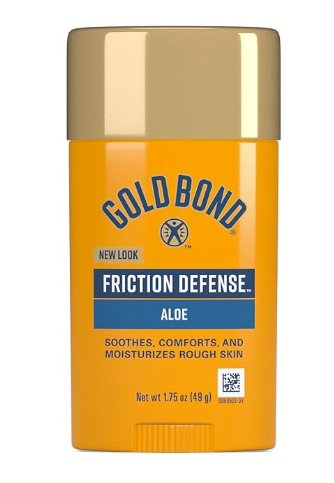
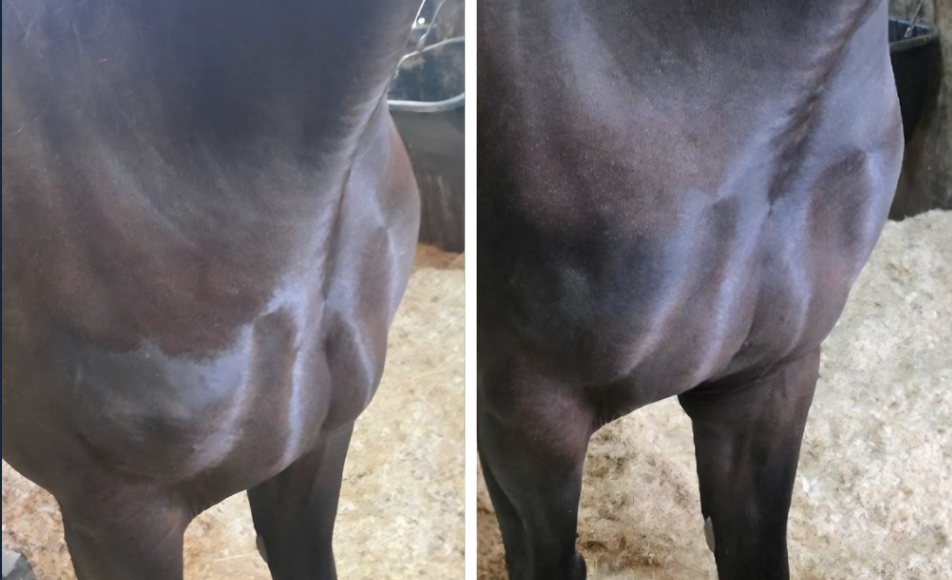
Enter this little stick of awesome. Just rub it on like you would deodorant in the spot(s) being rubbed and voila! I put it on once daily when I put the sheets on in the morning before turnout. They are usually outside sunrise to sunset. His hair started growing back within a week. After a month, it’s fully grown in. It looks a little weird being as the rest of his hair is bleached from before getting the sheets and the patch grew back unbleached black, but there is hair! Hallelujah! It is 9/18 and I’ve used 2 whole sticks at this point from August 8 to now, but that 13 dollars is worth every penny. I might as well buy a few cases of these things at this point.
The photo on the left was taken August 7th. The one on the right was taken Sept 6th. The hair has completely come back in.
Just putting this out there, maybe someone somewhere will find this and it will help them and their horses from getting terrible blanket rubs!
I guess it was about 3 or 4 years ago when I first heard of a track system for horses, or a paddock paradise as some may call it. I thought it was an interesting concept, but didn’t really look much into it as I didn’t have horses at home at the time and had never really had experience with anything other than traditional turnout. Fast forward through 2023 where my 2 horses had promptly trashed both “rotating” pastures we had built. I mean literally, they destroyed them. Despite my rotating, despite fertilizing, despite reseeding, they were trashed to the point that most of what still grew was weeds. Early 2024, I had nothing but mud on at least half of both turnouts. GROSS. No one likes mud. Especially the boot sucking KY clay kind. No thanks.
Something had to be done, there HAD to be a better way. As I thought about potential remedies, I remembered seeing the “track system” or “paddock paradise” so I started to research. Turns out, there is a LOT to creating a horse oasis track system, BUT, it can make land management a lot less of a struggle. Especially for those of us not able to afford plenty of acreage suitable for horses. We have a total of 6.5 acres here, however as it turns out, not a lot of it is suitable for horses. Toxic trees, sink holes, flooding when it rains hard among other things plague part of our land but we do have a nice area that’s just big enough to give them room to run. And really, that’s all they need. Freedom, friends, and food.
So, basically the idea of a track system is to mimic the way horses would live in the wild. Roaming/moving constantly, foraging, moving over different terrains and having forms of enrichment they wouldn’t get in a traditional type of turnout. As I do with basically everything I’m interested in, I went down a rabbit hole of research looking into this and as with most things horses, there are die hard crazies, half-assers, and people somewhere in the middle. It’s enough to make a person lose their mind, but I’ve been around the horse industry long enough. I know how to ignore the loonies that scream “ABUSE!” at everything from bits to shoes to stalls and pretty much everything people do with horses, so I have been able to dive into this track thing and find my middle ground. Side note, no matter what you do with horses there are always going to be people out there who will tell you you’re wrong, you should/shouldn’t do this or that, etc. Well look here Karen, you do you mkay? We’re all doing the best we can with what we have. Move along.
Once I decided I’d give it a go, off to tractor supply I went to get a bunch of those cheap step in posts and put up a temporary “inner” fence. Since I had plenty of electric rope and accessories leftover from our last turnout build, I was set there. My husband was absolutely convinced these horses would NOT respect these, since they are much shorter than their (5 ft) permanent pasture fencing. Low and behold, they DO in fact respect it and it WORKED. I have kept it up all summer and it’s worked really well! Even when I wasn’t able to work the boys consistently, they never really lost much of their fitness level because they kept busy walking and running around outside instead of standing in one spot gorging themselves on grass.
After having the temp inner fence up all spring and summer and seeing the benefits, we finally put in some permanent corner posts so the cheap step ins can just serve their “line post” purposes. Just to note, the temp posts aren’t without issue (they bend and then deform, badly, from the tension and sun and whatever) but they have served their purpose from early March to now (October). However, they worked really well to establish where I did want the more permanent fencing to be. Now that we have the permanent posts up, I was able to install electric gates to open/close as needed/wanted. Another added benefit to this is that I will be able to hang more hay bags from the new posts to encourage even more movement! I would love to add more features to the track, but for right now, we have what we have. With time and money, I’m sure more will come.
What are the benefits of a track system? Well, for starters:
Increased movement leading to better fitness even without work
Restricted grass intake (great for horses with cushings, history of laminitis, and other similar diseases)
More like the “natural” environment horses bodies were built for (more varied food sources, more long stem dry forage, less lush pasture)
Creates a stimulating, more interesting environment for the horses
Has many health benefits
While there are people who keep their horses out on their tracks 24/7 and swear their horses hate stalls and people who stall their horses are the devil, that’s great, I just don’t have the right land setup and facilities at this time to be able to do that. Would I like to one day? Maybe, but now isn’t that time. The boys are on track from sun up to sun down on all possible days, meaning it isn’t raining, isn’t icy or super slick, isn’t actively snowing, or otherwise garbage weather. There is no shelter in the fields/on the track and there is no good place they like to rest, so for us currently, bringing them in to their stalls at night is best. Unless someone out there stating I abuse my horses for “locking them up” wants to sponsor them a nice cushy shelter for their track so they have something, anything to block the sun/rain/wind, etc so I’d feel OK leaving them out. Until then, they will be in the barn in the shade under their fans during the hottest parts of the day, in their insulated stalls on the coldest nights, and out of the muck on the muddiest days. The rest of the time, they’ll be enjoying “track” life!
An overview map of the layout
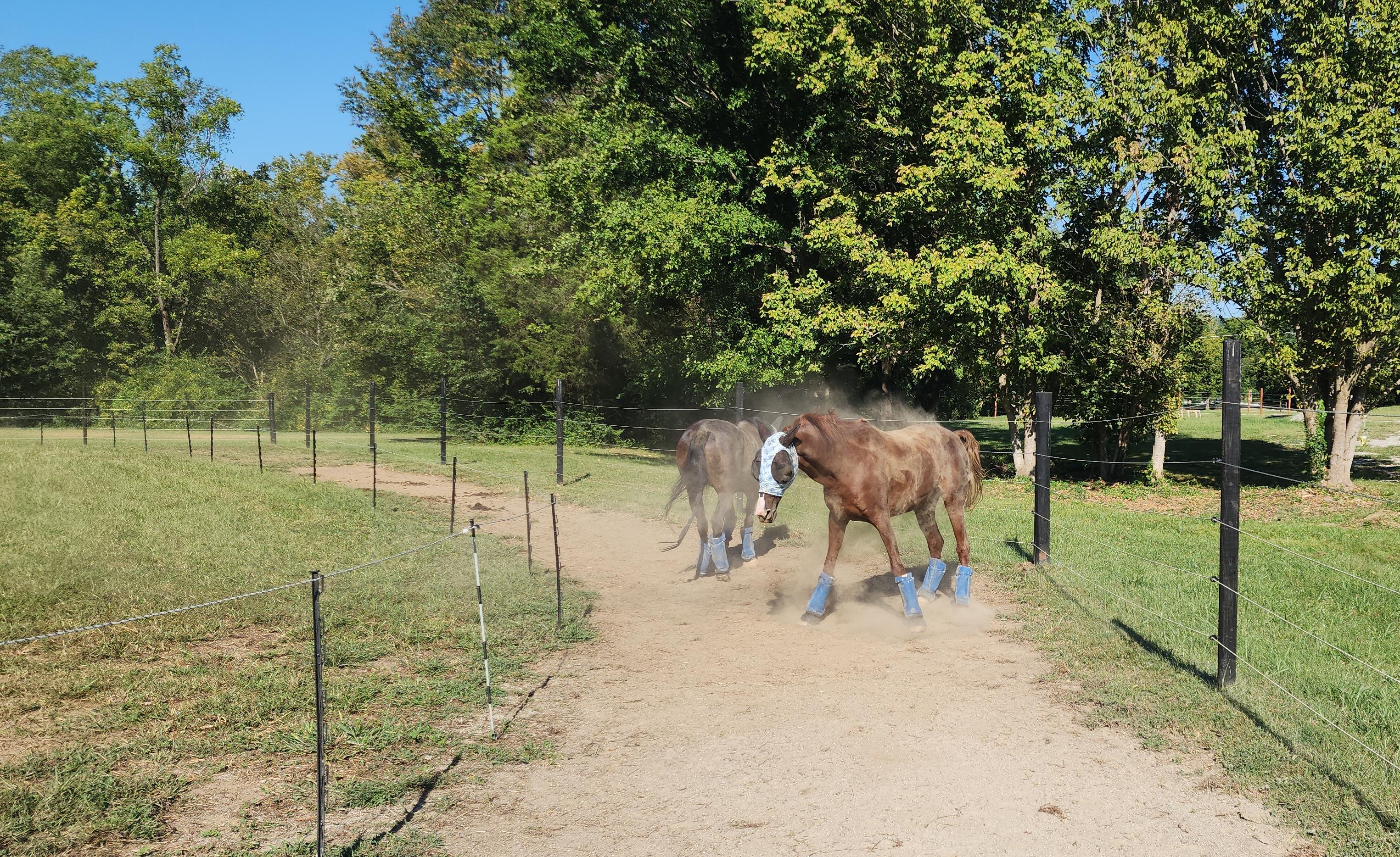
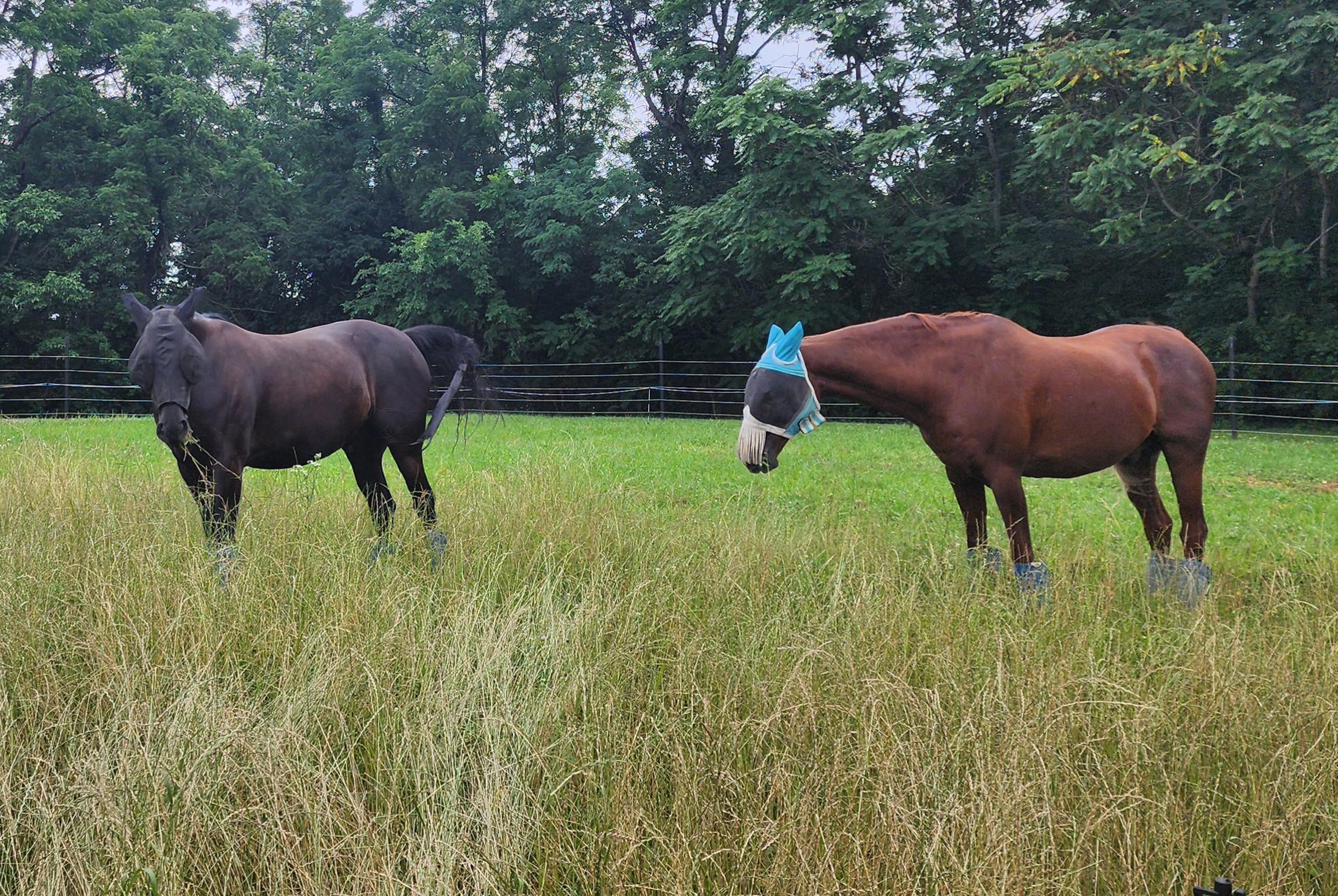
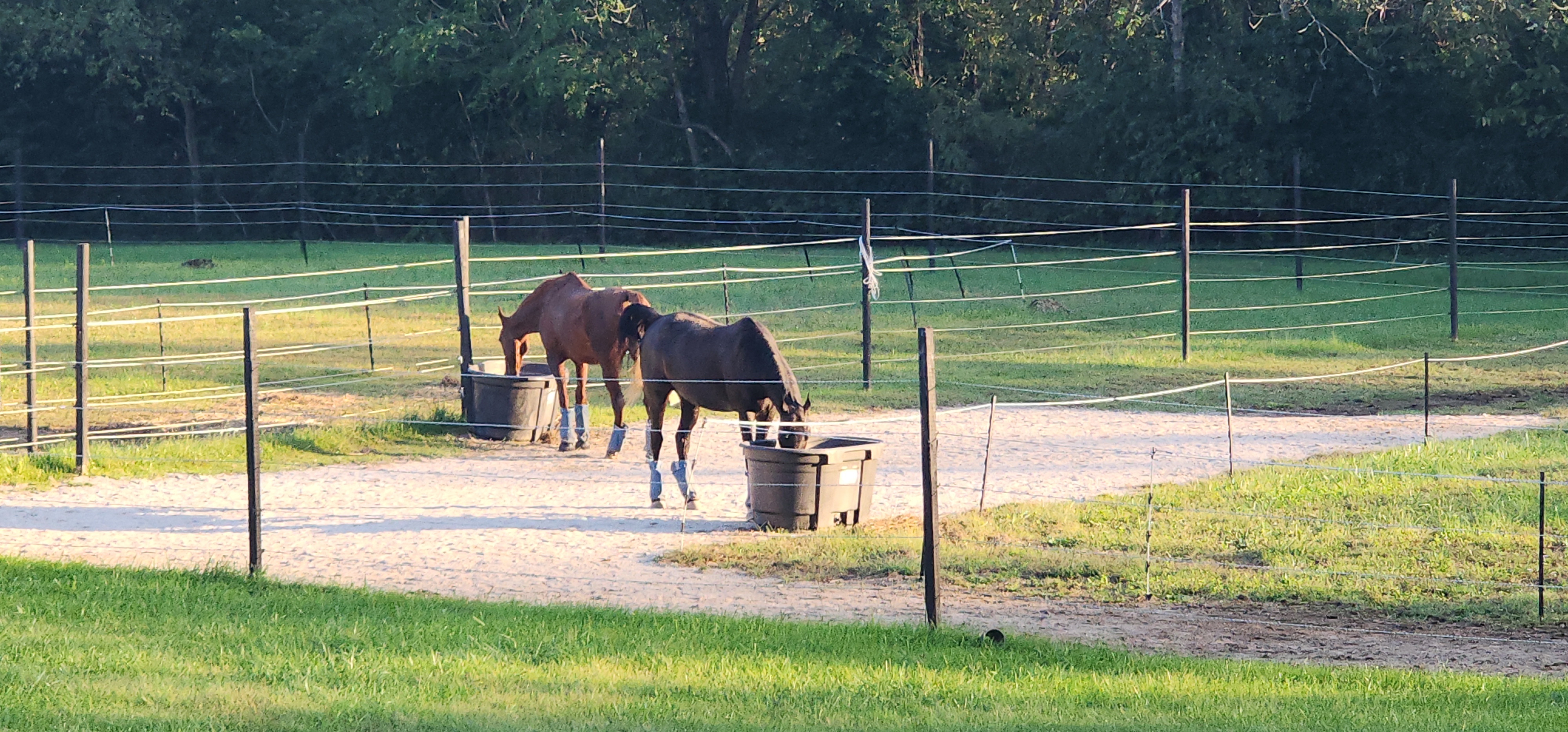
Here is a video and some photos of the boys enjoying their track. A few shots of them grazing the “middle” selectively where we have been able to grow much nicer grass than with them on it all the time! As you can see, the track portion has become pretty bare in a lot of spots, which is great since restricting the amount of access they have to lush grass is kind of the idea here.
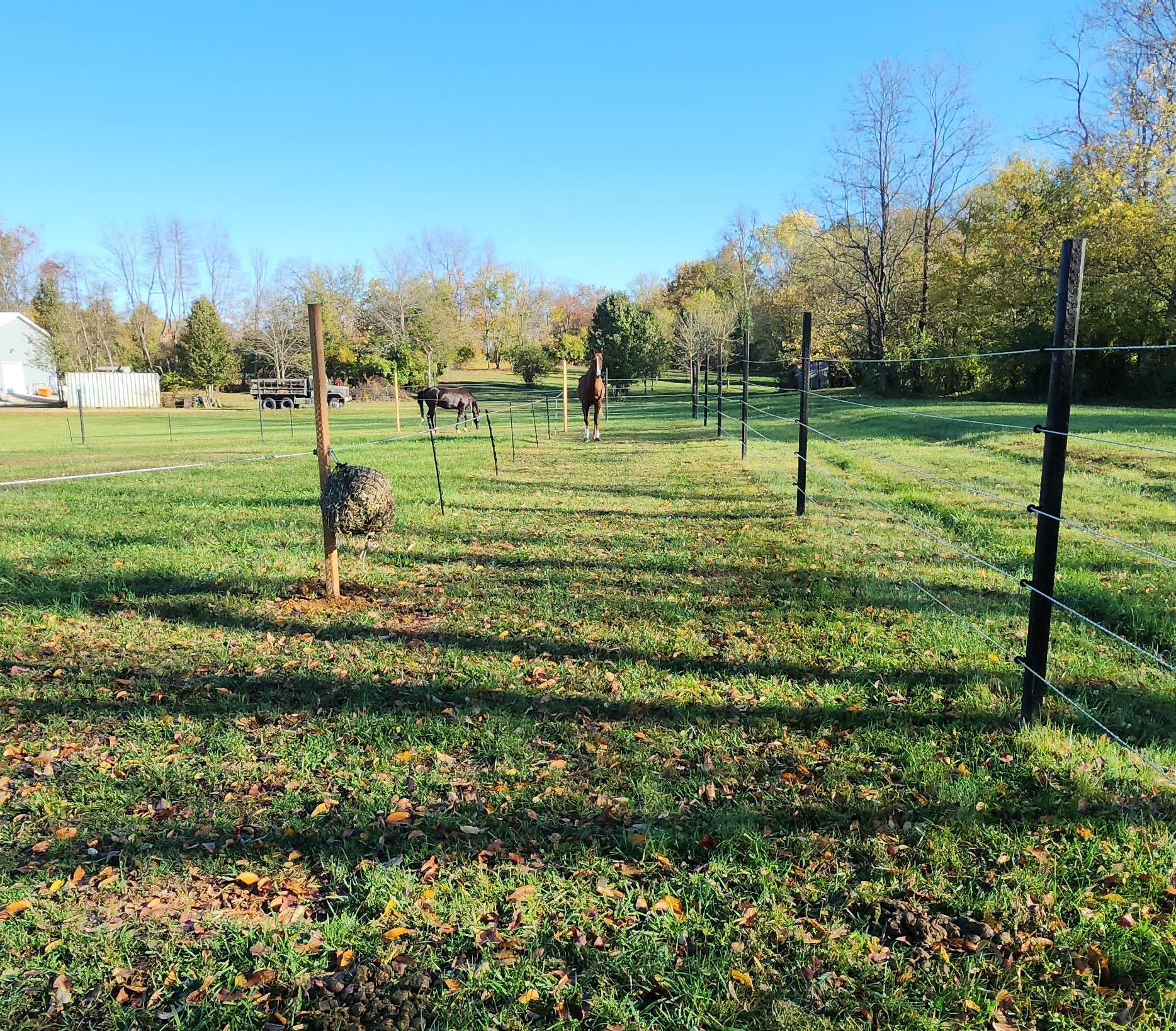
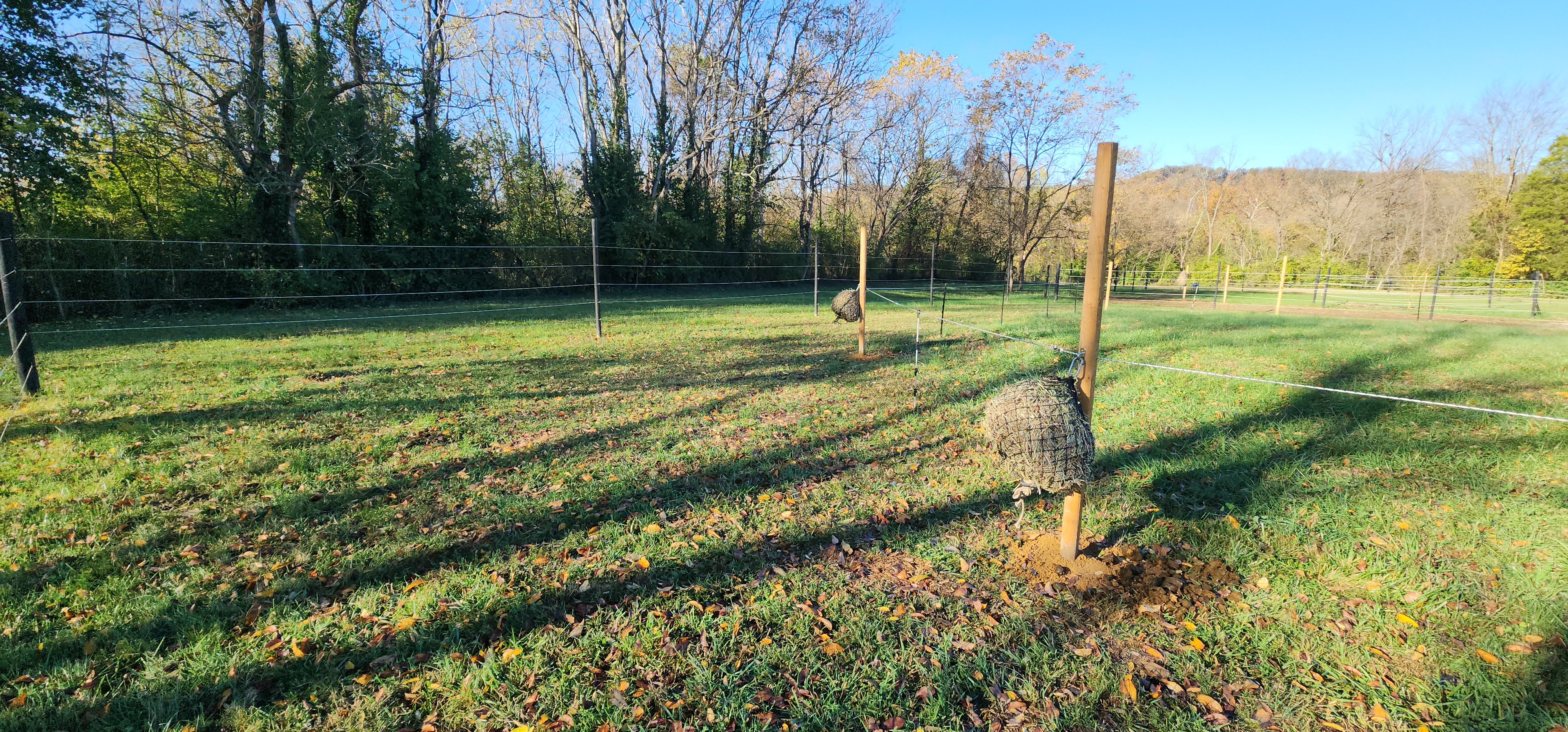
Here are a few photos since putting in the permanent posts this week!
They found their new hay stationsTheir “dry lot” The lower part of the track, this will get surfacing first as it is the lowest area and holds the most water after a rain. It rained the day/night before this photo was taken.An overview of most of the entire turnout area
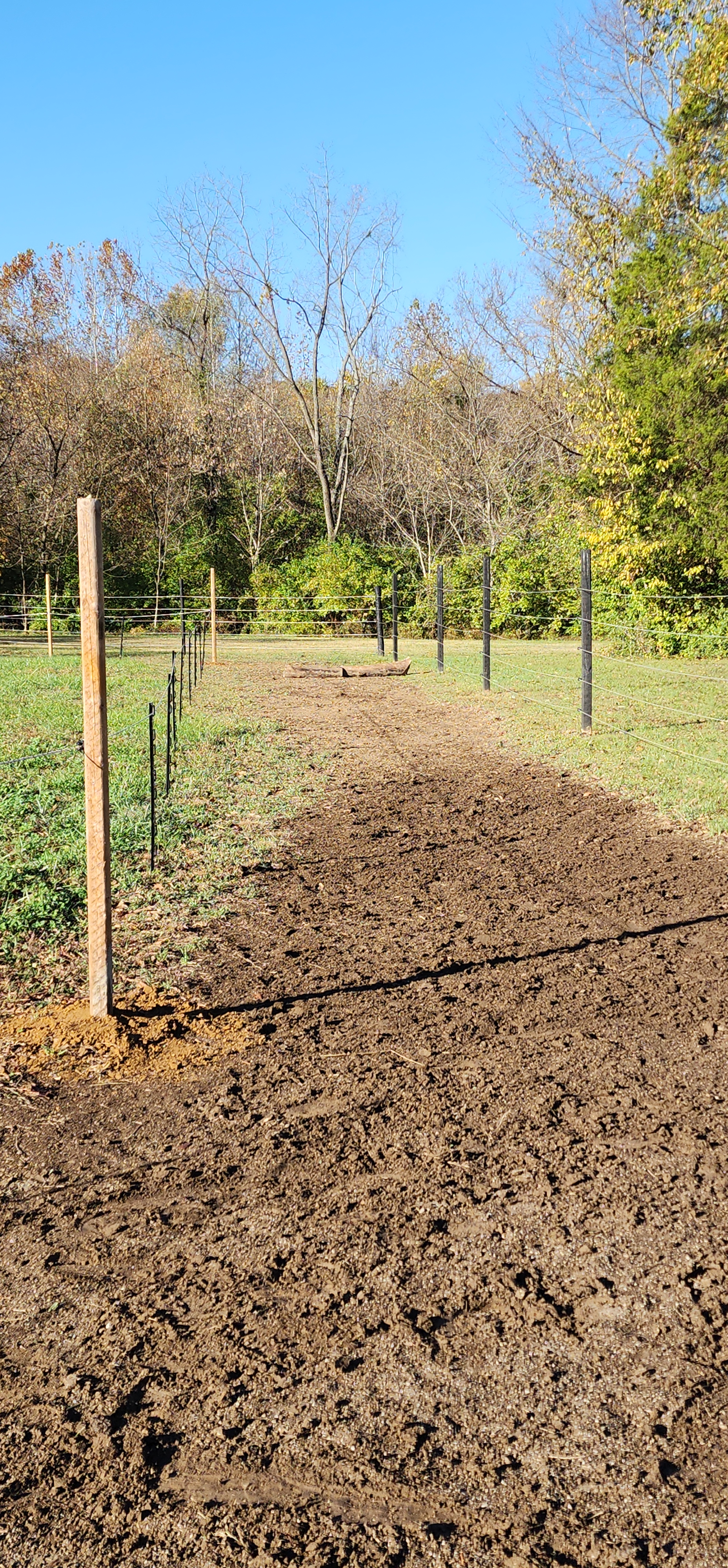
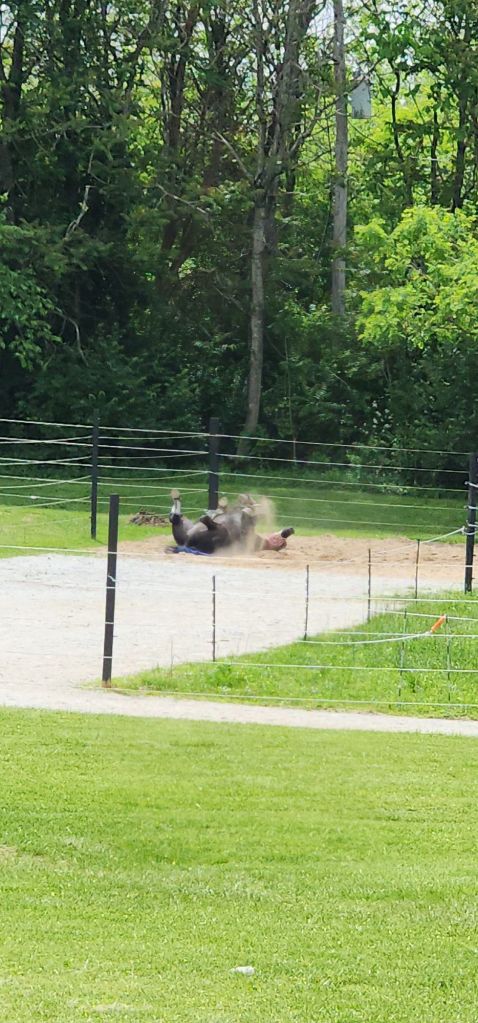
Here are some improvements including surfacing on the “front side” and a sand pit at the end of the hardatanding “square” plus some logs for them to navigate. Next up is a scratch post going in very soon!
A subject you don’t find details on often, because it varies greatly from horse to horse and location to location. However, it’s something anyone looking to own a horse or multiple horses needs to consider in detail before purchasing and deciding how/where to keep their horse(s). This will vary by area and cost of hay and other items in your area, but we are in Kentucky, and these costs are based on that. I encourage anyone looking at this to research costs of hay, feeds, and other items in their specific area so they can add up costs specific to their location. I am an advocate for transparency in the horse industry, so I am sharing my specific costs as a way to help others put a dollar amount to basic horse ownership. If you know up front, you’ll be better prepared to maintain your horses and not get into a situation where you can’t keep up with their basic needs.
If you are boarding and think the monthly boarding fee is outrageous, consider what is included and everything you do not personally have to do no matter if you are healthy, sick, injured, tired, busy, etc. The actual dollar amount is not indicative of the actual cost of boarding.
In the case where you’re doing it yourself “at home”, here’s what you’re going to be looking at as a SIMPLE feeding plan cost for a 1000 lb easy keeper who requires no supplements or “grain” to maintain weight. This is the base of my feeding program and equates to around $1700 a year for one, approximately 1000 lb horse. This assumes they need NO GRAIN and NO SUPPLEMENTS, which, 98% of the time is not the case. A ration balancer, at minimum, should be fed to ensure they get the right balance of minerals for their body, skin, hoof, and other health needs.
Any feed or grain needs to maintain a healthy horse or preferred supplements (as either required or preferred) of course add additional cost to any feeding program. Most competition horses of average age will require some form of maintenance in the form of additional feed and/or supplement(s). If you have a growing foal, pregnant mare, horse in hard daily work, or a retired pasture puff /horse otherwise not in work, their needs will be very different and based on each individual.
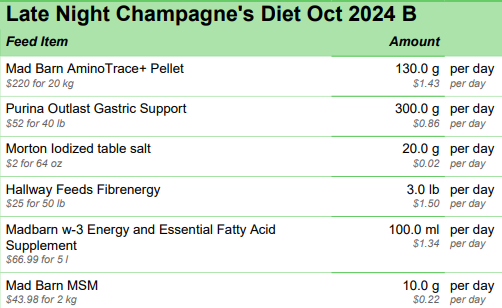
Below is a complete representation of what they are currently being fed (and doing well on) and the costs involved. Note this is the Fall/Winter costs (Oct-March). Every year when I get a new batch of hay, I have our local extension office come out and pull samples to send for testing. Once I have the testing numbers, I use FeedXL to balance their supplements to fill the gaps where their hay/forage is lacking. It’s not 100% accurate, but it’s a less expensive alternative to hiring a nutritionist and it’s easier than learning how to calculate all their needs myself.
Also to note, April-Sept they are on a product called Multifly to control the fly population and keep them (and us) more comfortable. We started this late in 2023 (In July) and I will possibly do a review later but it WORKED so we started it in April 2024 and continued through October. That adds approximately $10/monthly per horse.
So, all in all, these 2 horses cost me approximately ~$7000 combined annually to feed assuming nothing changes. This is ONLY what they EAT.
Am I certain there are cheaper ways to feed? Yes. Could I probably cut out some of the extras (oil, etc) also yes. But I feed what I prefer for the results I want to see and the performance I expect to get out of my horses and this is what is working for us. I have changed a lot of things over the last 3 years to find what works for me. It may not work for everyone and there are a ton of products that may work just as well, or possibly better. This is where we are right now. It’s subject to change. As long as my horses are happy and healthy, have shiny coats and quality hoof (which lets face it, has been a struggle for us in the past) I will be satisfied with their feed program and not likely to change much.
If you’re interested in overall cost of horse ownership, factor in every approximately 6 week trims/shoeing, minimum of once a year vaccines/wellness exam (most veterinarians require you to be a current client in order to address any emergencies/after hours needs), a contingency amount for any emergencies that may pop up, and insurance on your animal(s) if you so choose, etc.
Annual Wellness exam with necessary vaccines, dentals, sheath cleaning, coggins, state health certification, etc. from my vet is approximately $1200 for both horses.
4 foot shoeing with my farrier is $120
This is assuming they have no special shoeing requirements (corrective shoeing, pads, etc), and I don’t have to call the farrier back to put shoes back on during their cycle, which can add cost.
Barefoot trims are $60 (I let them be barefoot in the winter if at all possible)
I pay an annual premium of approximately $1200 for both horses to be insured (Major Medical and Mortality)
This is assuming the horses are kept on your property, and not considering any improvements, maintenance, or other costs associated with having them there such as halters, lead ropes, fly masks/sheets, turnout/stable sheets and/or blankets, coolers, shampoos, brushes, bridles, saddles, or any other tack/equipment necessary.
Lets assume for the sake of easy math, they are shod year round, have no medical emergencies, and require no additional medical/health maintenance. To feed and maintain very basic care of 2 healthy horses, it costs me around $10,500 annually, which is about $875 per month.
Those of you who have been following this for a long time probably remember the posts here about bringing the boys home. Can you believe it’s been (over) a year now? I can’t. What do they say? Time flies when you’re having fun? Or having… all the work to do? Or something like that.
I have managed to keep my horses alive and major incident free for a year. By major incident I mean we have not had any significant health problems or issues and we have needed little vet care but I don’t mean we have had zero issues. You guys realize my horses are animals with a sense of humor that love to watch me squirm and panic, right? So here are the things I have learned over the past year having horses at home.
Having horses at home is an absolute blessing and it’s so cool to just watch them live, breathe, eat, etc. There’s nothing like the sound of horses happily munching hay.
If you should be blessed with horses that have as much personality as mine, you could likely create a youtube or something and make money off their antics. I am not that creative, but I have thought about it. They are hysterical and I laugh, a LOT.
You better prepare yourself to fill your entire phone with photos and videos of all the things they do. Or have some self-control, which I do not possess when it comes to them (or the dog, for that matter). Zero pictures of the husband and I. ALLLLLL the pictures of the horses and dog.
If you haven’t spent time in the barn in your pajamas or bath robe, you’re probably doing it wrong or haven’t had horses at home long enough.
You will 10000% spend more time working in the barn and managing the horses than you will riding or working the horses
Barn chores wait for no one. It doesn’t matter if you are busy, sick, hospitalized, out of town, or just lazy, etc. The chores still have to get done. Someone has to do them. If you can’t, you better find someone who can.
Going out of town is a thing that requires much planning and effort, and you will worry the whole time about your horses.
Horses are accidents waiting to happen.
Pro tip: get annuals to keep in good standing as a current client with a vet. Otherwise, you may not be able to get care in an emergency.
Don’t think you are above having an emergency. Your horse(s) will prove you wrong.
They WILL get loose at some point. Have a plan. Or run around like a complete fool trying to contain them. I’ve done both.
Your barn will never be clean. Ever. Horses are gross. You will never 100% get rid of all the dust or grime they bring.
Take all the things you thought you needed, and add more things you never knew even existed. Then you still won’t have everything you need for horses.
There is no such thing as too much tack or too many bits.
A leaf blower has many uses far and above blowing leaves, and is a great thing for barn use
Cobwebs. They refuse to go away no matter how many times you swipe them down with a broom. Just, WHY?
Your permanent accessory is now hay. Hay in your hair. Hay on your clothes. Hay in your pockets, down your pants, in your gloves, in your boots, in your underwear, literally everywhere. Feel something stabbing you in the middle of the night in your bed? Hay. How did it even get there? Hay goblins-I don’t know. But it does.
If your horses wear shoes, it will take an act of God to keep them on if they are on lots of turnout. But lots of turnout is good for their brains. It’s a double edged sword.
Speaking of shoes, pray for a good farrier. A consistent one. A true horseman who won’t charge you a zillion dollars, but also treats you and your horses well and SHOWS UP when you need them. Level of difficulty: Expert. Godspeed. Finding that unicorn is near impossible.
You can never have enough hooks to hang things on in a barn. Or enough bins to organize things. And somehow, with all the organizing tools in the world, you’ll still manage to leave things out of place. It’s OK. You have bigger problems.
Never underestimate a good pair of gloves. Or a good 10 pairs, because you’ll use the snot out of them and even the nicest pairs will eventually fall apart under barn use. Hay string spares no glove. Nothing else does, either. And for the love of God, don’t waste your money on cheap work gloves. Your hands will thank you.
I am sure I could think of a million other things. But for now, it’s time to go back to enjoying watching my horses exist. As much of a pain as they are, they make my days every single day. Sometimes they make them frustrating, but they always make them happy because I am one lucky lady to get to experience life with them right here with me.
It’s been nearly 3 weeks since I pulled the trailer into our driveway with my boys in tow.
Since we are honest folk here at Twisted Sisters, I’m going to lay it out nice and clear for you. If you are a person who dreams of owning a horse and keeping it at home, and also believes doing so is full of nothing but butterflies, rainbows, and unicorn glitter, you are sadly mistaken and living in a dream world. Come back down from the clouds and join the rest of us here in reality. If you are perfectly clean and look like a million bucks all the time, you’re probably doing it wrong.
That aside, it is still in all reality, a dream come true for me. I take pride in hosting my horses in clean stalls, making sure they are fed, and that they always have clean water. If that means I pick stalls every time I walk by and see a pile of poo, so be it. I have that luxury where I didn’t used to and I am grateful for a life that has given me this opportunity. So I will do all the things and I will be happy that I have that luxury. A lot of folks do not. A lot of folks would love to. Some are happy to pay others for the dirty work, but I’m not that kind of gal. I have always dreamed of a life where I could be intimately involved in every detail of my horses care and I FINALLY have that opportunity. I would venture to say most truly hardcore equestrians dream of a life where they can spend it day in and day out doing all the “horsey” things, even the dirty ones. Either way… here’s my experience and things I have learned so far as a first timer having horses at home.
Helicopter Mom: Apparently, that’s me. I installed a camera to spy on the boys. I check it incessantly. If I wake up during the night, I look at it. If I hear a noise outside, I look at it, if I am working or busy and can’t walk outside just to see if they are OK, I look at it. I mean, in the last 2 weeks I have looked at the camera like I believe at any moment either horses legs may detach from their bodies or some other horrific thing might happen. What do I find? Them munching away on hay, looking outside, or laying down sleeping. Perfectly content with life. OR I find Fizz rubbing his tail, and I can scold him through the talk feature on the camera. Both horses now think God talks to them, below is them listening-they don’t know it’s just little ole me.
Hay: I am pretty sure there will never again be a moment in my life where I am not wearing hay as an added accessory to my outfit. It’s itchy and it gets in places no one should have hay, ever. How does it even get there? Does it grow legs and crawl to really weird spots inside your clothing? Just, how?? Also, if you like to watch your money turn to poop… Just look at your horses happily munching on hay.
Sweat: It’s summer here in Kentucky. It’s HOT and it’s HUMID. I spend a lot of time outside and always have but when you’re working with horses it seems like the heat is amplified 10 fold. I can’t explain why. My eyes have never burned so much as in the last several weeks. I think I’ll keep this as opposed to frozen fingers, but still. I am pretty disappointed I’m not skinny yet after all of this sweating. The universe owes me an explanation on this.
Poop: So much poop. Like, I realize they are large animals and I have worked jobs where stall cleaning was a part of it (back in college and as a kid) but there is SO MUCH POOP. Literally they are poop factories. How did I not remember this? And I feel for all of you who have barns full of horses because just these two create so much!!!
Dust: There is literally so much dust. I use a combination of pellet bedding and bagged shavings, which I had read this combo was supposed to be low on dust. I would like to know what definition of “low dust” is on the internet because this is not it. Therefore, I have been researching this. Evidently, I need to “water” my stalls. Um, excuse me? I don’t even water my flower beds. Those things need to live off the water God gives them or they don’t survive well here. Somebody send help.
Crisis: If you think you’ll never feel like you are in a crisis, just give it a minute-one will come and your little fantasy bubble will have been popped. If you have thought about it and planned for every crisis you could think of (like me) and think you know how it will go, just know it goes nothing like you thought it would. Also know that of all the crises you could think of, the one that will happen is something you NEVER thought of. There’s a back story here I might visit later, but my first “crisis” was experienced and it is over now. Bless my husband, my friends, and my very lovely Vet for putting up with me. I probably worry way more than I should.
Bills: There are just SO many bills. Hay, grain, bedding, vet, farrier, supplements, and the list goes on and on and on into eternity. Some bills can be more than you expect, by a LOT. You might think about finding a street corner to call your own, but in the end you’ll do whatever it takes to make sure your horses are healthy and happy. Even if that might mean eating ramen and never leaving your house again.
Help: Having help is CRUCIAL. I can’t say this enough and to those of you out there doing it by your very lonesome, what kind of super hero DNA do you have and where can I get some of it? Or are you just an alien with weird superpowers I can’t even begin to imagine? Because I would NOT have made it even these last few weeks without my poor non-horsey husband who has gotten a very rude intro on how to restrain a contrary horse, how to work a twitch, and some of the other unpleasant things things that come with being around horses. He has also been learning how to pick stalls and he does so without even being asked. BLESS HIM. Ladies, a lot can be said for a man who isn’t into horses but cleans stalls without asking simply because he knows YOU want your horses living in the cleanest stalls in America. I would also not have survived without my Mom, who comes over simply to make sure I don’t die while working these creatures. She’s a saint.
Work: Having horses at home is work. I work a real big girl job. I spend every other amount of time doing things for the horses and the dog. What exactly is this “spare” time everyone speaks about? Who exactly in this world gets to “sleep in” because yeah, that’s not a thing here (for me). Everyone else is taken care of before me. I am the last to eat, the last to be clean(ish-you know, because hay exists…), and I’m fairly certain the horses stalls are cleaner than my house. I can barely manage to do something as simple as boil noodles and slap sauce on top for dinner most days. Dishes left in the sink? Oh well, maybe I’ll get to those tomorrow. Or not. As long as the 4-leggeds are taken care of those dishes can sit another day. Paper plates? Meals that don’t require silverware? Even better. Sign me up.
LOVE: These animals have so much love to give. They make me laugh daily and they fill my heart with so much joy despite all of the above. I truly enjoy simply watching them exist day to day. Every person has good day and bad days, and I believe all creatures do. Our job as humans and facilitators of these animals is to make sure their days are all as good as possible, and understanding that they too, have days that are “off” and they deserve our compassion and understanding. No one, and no animal, is perfect all day every day. These horses (and our Dog Dixie) give me a break when they know I’m having an off day. They offer me peace and acceptance, despite my shortcomings. The least I can do is offer them the same.












 Twisted Sisters Saddlebreds