I’m not sure who is more stubborn, me, or the horses. I have heard so many “you can’t” do this or that with show horses, with my horses specifically, etc. You can’t turn them out during show season, you can’t work them twice a day, you can’t get on from the correct side or from a mounting block (Duke), you can’t ride him bareback, you can’t ride him just in a halter, you can’t run barrels, you can’t trail ride show horses, especially saddlebreds, they’re too spooky. Excuse me, what? No. We can do anything we want. Don’t tempt me with a good time trying (even if we fail). Which we won’t. Because we’re awesome. And we’re too stubborn to stop trying until we figure it out. Saddlebreds are smart, resilient, brave, and versatile. Despite what people think, they ARE multi purpose. At least mine are. I don’t really give them a choice not to be.
Many years ago when Fizz first came into my life, I was determined to give him a well rounded education. What I didn’t know is that I would be educating myself along the way. Over the years, I have learned many things outside of the saddleseat background that I grew up in. The key is to take knowledge from any and all places, no matter if you agree or disagree or like or dislike the discipline. There are principles of training in literally every discipline that you can use to make your horse better. Contrary to popular belief, I don’t believe that teaching them things outside of their intended use is going to make them less good at their primary job.
From saddleseat to dressage, to jumping, to reining, to barrels, to trail riding and everything in between, there’s something in each and every one that can help build your horse. I do the same exact job every working day and it makes me bored as all hell. What makes us think our horses don’t like variety? I know from my experience the happiest my horses are, is when they aren’t asked to do the exact same things every single day. The least happy they are (or at least Fizz was) is when I was doing the same thing day in and day out hoping to make a saddleseat horse out of him in the very beginning. That is all I knew. The best thing I ever did for him and for me is to open my eyes and learn. Most importantly, HAVE FUN.
Am I saying you have to trail ride if you don’t want to? No. Am I saying you have to take lessons in dressage? No. Am I saying you should run out and set up jumps and jump them? Absolutely not. But certainly don’t discount the training principles of the disciplines other than yours and give some solid thought to the ideas behind them, how they can help your horse(s). You have the option to try, and if you don’t like it or it doesn’t seem to work well for you, the beauty of life is that you can choose to discontinue doing something whenever you want. True that consistency and repetition is how horses learn, but once the basics are covered I am a FIRM believer in that horses adapt very easily to different things. The consistency comes in your handling. You keep your contact the same in their mouth, your cues stay the same no matter what job they are doing, you have the same basic rules and they can adapt to any task at hand. It’s OK for them to question it but at the end of the day, they should rely on you and trust you to support them in the same ways you always do and they can overcome any obstacle.
Enjoy these photos of the boys doing many different things. SUCCESSFULLY.
I will start this like most of my reviews. I am not in any way affiliated with or compensated by this company (or any other companies I review) for saying the things I say.
I follow a group on Facebook that pertains to grooming horses, show prep, coat, mane, and tail maintenance, etc. There are a lot of folks on there with feathered breeds, who have long, thick manes and tails and I have seen them recommend this product many times. I’ve seen their before and after photos. And for a while wondered, “how could this product help my boys?”
Fizz struggles with growing his tail. I have owned him for over 10 years and his tail has barely gotten longer than it was when he was 4. And he hopelessly rubs it, so his tail “feathers” are just… Sad. I made my first order directly from the Mane-ly long website on Sept 4. It came pretty quickly. I only ordered small versions of their shampoo, conditioner, and polisher/detangler to get me started and try it out. The stuff is pretty expensive after all, and I wasn’t sure how well I would like it or if it would work any better than anything else I’ve ever tried.
Day 1: Here is what Fizz’s tail looked like. sorry I don’t have better photos, I didn’t really think I’d be writing a review.
I have since washed, conditioned, and detangled it twice. Every few days, I rub in the “shock” treatment, which is a half and half mix of the conditioner and detangler/polisher.
After using this product for the last 2-ish months, here is what his tail looked like on 10/20/23. I have done nothing different aside from using Mane-ly long products in it. It appears longer and thicker, and while he does still rub it here and there, he is not viciously rubbing it at every opportunity he gets. I assume this is because the conditioner keeps it from being dry, so it’s less itchy? When he does rub it, the hairs don’t seem to break off nearly as bad. They ARE growing. Slowly but surely. And I consider that a win.
Over the summer (and I don’t have photos of this unfortunately) the top of his tailbone was almost rubbed raw he was rubbing so bad. The feathers on the tops and sides of his tail looked like I had shaved them. I wish I had taken photos of that!
I’m also using the products on Duke, who has a long, thick, pretty nice tail. I braid and bag Dukes tail, but he swats at flies and wrings his tail like he’s a dang helicopter about to take off. I was struggling to keep it unmatted at the top portion between the tail bone and where the braid starts. I spent so much time picking through it with other sticky detanglers with not a lot of success. The manely detangler is not super sticky, it seems to soak into the hair, and it works. I use the “shock” about every 3-4 days (about a quarter size drop, a little goes a long way) and so far, it’s kept it unmatted!
I’ll continue to take and post photos of the progress and post them here when I can, but so far, I am pretty impressed with these products. Expensive, yes. But they are working for us. And a bonus, his tail always smells really nice.
As a horse owner, you are the advocate for your horses wellbeing. You are the person in charge of making decisions regarding their care and the providers for that care. You are the person in charge of their tack, their equipment, their wardrobe, their diet, everything. At the very minimum, you choose who is in charge of choosing those things (in a boarding/training situation) and you need to be able to trust that person or people. You are your horses voice. But, don’t they get a say?
If your normally well behaved horse suddenly starts throwing fits over something repeatedly, listen. Its easy when you have a golden child who you know inside and out to decipher when something is off and start investigating. If you have a sensitive, reactive horse however, it is easier to overlook things they’re trying to tell you as they’re just being dramatic, again.
But listen y’all. Dramatic horses still speak. I have a drama queen. He’s called Duke and he is the most sensitive creature. For the last year we have been fighting with his feet. His feet which had not been overly problematic before. If you recall, I made a previous post with a review for Keratex Hoof Hardener and how it had helped his crumbling feet. This was right after they came here. Then the stubborn abscess happened last fall. And we’ve been on again off again lame post shoeing since.
Let me tell you about Duke. He’s a Nervous Nelly. Anytime he’s nervous, he runs around shooting turds out like they’re some kind of ammo to ward off the things causing him to panic. It’s easy to laugh but at the same time, he’s speaking. He’s telling you that to him, something isn’t right, something is scary or he is otherwise uncomfortable. Based on the fact that since I’ve known him, he’s been afraid of his own shadow, I didn’t really blink an eye when he would immediately start the pacing/pooping process when the farrier showed up. He would proceed back to it after being shod and continue up until the farrier left. I just figured “another thing he’s being dramatic about” and moved on.
I had used the same farrier since the horses came home with me in July of 2022. From the beginning, Duke had on again off again lameness and hoof issues, which had been attributed to his sensitivity, poor hoof quality, genetics, etc. He’s been on a hoof supplement for the entire time he’s been here. June/July 2023 rolls around and the farrier reschedules 3 times. Dukes toes were crumbling by the time he finally came at a little past 10 weeks, and he was lame immediately after the reset. The farrier would not come back to check him. I was able to get a stand-in farrier to come remove the shoe and found there was a hot nail (dried blood in the nail hole on the lame foot). He showed immediate relief, and he was barefoot on that hoof until his next reset (about 4 weeks) since I was not able to get the stand-in farrier or regular one to come back before the next appointment. At the last appointment, the farrier insisted putting on a more expensive, heavier shoe on already compromised feet. He also attempted to put mesh and “hide” a piece of lead with it, knowing that is illegal for the division I told him we would be showing in. I seriously began looking for a new regular farrier at that point. I can forgive a lot of things, but putting my horses wellbeing in jeopardy is NOT one of them. Willingness to cheat/lie (and charge me more for it!) is also not on the list of things I am willing to overlook.
Enter NEW farrier. Pulls up. Checks out Duke. Reset. SOUND. And you guys. He stood there. BEFORE, DURING, AND AFTER, and he stood NICELY-which has literally never happened. He never once rocket launched turds or acted nervous in ANY way whatsoever while this farrier was at the barn. Excuse me new farrier. What voodoo magic sorcery have you used on this horse? Second appointment, same… Sound and happy.
We are now dealing with repairing the damage left by the previous farriers poor choices. Duke is barefoot. Again. Not by choice but by necessity. And hopefully his one “bad” foot can truly heal this time and all 4 can improve. Below, the top image is what forced us into going barefoot. The second image is what his feet look like barefoot. He’s currently wearing Cavallo simple boots (which I reviewed years ago here) any time he’s turned out or if he is being worked. He’s comfortable in them, with zero signs of any lameness.
Look, I’m not saying the previous farrier caused the abscess, abscesses happen. I’m just stating this horse did not have a history of abscesses. A years worth of one farrier working on him, he was lame after being reset almost every time, at least for several days and sometimes several weeks. I am not saying it was 100% his fault Duke was lame a lot. What I am saying is that he did not previously have a history of being lame post farrier work. Until he did, with this particular farrier. What I am saying is that he, twice now, has been sound post farrier work with someone new. I’m not saying Duke is an Angel nor a Demon, but he stood like a Demon for one farrier and like an Angel for another. He was nervous around one, but not the other.
Moral of the story, listen to your horses. Even your sensitive ones. Be an advocate for them, an advocate for change. Notice things and adjust to try for a more desirable outcome. Change care providers. Tack. Feed. Methods. ANYTHING you think might make a positive difference. At the end of the day, if no difference is made, you can always pivot back to where you started (as long as you behave in a professional manner and don’t burn bridges like a savage jerk).
Dear Duke, I am sorry it took me so long to listen to you. I wish I had done so sooner, but rest assured now changes have been made and we are moving forward. Thank you for tolerating me, humoring me, and relentlessly being “loud” to the point where I had no choice but to listen. Love Always, your loyal servant and supporter.
A subject you don’t find details on often, because it varies greatly from horse to horse and location to location. However, it’s something anyone looking to own a horse or multiple horses needs to consider in detail before purchasing and deciding how/where to keep their horse(s). This will vary by area and cost of hay and other items in your area, but we are in Kentucky, and these costs are based on that. I encourage anyone looking at this to research costs of hay, feeds, and other items in their specific area so they can add up costs specific to their location. I am an advocate for transparency in the horse industry, so I am sharing my specific costs as a way to help others put a dollar amount to basic horse ownership. If you know up front, you’ll be better prepared to maintain your horses and not get into a situation where you can’t keep up with their basic needs.
If you are boarding and think the monthly boarding fee is outrageous, consider what is included and everything you do not personally have to do no matter if you are healthy, sick, injured, tired, busy, etc. The actual dollar amount is not indicative of the actual cost of boarding.
In the case where you’re doing it yourself “at home”, here’s what you’re going to be looking at as a SIMPLE feeding plan cost for a 1000 lb easy keeper who requires no supplements or “grain” to maintain weight. This is the base of my feeding program and equates to around $1700 a year for one, approximately 1000 lb horse. This assumes they need NO GRAIN and NO SUPPLEMENTS, which, 98% of the time is not the case. A ration balancer, at minimum, should be fed to ensure they get the right balance of minerals for their body, skin, hoof, and other health needs.
Any feed or grain needs to maintain a healthy horse or preferred supplements (as either required or preferred) of course add additional cost to any feeding program. Most competition horses of average age will require some form of maintenance in the form of additional feed and/or supplement(s). If you have a growing foal, pregnant mare, horse in hard daily work, or a retired pasture puff /horse otherwise not in work, their needs will be very different and based on each individual.
Below is a complete representation of what they are currently being fed (and doing well on) and the costs involved. Note this is the Fall/Winter costs (Oct-March). Every year when I get a new batch of hay, I have our local extension office come out and pull samples to send for testing. Once I have the testing numbers, I use FeedXL to balance their supplements to fill the gaps where their hay/forage is lacking. It’s not 100% accurate, but it’s a less expensive alternative to hiring a nutritionist and it’s easier than learning how to calculate all their needs myself.
Also to note, April-Sept they are on a product called Multifly to control the fly population and keep them (and us) more comfortable. We started this late in 2023 (In July) and I will possibly do a review later but it WORKED so we started it in April 2024 and continued through October. That adds approximately $10/monthly per horse.
So, all in all, these 2 horses cost me approximately ~$7000 combined annually to feed assuming nothing changes. This is ONLY what they EAT.
Am I certain there are cheaper ways to feed? Yes. Could I probably cut out some of the extras (oil, etc) also yes. But I feed what I prefer for the results I want to see and the performance I expect to get out of my horses and this is what is working for us. I have changed a lot of things over the last 3 years to find what works for me. It may not work for everyone and there are a ton of products that may work just as well, or possibly better. This is where we are right now. It’s subject to change. As long as my horses are happy and healthy, have shiny coats and quality hoof (which lets face it, has been a struggle for us in the past) I will be satisfied with their feed program and not likely to change much.
If you’re interested in overall cost of horse ownership, factor in every approximately 6 week trims/shoeing, minimum of once a year vaccines/wellness exam (most veterinarians require you to be a current client in order to address any emergencies/after hours needs), a contingency amount for any emergencies that may pop up, and insurance on your animal(s) if you so choose, etc.
Annual Wellness exam with necessary vaccines, dentals, sheath cleaning, coggins, state health certification, etc. from my vet is approximately $1200 for both horses.
4 foot shoeing with my farrier is $120
This is assuming they have no special shoeing requirements (corrective shoeing, pads, etc), and I don’t have to call the farrier back to put shoes back on during their cycle, which can add cost.
Barefoot trims are $60 (I let them be barefoot in the winter if at all possible)
I pay an annual premium of approximately $1200 for both horses to be insured (Major Medical and Mortality)
This is assuming the horses are kept on your property, and not considering any improvements, maintenance, or other costs associated with having them there such as halters, lead ropes, fly masks/sheets, turnout/stable sheets and/or blankets, coolers, shampoos, brushes, bridles, saddles, or any other tack/equipment necessary.
Lets assume for the sake of easy math, they are shod year round, have no medical emergencies, and require no additional medical/health maintenance. To feed and maintain very basic care of 2 healthy horses, it costs me around $10,500 annually, which is about $875 per month.
Those of you who have been following this for a long time probably remember the posts here about bringing the boys home. Can you believe it’s been (over) a year now? I can’t. What do they say? Time flies when you’re having fun? Or having… all the work to do? Or something like that.
I have managed to keep my horses alive and major incident free for a year. By major incident I mean we have not had any significant health problems or issues and we have needed little vet care but I don’t mean we have had zero issues. You guys realize my horses are animals with a sense of humor that love to watch me squirm and panic, right? So here are the things I have learned over the past year having horses at home.
Having horses at home is an absolute blessing and it’s so cool to just watch them live, breathe, eat, etc. There’s nothing like the sound of horses happily munching hay.
If you should be blessed with horses that have as much personality as mine, you could likely create a youtube or something and make money off their antics. I am not that creative, but I have thought about it. They are hysterical and I laugh, a LOT.
You better prepare yourself to fill your entire phone with photos and videos of all the things they do. Or have some self-control, which I do not possess when it comes to them (or the dog, for that matter). Zero pictures of the husband and I. ALLLLLL the pictures of the horses and dog.
If you haven’t spent time in the barn in your pajamas or bath robe, you’re probably doing it wrong or haven’t had horses at home long enough.
You will 10000% spend more time working in the barn and managing the horses than you will riding or working the horses
Barn chores wait for no one. It doesn’t matter if you are busy, sick, hospitalized, out of town, or just lazy, etc. The chores still have to get done. Someone has to do them. If you can’t, you better find someone who can.
Going out of town is a thing that requires much planning and effort, and you will worry the whole time about your horses.
Horses are accidents waiting to happen.
Pro tip: get annuals to keep in good standing as a current client with a vet. Otherwise, you may not be able to get care in an emergency.
Don’t think you are above having an emergency. Your horse(s) will prove you wrong.
They WILL get loose at some point. Have a plan. Or run around like a complete fool trying to contain them. I’ve done both.
Your barn will never be clean. Ever. Horses are gross. You will never 100% get rid of all the dust or grime they bring.
Take all the things you thought you needed, and add more things you never knew even existed. Then you still won’t have everything you need for horses.
There is no such thing as too much tack or too many bits.
A leaf blower has many uses far and above blowing leaves, and is a great thing for barn use
Cobwebs. They refuse to go away no matter how many times you swipe them down with a broom. Just, WHY?
Your permanent accessory is now hay. Hay in your hair. Hay on your clothes. Hay in your pockets, down your pants, in your gloves, in your boots, in your underwear, literally everywhere. Feel something stabbing you in the middle of the night in your bed? Hay. How did it even get there? Hay goblins-I don’t know. But it does.
If your horses wear shoes, it will take an act of God to keep them on if they are on lots of turnout. But lots of turnout is good for their brains. It’s a double edged sword.
Speaking of shoes, pray for a good farrier. A consistent one. A true horseman who won’t charge you a zillion dollars, but also treats you and your horses well and SHOWS UP when you need them. Level of difficulty: Expert. Godspeed. Finding that unicorn is near impossible.
You can never have enough hooks to hang things on in a barn. Or enough bins to organize things. And somehow, with all the organizing tools in the world, you’ll still manage to leave things out of place. It’s OK. You have bigger problems.
Never underestimate a good pair of gloves. Or a good 10 pairs, because you’ll use the snot out of them and even the nicest pairs will eventually fall apart under barn use. Hay string spares no glove. Nothing else does, either. And for the love of God, don’t waste your money on cheap work gloves. Your hands will thank you.
I am sure I could think of a million other things. But for now, it’s time to go back to enjoying watching my horses exist. As much of a pain as they are, they make my days every single day. Sometimes they make them frustrating, but they always make them happy because I am one lucky lady to get to experience life with them right here with me.
It’s been over a year since I’ve had the boys at home, and in the past year I have learned things I never thought were even a thing. I never thought about these things because someone else was always managing my horses. I thought it was simple: Give your horses hay. Give your horses grain a few times a day. The end. I was SO wrong.
Did you know, certain (many) feeds contain ingredients that can cause an inflammatory responses in some horses? Feed quality affects body condition, hoof quality, and energy levels? Hay type and quality affects what types of feeds/supplements are needed to “balance” a horses diet for best body/hoof condition? Calories matter, weights of hay flakes matter, the amount of those hay flakes that are actually consumed matters. The amount of work they are doing daily matters. If you are feeding a supplement that you think is helping (hoof supplements come to mind) but your horses feed and hay combined already have the amount of those ingredients the horses body can absorb, you are literally throwing money at a problem and that money is being turned directly into manure. What a waste, right? Who knew? Well, apparently a lot of people, but I wasn’t really one of them until recently.
I have 2 horses with “less than ideal” hoof quality, as I have previously posted about. I have one that is a consistent tail rubber-and I have tried SO many things to get at this over the years EXCEPT changing the way they are fed. Up until last year, I really didn’t have much of a say in how they were fed as they were being boarded at other locations. As a means to an end with some recent issues, the investigation and research began as to how I can make an attempt at really fixing these issues. The resounding internet research, however reliable or unreliable it may be, was DIET MATTERS-and a proper diet can help with many issues. Now that they are here in my back yard, I DO have a say and I CAN try new things. So, here we go.
Lets think about how horses are designed. Their bodies are designed to “graze” most of the day (16-20 hours) and sleep very little. As such, horses are not meant to go long periods of time without food. Most of my research says 3 hours is the maximum you should let your horses go without ingesting some form of food, since the amount of stomach acid they produce constantly (for the grazing lifestyle their bodies are designed for) can cause a multitude of issues (ulcers, hindgut acidosis, behavioral problems, etc), many of which we battle with horses living a domesticated, performance lifestyle. This means they are stalled, and fed a few meals a day with a few flakes of hay at those meal times. This means they do go long(er) periods of time without food, depending on how fast they eat.
The average horse needs to eat 1.5 to 2.5 % of it’s body weight a day to maintain it’s weight. Say a 1000 lb horse is fed a grain meal at 7am and given 2 flakes of hay. Then dinner at 5pm, same feeding-a grain meal and a few flakes of hay. This is a typical feeding for many large barns. Assume 6 lbs of grain daily which is mostly the recommended amount to get the full nutrient content required, and each flake of hay weighs somewhere around 5 lbs, totaling 20 lbs per day. Assume your horse is going to waste some (if my horses are fed hay free choice on the ground of their stalls, they eat about half of it and use the other half as a toilet or extra bedding). So, that leaves 10 lbs a day of hay and 6 lbs in feed, and long periods of time in between feedings means if your horse does not “ration” it’s hay then it is without food for much longer than the max amount of time it should be. Not ideal, right?
My feed setup is such that they get “free choice” hay in a contained area made with a piece of stall mat and also hay in a slow feed net (pictured below). If I fill both, it lasts them about 24 hours. One of mine leaves very little waste, and the other eats about 50%. I give his remaining 50% to the hoover/hippo, and refill both, about once a day or as needed. When they came here, I began feeding a high quality fortified complete sweet feed at 6 lbs a day split into 2 feedings morning and evening with 24/7 access to hay plus supplements for hoof quality and gut health once daily. The hoover got so fat over winter that when it came time for them to ease back into work in early spring, I didn’t have a girth that fit him! His grain got backed off to about 3 lbs a day. With that though, I began thinking about how he wasn’t getting the nutrients he should be, considering the recommended feeding for the complete feed was 6 lbs to get the complete nutrient amount for a day to make it “complete”. His weight improved with less grain, but his hoof quality has suffered over the last several months. Is it attributed to the reduction in feed? Who knows. Oh well… live and learn. Try, try again. Keep going. It’s all we can do.
About a month ago I decided I was going to switch to a forage based diet instead of feeding grain (fortified sweet feed) which is known for the inflammatory responses I mentioned earlier (maybe this is causing the tail rubbing? Maybe not but it won’t HURT it to try it and if it helps, bonus!). Now, they are completely off of the old fortified grain and easing into 1 meal a day of the following: 1 lb of a ration balancer mixed with soaked alfalfa cubes. Currently they are still getting their old hoof and gut supplements until those run out, then they will be switched to the new supplements I have decided on-one for gut health and one for bone and joint support (which is supposed to help hooves and also joints-if it works like it says). They will get an evening ration of soaked alfalfa cubes only, with added electrolytes to encourage more water intake when needed. My picky eater who wastes half his hay gets rice bran oil added to his morning and evening feeds for maintaining weight. The hippo skips this part. Both of them are transitioning well, but I have a feeling it’s the soaked alfalfa cubes encouraging them!
The up side to this is, IF either horse had inflammatory responses to the fortified sweet feed, that should go away with the new feeding program. The new feeding program will also be less sugary, so any issues that could develop where a horses sugar and starch intake would need to be monitored, would already be lower than the previous feeding routine and not much would need to change. Metabolic issues in horses can develop at any time, but even if they have not been diagnosed with these types of issues it seems there are still a lot of benefits to feeding a low sugar, lower starch diet to horses.
To be totally transparent, I have not had my hay tested so I do not completely know if they are getting a 100% balanced diet. However, I do know the average contents of the type of hay I am feeding and the contents of the ration balancer and it’s close enough. Will I potentially need to adjust the amounts? Yes. Will I maybe need to add other things? Yes. Will it maybe work out to be perfect as-is? Maybe. Will it change as the seasons turn? Also yes. Managing horses is an ever-evolving situation and something working today may not always work until the end of time. You have to be open to change. You have to be willing to research. You have to try your best. At the end of the day, most people managing horses are doing the best they can with their unique situations. None of it is the end all, be all, best possible way for every individual equine. I’m just over here trying to do what I feel is right for mine.
Since this is the first week switched 100% to NO fortified sweet feed, I have taken measurements of their girth to estimate a weight, and will do so weekly for the foreseeable future so I can keep a closer eye on how they are maintaining weight. I want to be quick to catch any drops so I can make any needed adjustments quickly. It’s harder to put weight on a horse than it is to take it off.
Later, I may add reviews on the new feed products and supplements after I have had a chance to see results on those. I am cautiously optimistic at this point and just praying I am making the right decisions. If not, I can always change it… again. Now, if I could only put so much effort into feeding myself! Yeah, not going to happen, but it’s a nice thought.
I (Kayla) am basically a “one-woman” show. I do most of what I do with the horses, alone. From stall cleaning to feeding to working to turnout to show prep, I am often times by myself. It is truly both rewarding and frustrating at the same time. Rewarding because hard work does indeed pay off but frustrating too because well, doing everything alone means that sometimes you can’t do everything you want to do.
In all reality, I am not sure I will ever make it to the world championship show with either of my horses, but it’s a thought still that maybe, just maybe, if all the stars align just right it could be a possibility. I have had dreams of qualifying Fizz for several years and having one final show there and retiring him. However, the grim reality is that we simply cannot trailer to every show across every state we would have to go to in order to get enough points to be in the top 20 hunters in the world, just to go to the show. Sadly, that dream is likely never to become a reality.
However, for Duke, his qualifying would be less stringent so the odds of us being able to go one day are much higher. We are not the only AOT team to have sights set on WCHS. We would not be the first AOT team to ever grace the green shavings, so I have questions. What does it take to get there? What does it take to be successful? How do you do it? Do you have help? What is the “process” of getting there and how did (does) it feel?
These are all things I’d like to ask AOT’s who have been there, done that, are doing it, or plan to do it in the future. I have a few of these fine folks who are available, here’s hoping the KY State Fair media gives me the credentials I will need to get in to see them. I’ll report back later, if we are able to get this done while everyone from all across the country is in town!
There are good days and bad days working horses. It’s always the great days that no one sees and there’s no evidence of. I am beyond lucky to have 2 very special, talented horses to work even if no one sees their best days but me. Ideally, their best days would be at a show, in front of God and Country and everyone else, but alas, we are rarely that lucky.
As an AOT, it’s been a very difficult road (with a stint somewhere in the middle where I just about gave up) but I have learned a lot in 10 years. People have asked me how I do it. Well, honestly, I didn’t know I had another choice. I can’t afford $2,000-$3,000 a month for professional training (the going rate here in KY is between 1,000 and $1,500 per horse). This doesn’t include any farrier, vet, or other needs. It’s also well above what we pay for our mortgage so… yeah. We are not in a financial position to pay more for horse training than we do for a home to live in.
When you don’t have money but you have work ethic and an undying stubbornness inside of you that refuses to give up, you can create your own 5 figure horses out of next to nothing. Granted, they may not be the best of the best, they may not ever be world champions, they won’t win every class they are entered in, but they are FUN. They are (Mostly) SAFE. They are talented. And if I were to go out and purchase horses of this quality at their current training levels, they would NOT be cheap. Even with their quirks.
$500 horse on left, “free” horse on right. However, just because they didn’t cost much up front doesn’t mean they haven’t cost. They have both had a LOT invested into them. They are worth every ounce of frustration, financial hardship, time, and sanity that I have invested into them.
Trying to find a hunt saddle to fit Fizz, in a price range that I could afford, has proven to be a challenge. I have dealt with the ill fitting one for far too long and finally sold it a few months ago. I have since tried several others, to no true avail, and even sent info to a consignment saddle fitter and they had nothing they thought would work for him in their inventory of over 100 used saddles. I was resigned to the fact that I’d hit show season without a saddle and be stuck not showing. I did a demo a few weeks ago on a brand new Freedman, which fit him beautifully, but I cannot afford to spend nearly 4k on a saddle and fittings after it’s all said and done so I guess I’ll need to start saving my pennies and/or selling some things. (Who am I kidding, I’m a hoarder, I don’t really like to sell things…)
BUT, I am one lucky son of a gun, I picked up what I now know is a 2002 model Freedman hunt style saddle the same weekend. This came from the famed Walnut Way dispersal sale, how lucky am I? The only thing that is really wrong with it is that the knee roll foam is basically disintegrated. But, for $200, I could not say no to a saddle that had good potential to fit him. And guess what? It fits pretty decent, not perfect but better than the one I sold. For being over 20 years old, it’s in surprisingly great shape overall.
Since I am not in love with the reddish color of the leather, it does not match his Freedman show bridle or breast plate, and I have decided that I cannot afford the new one that I am in love with at this time, I have to make this one work for now. SO, I set out to find a solution to the color problem and I might be crazy, but I’m going to DIY dye this saddle. Yes, I could pay someone. But then I’d have less money to save for a new saddle while still having to use this one.
Products I used:
Fiebings Deglazer (this is probably acetone based on online research, but better safe than sorry)
Fiebings Pro Leather Dye: Chocolate color
Wool Dobbers (some online sources have said the “applicator” doesn’t come with the dye so I just ordered some myself to be safe) Low and behold, no applicator came with the dye.
Passier Lederbalsam- I have read that this is a great alternative to use for a top coat (like resolene) since it is heavy in beeswax, but still allows you to condition the leather (unlike resolene).
Here is what we are starting with, color wise. I prefer darker brown leathers and this orange/red is just not my style. Also note the wear marks on the flaps where it’s faded/discolored.
Before starting the process
Step 1: find a well ventilated area to work and gather your supplies. Believe me you don’t want your house smelling like this stuff. I used my barn, with the horses outside for the day. It was a breezy day so I didn’t really notice the smell until I left the saddle in the tack room to dry overnight.
Step 2: Deglazing. This is to remove any top coat and oils so that the dye is able to penetrate the leather. It is scary. No one likes dull, spotty, dried out leather! But, it’s necessary so try to keep from cringing and keep going. Put your deglazer on a rag or piece of cotton and rub in circles everywhere you plan to dye. For me, it was everywhere with leather that I could get to, top and bottom. After deglazing, notice how everything looks extremely dull and discolored. Not that it wasn’t discolored before, but now it’s worse.
After Deglazing
Step 2: Dye and buff!! Here is where you start to see the transformation, but again, it’s scary too!! Due to the dullness/dryness of the leather, the dye coat will look uneven. Do not fear. Just stick the coarse. Use the dobber and apply a thin coat. Don’t worry if it isn’t perfect, you’ll be doing more coats. After coat 1, I let it dry for about an hour, then went over it buffing with a rag to remove excess dye. Use the same circular motion like with the deglazer, and use a fresh rag. Microfiber works well and won’t scratch the leather.
In process, coat 1! Coat 1 of dye complete, before buffing
Steps 3 (and 4?) Repeat step 2 until you get the desired color and coverage with your dye (or until you run out like I did). I was able to do 3 thin coats on top, and 2 thin coats underneath with 1 dye bottle.
After coat 3!
After coat 3 I left it outside in the sun for the rest of the daylight I had left for the dye to soak in and dry. Then once it got dark I moved it inside the tack room to lock up, and left it there overnight (and most of the next day because, real adult jobs get in the way of fun horsey things).
Step 5: BUFF until you think your arms might fall off. OR until you come up with a better way to buff.
Step 6: Apply the lederbalsam. Slather that stuff on there like its going out of style and leave it to soak. Then again, buff buff buff.
Step 7: Repeat step 6.
Step 8: Repeat step 6 again!! Yes. At this point you may not have working arms. Haha but rest assured the end result will be worth the personal torture. I ran out of weekend and had to do this over the course of the next few weeks. Any time I’d get a few spare minutes, I’d just buff on the saddle some. I really think leaving it alone though let the dye set in really well, so points for procrastination.
Here is the finished product!!! I am pretty happy with how it turned out. I am not sure how it will hold up over time, but for now, I am pretty darn satisfied. The last photo shows how the color matches his new Freedman bridle and breast plate. Pretty perfect!! 😍
Do you ever get that feeling like you’re just missing something? Maybe it’s right in front of your face and you just can’t see it? Yeah, me too. Since Duke got here in July, and even before that, my goal with him has been to get us to a (real) show, under saddle, IN A SUIT, all up in front of the public and NOT embarrass ourselves. We have hit roadblock after roadblock (he had an abscess that took forever to heal, I had surgery that put me off for 6 weeks, WINTER, mud, etc). It’s so easy to become frustrated and sit back and say we’ve gotten no where. The wheels of progress turn so slow, and the winds of change are barely blowing.
However, I cannot in all honesty say we have not made any progress. While the progress sitting in the saddle isn’t as noticeable as I wish it were, and we still have quite a way to go to be ready to hit the show ring, there are other areas where the level of progression is much more noticeable. On the ground, he is a different horse. I can put a brush to his face without him running backwards. I can put a blanket on without him running sideways. I can work around him without fear his teeth will take a chunk out of me when I’m not paying attention. I can use a mounting block. He still hates anything being sprayed on him, but we are working on it. He might squat a little but he no longe3r becomes a crash test dummy who would slam himself into anything around just to try and get away.
I have never dealt with such an incredibly sensitive horse in my life. So, what do you do when you have a horse that is so (over) reactive to literally every move you make? You just don’t react. You keep going. You take it slow, but you make it a point to continue on. Don’t panic when they panic, just keep going like nothing is happening. It’s just not your turn to have a meltdown. And it probably never will be.
I can’t say this is the way to go with ALL horses, but with Duke it has proven to work. After MONTHS of flailing my hands around his face, dropping things on purpose, kicking things all around him, touching him with any oddball thing I may be walking through the barn with (a broom, a rake, a pitchfork, a feed bag, a shavings bag, a giant rolling magnet, you get the point) he finally just stands and looks at me like I’m the most ridiculous human on earth with most things. He doesn’t shake in fear, he doesn’t run backwards or sideways or anything else. If I happen to drop something next to him, I don’t have to worry he might take me out on the way to getting the hell out of there, or that he will break the crossties trying to escape his fate. He stands there, 98% of the time. None of us are perfect, I’ll take 98%.
Duke: “There better be snacks involved after this”This is his “are you serious?” face
I go by the rule that if you spook at it, you get to wear it or be by it or look at it so you can realize it isn’t scary. It may take a few days of seeing it, being touched by it, etc. Some people might think this is cruel, and to those people I ask: how else are you desensitizing your horses? How are they supposed to understand something isn’t going to hurt them if they aren’t exposed to it? If they are not physically shown there is no harm to come from being “brushed” with a broom or “ridden” by a bag? Or whatever else. Please. Enlighten me. I’m always open to new ideas. Everyone has good ones, and I’m ready to hear them. However, this is what is working so far on my extremely sensitive guy, and he’s no worse for wear. Until a better alternative is offered up or discovered, I will stay the course with this. Do I annoy him? Probably. Is he safer to work around (and even ride) because of it? Absolutely. Does Fizz look at me like I’m a horrible human for “torturing” his brother? Nope. Been there done that is probably laughing from the other side of the divider.
Anyway, just because you can’t see progress every single day doesn’t mean progress isn’t getting made. When you feel you’re in a rut, take a look back at where you were a month ago, 6 months ago, a year ago. Don’t focus on today, yesterday, and the frustrations you may feel in each moment. Don’t look at your end goal and think about how far you have to go still. It can make it seem hopeless, believe me, I get it. Instead, focus on where you came from, where you are, and where you want to be. Adjust along the way if necessary. Look at the big picture. See the whole forest (all the little hurdles you’re jumping on the way), not just one tree (your end goal). It’s OK to trip. It’s OK to stand still and evaluate. It’s OK to proceed with caution. As long as you’re not going backwards, you’re doing all right.
I had a conversation with someone the other day that made me take a look back through my life. My childhood. My teenage years. My adulthood. My struggles, my fears, my triumphs, etc. I am going to go out on a limb here and be completely vulnerable to my readers for this post, even though it’s out of my comfort zone and not my normal style. I am going to put some things out there I normally wouldn’t, because I think it’s important. There’s a lot of focus on “mental health” these days, as people come to understand more how bullying affects kids and adults alike. If I can shed some light to anyone, anywhere, about how you shouldn’t care about what everyone else thinks through my story, if I can help even one person feel understood, then it will be worth it.
For as long as I can remember, horses have been a constant in my universe. When all else has gone awry, I can always count on the horses to bring me back to center. They have literally never failed me. Embarrassed me, maybe (haha) but failed? Never. There has never been a bad day that has been spent with horses. All the hard days, frustrating days, disappointing days where work or show doesn’t go as planned, have all still been wins because they were spent with horses.
I was never that kid that was like all the others, never one that was popular or well liked among all the school kids, especially the popular crowd. I was that socially awkward, shy kid that never quite fit in. In elementary school, middle school, and even high school I didn’t have all that many friends. I was bullied and made fun of. I was the target for kids looking for someone to poke fun at a lot of the time, and kids can be so incredibly cruel. Though I tried to stay quiet and fly under the radar, there’s only so much you can do to “hide” yourself in a small square classroom of 20 or less kids. “They” always found me. Don’t get me wrong, I did have (and still do) some AMAZING friends for which I am truly lucky to have, but that fact doesn’t make the other less true.
From my clothes, hair, and glasses to my weight (I’ve never been “thin” although I am not obese either), everything was fair game for mean kids in school. I won’t get into the whole “be kind” movement here, but really ya’ll, would it kill ya as adults to just be nice? To correct your kids if they’re the ones doing the bullying? To teach your kids it’s OK to be different, it’s OK to be themselves, and it’s OK to stand up for what they believe in, and do what they love? To make sure if they’re being bullied, they know they are enough-just the way they are? To make certain they are aware they are loved? To give them something to participate in (no matter what is) that makes them feel confident and useful? My parents did all of the above and I am grateful for that. I am also grateful despite their financial limitations, they found a way to give me an outlet in horses, they found a way to make it happen and keep making it happen no matter what.
This was somewhere around 1993 or 1994, my 10 or 11 year old self with an Arabian lesson horse called “Dancer”. This was around 1996, if you look closely, you can see my round wire rimmed glasses other kids were so quick to make fun of (I got those in 7th grade) at a schooling show aboard a Saddlebred called Mr. K.
I will probably never truly know the hurdles my parents jumped just so I could spend my summers at the barn, get my weekly lessons, or go to horse shows. But it’s important to note that because of that, I knew I was enough. I had great parents and because of them, I had horses. Even at an early age, I had goals for my equestrian life and motivation to focus on meeting them. I had something outside of school and away from the “mean kids” to do, a place where I fit in. I had something that gave me the confidence to tell those mean kids to shove it. I had an activity where my participation was paramount to my success with my partner (my horse). Bit also due to my parents limited financial means, I had to WORK to reach some of my goals. I cleaned stalls to get more lessons, and did other farm work to help offset show costs. And besides that, if I was working, I was learning and I couldn’t dismiss any opportunity to learn about horses.
Horses can be terrifying. Riding large and rather unpredictable animal makes you resilient, it pushes your expectations, it makes you physically tired but emotionally calm. Horses can feel your heartbeat and mirror your emotions, so you have to learn to control your emotions around them. Being an equestrian as a kid gave me an activity that instilled in me many of the qualities and skills that have propelled me though life and shaped my success as an adult: Dedication, hard work, confidence, critical thinking, organization, focus, forgiveness, compassion, and a myriad of other words you would think of when describing a successful person. Being an equestrian as an adult keeps those qualities and skills in check.
Why do I consider myself a successful person?
#1: I have never been in jail. I could have been. There was a time in my life where I had some friends who were “from the wrong side of the tracks” and I could have rode that train right into juvie. But horses took me a different direction.
#2: I am a contributing member of society. I do not expect anyone or anything to be given to me and I WORK for everything I have. Who/what (mainly) taught me that? You guessed it: Horses (along with my parents constantly reminding me that life is full of lemons, and I just needed to learn to make lemonade.) Horses are my “lemonade” complete with all the sugar in the world.
#3: I didn’t murder anyone. There was a time in my life where I possibly could have been one of those women on an episode of snapped. I was once married to a man who didn’t think I was smart enough or brave enough to call him on his crappy actions, who berated me for speaking up, who tried to make me feel guilty for doing things that made me happy, who called me crazy when I reacted to his transgressions. When I finally got the courage to leave, who was there for me, motivating me to keep going? FIZZ. He never expected anything of me (except that I produce snacks when I showed up). He counted on me to show up for him, and that’s all I really needed.
#4: I am now living the life I dreamed of as a kid. I busted my butt to get here. I fell, a lot (and still do from time to time), but every time I get back up. Another lesson I learned from horses. Drag your ass out of the dirt, dust yourself off, and KEEP GOING.
#5: I still have goals. I still work hard. I still do not expect handouts. I still get up every single day and take care of business.
#6: I couldn’t care any less about what everyone else thinks of me, or what they think of my horses. They are imperfect, as am I, and it’s OK. Expectations vs. Reality is a real thing and a lot of people seem to live in some skewed fantasy world where everything is perfect. All that matters in the end is that we do our best and try to do better every time than we did the last.
I could think of a million more reasons, but I don’t want to drone on. The real point here is, a thousand times over and continually throughout my life, horses have saved me. They have gotten me through some of the hardest, darkest days and been my light at the end of the tunnel more times than I can count. They have given me reason to get up in the morning, put on my proverbial boots and trudge through the mud of life to get to greener pastures. (Or you know, actual mud because it is currently mud season here in Kentucky-YUCK-where is summer again?)
I wanted to share this because I am 1000% certain I am not the only “horse girl/kid” that was an awkward child who didn’t fit in. I am also 1000% certain I am not the only one who despite it, grew up to be awesome. Horse people are extremely resilient, and some of the most hard working people I know who are not afraid to be unapologetically themselves. Why? Because the horses don’t care what you wear, what you look like, how expensive your clothes are, etc. As long as you show up for them, they show up for you. Your “school years” or the other kids/bullies who reside there, are not your defining factors in life and overall, they are only a small part of what your life will be. Build relationships with people who love you for who YOU are. Do not change yourself to be who they want you to be. If they can’t accept you, get on your horse and leave them in the dust.
That’s all for now… I’ll post some normal content soon, we’ve had a lot going on over here with Fizz and Duke, just working hard in the background and grinding away toward show season 2023!
I’m not sure if I have mentioned this before but ever since day 1, Fizz has been a “tail rubber”. It is literally the WORST. He will rub his behind on just about anything he can find if left alone and naked with something to rub against. He’s 15 this year and I’m pretty sure after 10 years of doing this (probably longer), he isn’t going to stop now.
He’s been in just about every living situation one could think of since we got him in 2013: Full turnout, part turnout, full time stalled, in full professional training, part time training, etc. He’s been fed a variety of different feeds, been evaluated by several different veterinarians, all the things have been cleaned, he’s had just about every potion known to man slathered all over his tail. It’s been put up, it’s been let down, it’s been conditioned to kingdom come and back again. NOTHING stops the rubbing. I feel like it’s just a habit of his that started for one reason or another and now he just likes the way it feels to scratch his behind.
People suggest:
De-Worming (pinworms are common cause of tail rubbing)
Sheath/udder cleaning
Check for sweet itch
Check/Tests for Allergies
Condition Dry Skin
Consider a “no grain/anti-inflammatory” feed
Feed ground flax as a supplement
Apply Listerine/Baby Oil 50/50 mix
Use MTG (Sorry, I can’t get past the smell-I tried, really, I did)
Use coconut oil
While the above (or something else I haven’t heard of yet) may have worked for some, it did not work for us. It’s always been bad, but by November of this year I had enough. There wasn’t even enough left at the top for me to start a braid so that was just not going to work. I also suspect Duke was munching on his tail too, making it even worse. They have a wall with open bars in between their stalls, and I watched Fizz put his butt up to the bars and Duke bite at his tail one day! That was the last straw.
My solution: Just keep it covered, and keep it clean and conditioned as best I can. He lives in a turnout sheet or blanket with a tail flap (depending on the outside temp) since it’s winter and colder here right now so when he does rub, it just goes on the smooth lining and doesn’t mess with the actual tail since the surface is slick. He will live in a fly sheet/scrim sheet in his stall in the summer if he keeps up the rubbing!
Here is the process I follow, aside from keeping his sheet/blanket on him.
Wash 1x per month with an antibacterial/antifungal shampoo (you know, just incase-even if there isn’t the kind of funk you’d usually attack with this type of shampoo). I use EQyss Medicated shampoo that I got at Tractor Supply, our local farm store but you can find it on the internet also.
Condition ( I like Biomane’s conditioner-it smells so good! Or Cowboy Magic’s Rosewater conditioner)
THOROUGHLY dry. You do not want your tail to rot. It will rot if you put it up the least bit damp, then all your work and effort will have been for nothing. I use a blow dryer, but he careful to desensitize your horse to this and make sure they aren’t going to run off, kick you, break everything in the general vicinity, etc.
Do NOT rake through it with a brush. Hand pick out all the knots, use a wide tooth comb but be careful not to rip on the tail or you’ll be losing valuable tail hairs. Every little one matters especially when the tail is as sad as Fizz’s tail.
Braid/put up into a tail wrap or tail bag. I use a Sleazy Sleepwear 3 tube tail bag. He doesn’t have a long tail, so it’s sort of tricky but it still works well, even if it works better on Duke’s nice long thick tail. Lots of people use vet wrap and/or a sock but I don’t prefer this method. If you’re interested in that though, HERE is a great resource with some more tips on “show horse” tails.
Keep dock/tail bone conditioned/oiled. I use a variation of THIS concoction by the Savvy Horsewoman (who has a TON of really handy DIY recipes and ideas) and apply it 3-4 times a week. I just keep an eye on his tail bone and put more on if/when it starts looking crusty again. So far, it’s working pretty well and it smells great if you add the essential oils!
Repeat once monthly. Fair warning, this is not fun in the winter. You’ll have to use a bucket heater, if you don’t have hot water in your barn. You’ll have to try and wait for a “nice” winter day where temps are not freezing. If you go over or under on the month mark, don’t fret. Just take the tail down and inspect it, and re-wrap/re-braid regularly to make sure everything is still good.
This photo was taken somewhere around Summer 2022. Sorry for the crap quality, but you get the point. You can see all the super short hair up by the dock, and the rest of the disheveled hairs all down the top of the tail bone.
This one is from January 2023 (a few days ago) after using the above method. You can see the tail braid bag, down in the lower left corner of this photo. This is still not the “ideal” tail, but it’s MUCH better than it was.
I will have to keep revisiting this page when I have more updates to his tail “progress”. I don’t think we will ever have that long beautiful dream tail, but at least we can keep it from looking like a brillo pad.
In typical Duke fashion, he has caused trouble again. I mean, not intentionally but if I don’t make light of it and laugh at the troublemaker, I just might cry. I have dealt with lameness in the past before with Fizz, but never to this degree. It’s always been “Oh, you removed my shoes? I’m now crippled” or something else that is basically no big deal in the grand scheme of things. It’s never lasted more than 3 days. This had been going on since the end of September. It’s December now like really can Santa bring me an unquestionably sound horse?
On Sept 25th, we had the boys reset. Since we are going into winter in KY we had Duke’s show shoes (with the little leather pad) removed and plain plates put on. If you read/remember the post about Keratex, I was absolutely thrilled his feet were in good enough shape to even be able to do this. I thought, this will be GREAT for winter work. Then on the 28th, he turns up dead lame. My initial thought was, he’s uncomfortable after we took the pads off. Give him a bit for his soles to harden up, and he will be fine. So I waited a week, but he was the same. The farrier came out to put hoof testers on him and he removed a nail on one side where he noticed a little bit of heat, thinking it could have been a hot nail. I didn’t notice this heat, but I’m no professional. Anyway, it wasn’t that. He believed it was an abscess and suggested I soak and wrap for a week, and see where we were. I agreed and did as directed. Below you will find “how to” of sorts.
If you’ve never soaked a fidgety horses foot before, good luck, Godspeed. I hope you have the patience of a saint, especially if you’re trying to use a bucket or pan like normal people do. If you’re like me and have maybe just a smidge more patience than your horse who thinks standing still is stupid and knocking over buckets is funny, I highly suggest you invest in a product that stays with them as they move. There are multiple products out there but I got the little contraption below from my local Tractor Supply and it’s worked out well for soaking thus far (with the exception that Duke promptly broke one of the keepers for the velcro straps).
Dissolve some epsom salt in warm water with a splash of betadyne (if you have it or want to go buy it-my vet recommended it).
Soak the horses foot in the solution for a minimum of 15 minutes once daily.
I like to wipe it “dry” with a towel, inspect, then wrap.
There are some options with wrapping. You can just put some warm water and epsom salt into a baby diaper and wrap if you don’t have anything else on hand, but I find that an epsom salt poultice you buy is easier to use and stays “in place” better. You can also use something like icthamol drawing salve, or some sort of hoof packing like sole pack. In all instances, you still should wrap with a diaper (or other type of cotton) and duct tape boot on top. I use the diapers because the generic ones are cheaper than rolls of cotton and they secure on the foot so it makes wrapping slightly easier. I suppose you could put on a hoof boot or some other hoof wrapping if you choose but I haven’t found anything I like that works as good as the old duct tape way. If you have a better method, I would love to hear about it!
If you’re like me and you have never had to wrap a hoof by yourself before, again, good luck and Godspeed. haha. But really, don’t fear, for we don’t live in the stone ages and there is YouTube now.
After the initial week of soak/wrap process, nothing had changed. Another week of soaking/wrapping. Duke’s frog was soft and pliable and seemed to be bothersome, so the farrier came back out to trim his foot and make sure the shoes didn’t need anything. Still, the lameness persisted. I thought, let it go and give it a few more weeks. Still the same. Unfortunately.
I watched and waited about as long as I could tolerate him looking uncomfortable and to the point where I had exhausted all efforts that I knew of and that had been recommended to me. Then I called the vet. On Nov 3rd, they came out and performed an exam. He didn’t respond to hoof testers. His digital pulse was not elevated. There was no heat. But the lameness was evident. They did X-Rays to diagnose, since everything else looked normal. However, the X-Rays proved it is without a doubt, an abscess. As shown in the images below, the “pocket” of infection is clear. The vet was concerned about the infection spreading to the coffin bone, so prescribed antibiotics for that, bute to make him more comfortable, and ulcerguard to help ease his stomach from the bute. You would have thought I was poisoning his food, but he reluctantly ate it over the course of the next 10 days. The vet recommended to resume the soaking/wrapping and wanted a report in a week if he was still uncomfortable. It did not resolve.
The farrier came back on the 9th to trim and reset, and recommended another soak/wrap immediately following the trim. And then….I had surgery on Nov 11th!! I was not able to soak, wrap, or really do anything after the 10th! However, it still had not totally resolved. He seemed more comfortable on and off, but would still take “gimpy” steps trotting around the turnout and coming out of his stall. On Nov 17th, the vet returned to do magnawave therapy on his hoof to draw the remaining abscess out. They said improvement should be seen within 24-48 hours and if not, they could do another session, or more! At this point, I’m wondering (not for the first time during horse ownership) if I needed to find a street corner somewhere, or sell my soul to come up with enough money to pay for this insanity. How has it been 2.5 months and this thing is STILL hanging on?
Being the stubborn horse person that I am, I enlisted my poor non-horsey husband to help me soak and wrap… it can’t hurt, even if it hasn’t helped (yet). We did one day with epsom salt, then the second day we packed with sole pack. Left this on for nearly 24 hours. Yes, I realize the package says 18 hours max. But, being limited in what I could do, that’s the best I could manage. When this wrap was removed, a literal CHUNK of his sole picked away with a hoof pick. I was concerned, but it didn’t seem to bother him. I turned him out without soaking or wrapping and over the next several days, he seemed a lot more comfortable.
THEN, he threw a shoe. Actually, both of them did. They both threw one front shoe each. FAIL. Duke’s abscess side shoe was still hanging tight, but called the farrier anyway. Thank GOD for a good farrier, he showed up the next day. We had a nice chat about their work and living arrangements over the next few months and decided to pull ALL shoes off BOTH horses. I was SO nervous this was going to be a disaster, but the farrier assured me they would both benefit from it and if not, he would come back and nail shoes back on. Both barefoot boys pictured below.
He examined the abscess hoof and he thinks it may have blown out under the piece of sole that came off. I tend to agree. They have been barefoot for 2 weeks now and today, he was a hot mess but he looked like a SOUND hot mess! Praise the lord I (cautiously) think we are over this, but apparently this is the most stubborn abscess in history and soaking/wrapping usually works a lot faster! In extreme cases the vet can cut in and drain, but in Duke’s case the vet thought that would cause additional problems and felt it would be best to let it come out in it’s own time.
If you’re dealing with lameness, and everything you are doing isn’t working, PLEASE have your vet out to confirm an absolute diagnosis. It could be a (should have been more simple) abscess, but really while you’re blindly treating symptoms there could potentially be a bigger issue that if treated sooner, would have a better outcome. While my bank account may be drained, my heart is happy knowing I have done my due diligence as a horse mom and caretaker. I exhausted every effort I could do myself within a reasonable amount of time before enlisting professional help (and spending a small fortune) but at the end of the day, my horse is happy and comfortable now and I feel good that I didn’t let it go on and on without asking for help. As much as we ask of our horses, we owe them that much.
What is with me and horses with “bad” feet? Not sure, but my first “reset” after getting the boys home did NOT go well for Duke. I had to get a new farrier, since the previous farrier does not come to my location. The new guy came highly recommended and he did not disappoint in the workmanship area. The boys feet looked absolutely amazing after he left and I was highly impressed. My bank account however, was not impressed. The previous farrier was much more budget friendly, and he always took excellent care of the boys despite their not so ideal feet. I’m hoping since now I can control every detail about their living and working environments, I can help keep their feet the best they can be. I can be extremely OCD and meticulous, and this situation is one of those things I have been very meticulous in managing.
The work Duke needed to keep his feet together required keeping leather pads with a shoe and applying epoxy to fix the parts of his hoof that were literally crumbling apart. He had soft, shelly feet and the bill I paid made me cringe. Shelly feet come from too much moisture, among other things (including genetics, vitamin/mineral deficiencies, etc) and I had a lot of instructions from the farrier to control and fix this moving forward.
No hose bathing
Sponge off sweat only, keep bell boots on to keep sweat scrapings off feet
Keep stalls clean/dry
No working on wet footing
No turnout when dew is present
Always work with bell boots on
Start feeding Farriers Formula Double Strength
I will probably do a review of Farriers Formula after he’s on it 6 months or so as it takes a while for the new hoof to grow out and see any benefits from a feed through supplement. I needed something to help FAST as I can’t sustain paying to glue my horses feet back together repeatedly over time. That’s where the Keratex comes in. I had used Keratex previously on Fizz when he lived in a field 24/7 and it seemed to help keep his shoes on longer, but I never really could use it in a controlled environment so I wasn’t sure if it was the Keratex or something else so although I had mentioned previously that we used it, I never did an actual review.
I wish I had gotten better photos, but I will share the photos I do have. Below are Duke’s front feet after being trimmed, where you can see the parts of them with chunks missing. This photo actually doesn’t do the damage justice. Those chunks were just flaking off with only finger pressure.
Below is a photo after the reset. The sections of white are the epoxy to create pieces of hoof to nail the shoe to. Such a pretty manicure!!
The day the above photos were taken, as soon as the farrier was finished, I went and bought a package of farriers formula and started him on it that day. I also started application of the Keratex the same day. Following the instructions on the package, I applied Keratex daily for 7 days. The packaging says to apply twice weekly after that as maintenance, but I went with 3x weekly due to the condition of his feet and how much we needed to improve by the next reset. Good idea/bad idea? I don’t know but in my mind an extra application wasn’t going to hurt anything.
Fast forward to 7 weeks later due to a farrier delay, and here is what the farrier had to say. Duke’s feet are HARD. He was able to do a reset into regular plates, with no pad for winter work! NO epoxy was needed! There is still a little bit leftover from the previous reset but by next trim it will be gone. He said they could actually use a little moisture, so he recommended to use Rainmaker 2-3x a week from this point forward.
Here is a photo of the reset after 7 weeks, just plain plates with no pad. The bill was much more acceptable! The Keratex did it’s job and then some. We have successfully managed to get hard feet in 7 weeks time with the use of this product plus the other management tips listed above from the farrier.
Verdict? If you have a horse with shelly feet that are crumbling apart, I would absolutely recommend Keratex. It appears to be the only product that chemically alters the horn of the hoof to provide results to what is essentially “dead” hoof horn. It also works on the sole, just follow the instructions on the package and stay away from the frog and the coronet band. I am not affiliated in any way with this product and I do not receive any commissions for recommending it. I am just a horse owner who has used this with fantastic results, and want to share so that it may help other horse owners with their horses if you find yourself in this situation. I hope you don’t, but if you do, give Keratex a try!
Since the horses got here a few months ago, we have been doing nothing but working in open space. Having never worked in totally open space before aside from trail riding, this was a new and different experience and I like some of the benefits of this, but also it has it’s disadvantages especially when you have a horse who you need to work on “slowing down” and open space to him means free for all to leave and you best just hang on for the ride.
For the past few months, we have been planning a round pen as a small controlled work area and also a small turnout since currently we do not have any of our pasture area fenced yet. Hand grazing several times a week has been very time consuming and not ideal. Since we are not white collar high class money oozing out our ears folk here, budget and cost is important and we needed a way to create an enclosure that would not break the bank but would contain my two (mostly) broke creatures and give us a safe space for them to have a bit of freedom.
I will explain how we built a round pen for under $400 in actual materials, not including tools which you can either buy or rent if you don’t have them. Considering corral panels are somewhere over $100 each and you need quite a few to make a round pen, and the lowest quote I got for someone to build a 4 board round pen was $2800, I think the $400-ish mark is a total win. Even with purchasing a hand held auger and a few other things to complete this task, we still came out WAY ahead of buying panels or paying a company to build something, and we have tools to help us work on future projects like a larger turnout space, which we will likely build the same way as we did this.
MATERIALS:
• 2 – 5 inch diameter, 8 Ft tall treated fence posts ($20 each from TSC) • 8 – Treated landscape timbers ($5 each from Menards) These are a decent diameter, and although they are not round like line posts for fencing, they were much less expensive and still treated, so that’s what we picked to use. You could probably use T-Posts if you are comfortable with those, but that’s just not what I wanted. • 6 – 60 lb bags of concrete ($4 each from Lowes) • 2 – Rolls of Zarebra Poly Rope (I actually used the balance of a roll of electrobraid I scored for $60 second hand, and used 1 roll of the zarebra for the balance that didn’t cover. I like the electrobraid better, but at over $200 a roll new, I wasn’t going to buy it just for this considering this pen will not be electrically charged. (The Zarebra rolls are $58 each from Menards). • 2 – Bags of Zarebra electric fence screw in insulators, 25 count. ($10 each from Menards) • 1 – Bag of Poly Rope Fence Connectors (I got them off Amazon, much less expensive than the name brand ones at the local farm store ($21 for a bag of 20, I only needed 10 for this-1 connector for each the beginning and the end of each strand) Make sure these are made for the size of rope you are using, as there are different diameters and the connectors will only fit a certain size rope. The ones I got are for 1/4″ rope, which is what we used. • 1 – 6 ft Gate ($139 from a local fence supply company) • Stain/Sealer (if desired) I used some leftover stuff I used on other projects around the house, it didn’t take a lot to do these posts. I would have chosen a different color had I bought something specific to this project, but this way I didn’t have to buy anything. You could choose to leave them natural. • Footing if you choose to add any. We did lime dust around the edges just so they wouldn’t be a muddy mess when it rains. The center is grass since we wanted the option to use this as a small turnout here and there while we get enough money saved to work on actual pastures.
TOOLS
• Manual Post Hole Digger • Tractor 3 point hitch auger or gas powered auger-we bought a gas powered hand held one, it was less expensive than the 3 point hitch one for a tractor. • Pinch bar (we got this one, and couldn’t have completed the project without it due to hitting rock) https://www.tractorsupply.com/tsc/product/groundwork-18-lb-pinch-bar?cm_vc=-10005 • Adjustable wrench • Drill • Screwdriver • Bucket (or wheelbarrow) to mix concrete in • shovel or rod to stir concrete • Stakes or spray paint to mark your post location • Tape measure • level
INSTRUCTIONS
Start by deciding the size you want to make your round pen. I chose a 60 ft diameter, as this is standard for working larger horses and gives a space large enough to ride in a balanced manor. It’s also a big enough space to let 2 horses loose in.
Mark the center of your circle and put a stake there.
Divide your desired diameter in half and measure that far from your center to mark where your first post will go. Since we chose 60 ft, I went 30 ft from center and marked my first gate post.
Measure out the rest of your posts and put a stake in each spot. I placed the 2 fence posts for the gate a little over 6 ft apart to accommodate the 6 ft gate. Admittedly the opening is a little wide, but it works fine for my guys anyway. The landscape timbers are each 20 ft apart. You could add more posts if you wanted to, but this distance is fine for the poly rope and worked for my pen.
Start digging your holes. If you have nothing but dirt, the gas powered auger will make quick work of this. I am 5’8 and not the skinniest or the strongest person in America, and even I could use the one we bought without much trouble on just dirt. My husband did most holes, but I did one and it wasn’t bad to use. If you hit rock though… the auger is essentially useless. That’s where the pinch rod comes in. That’s also where I was about useless. My husband had to slam this thing into the holes we were making hundreds of times over the 5 holes we hit rock on. Bless his heart for loving me enough to do this. I tried also, but just couldn’t put enough power behind it to do a lot of good. He would bust rock, and I would use the manual post hole digger to dig the hole out while he took breaks from rock busting. Here you can see an example of one of the rocky holes we dug with this time consuming, tiring, frustrating method. If you have a better way, by all means do that. As first time “fencers” this is the only way we could think of. We spent about 3 hours digging 5 holes manually, and about 20 minutes digging the other 5 where we didn’t hit rock with the gas powered auger.
Once all your holes are dug, you can start setting your posts. We concreted every post because with this being a circle each one was going to have at least some tension on it with the rope. Just mix up your concrete and add some to each hole. We filled the hole somewhere between 1/2 and 3/4 with concrete depending on hole depth. Some of the rocky holes were a little more shallow (18-ish inches) but the augered holes were around 2 ft deep or a little more. Make sure your post is straight using a level, and pack dirt in on top to secure it straight. This took both of us to do, I’m not sure 1 person could do this part successfully. We let ours set overnight before we did anything else.
Decide the height you want and measure for your insulators. I put the top strand at 5 ft high and did 5 strands because I felt like this would be most secure. So, 5 ft, 4ft, 3 ft, 2 ft, and 1 ft on the post was marked with a dot on all posts first. Then I drilled a pilot hole on each mark so putting the insulators on would be easier. I used a screwdriver through the “hole” in the insulator as a handle to rotate it until it was all the way screwed in instead of screwing it in with my hands. I hope this makes sense.
Once your insulators are on, it’s time to string up your strands of rope. Start by making a loop at one end through the connector and secure the connector in place. Photo below of how this looks. Put this onto your first insulator and then run your strand all the way around. Pull it tight and add another connector with a loop the same way through the last insulator. Make sure the entire way around is pulled tight, and adjust your end connector to take up the slack. Repeat for every strand you run.
The last step is hanging the gate. Pilot holes were drilled for the gate hinges, then used the adjustable wrench to rotate them until they were secure. The adjustable wrench was used to add the nut to the top hinge piece and tighten. We opted to tighten it until you have to push/pull on the gate to move it, but it could be left more loose if you prefer the gate swing freely.
And DONE! Sit back and enjoy the fruits of your labor. Ride in it. Turn out in it. Do whatever you want!!
Disclaimer: We are not a professional fence builders, or even close. We have never constructed fencing, a round pen, or anything prior to doing this method of making a fence/pen. This is just what we could come up with on a budget and within our personal capabilities. Will it hold up over time? I don’t know. Will it keep in wild mustangs? Probably not. Will something very determined be able to bust out of it? It’s likely. Will it work for our purposes for our particular 2 horses? Absolutely. Keep in mind your animals level of training and respect for fencing/boundaries when you are building a round pen or any containment area for them and build something you feel will safely contain them. If this will work for you, terrific! Just know I am under no illusion that what we built will work for everyone. It will work for us so I wanted to share incase it could work for someone else who is also needing a very budget friendly option.
Check out the boys enjoying their first bit of freedom in this new space
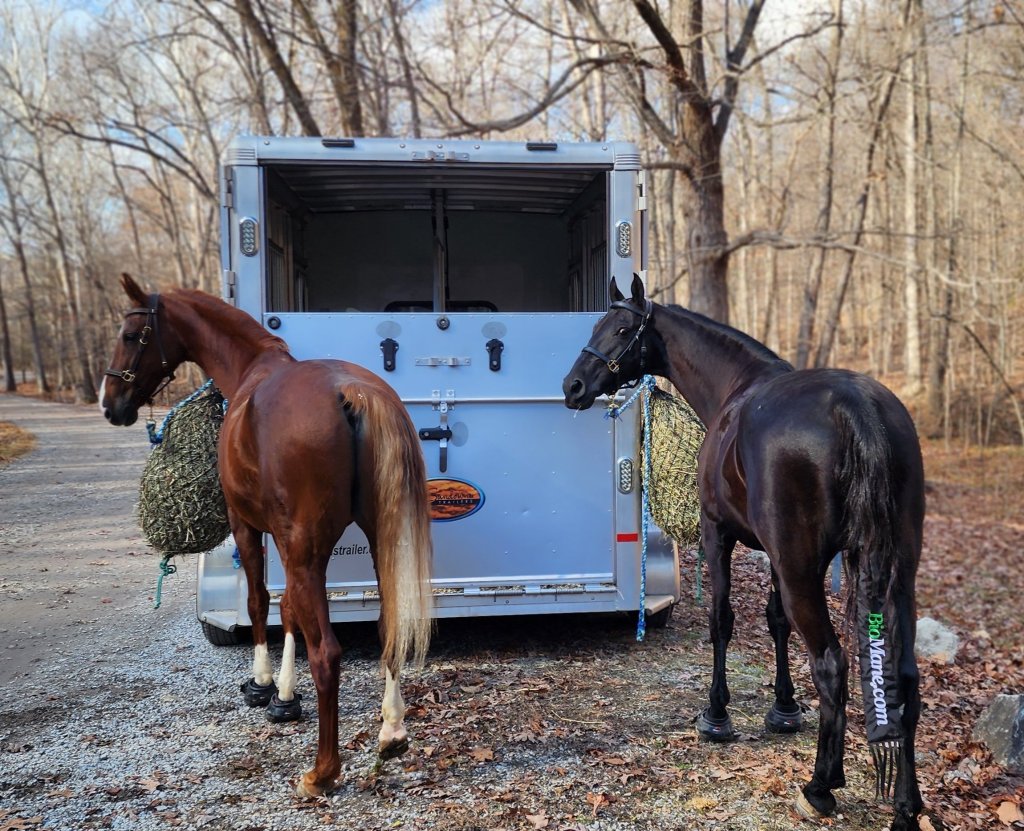


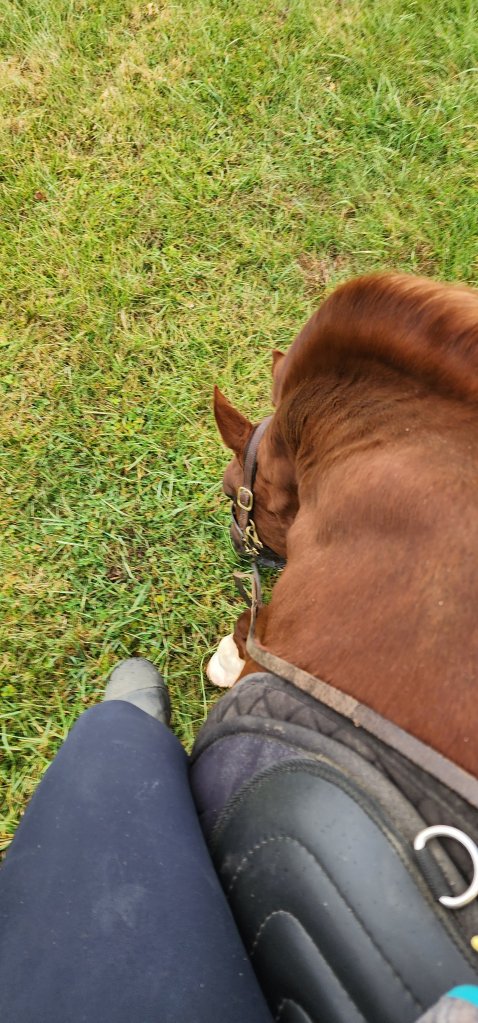

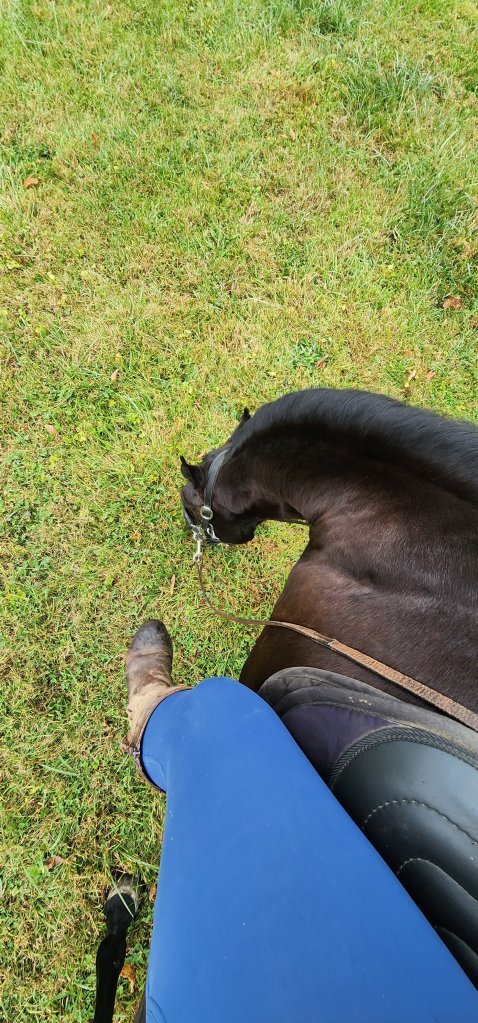

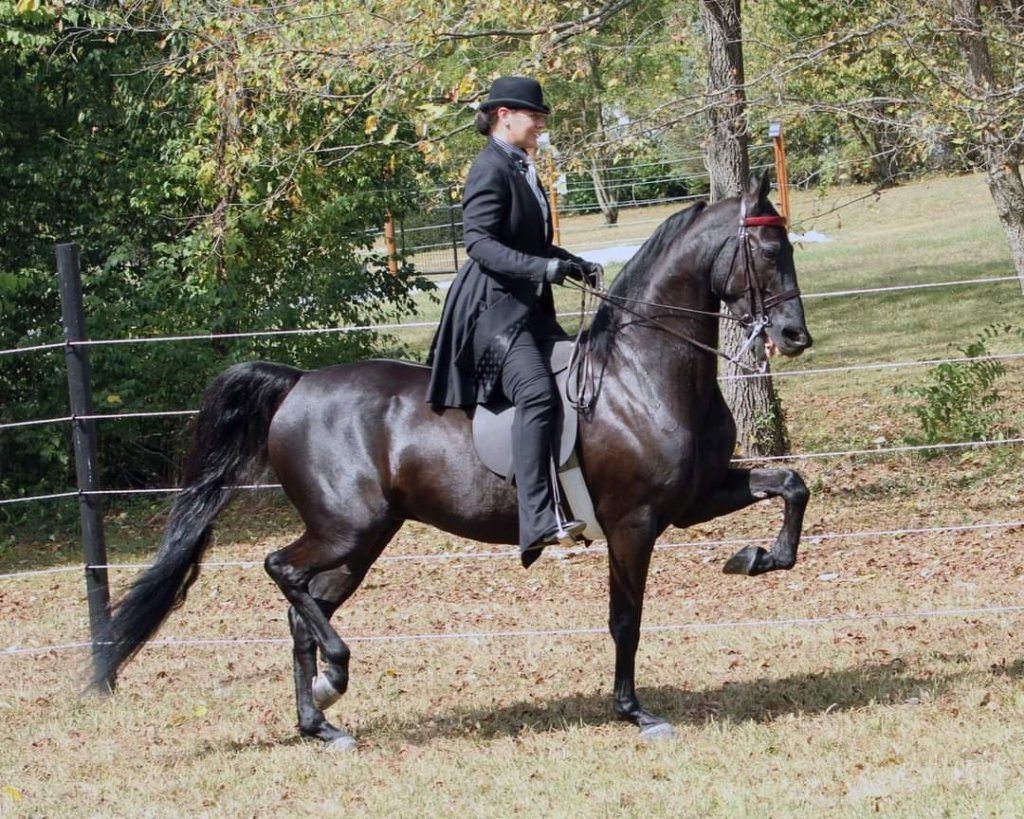
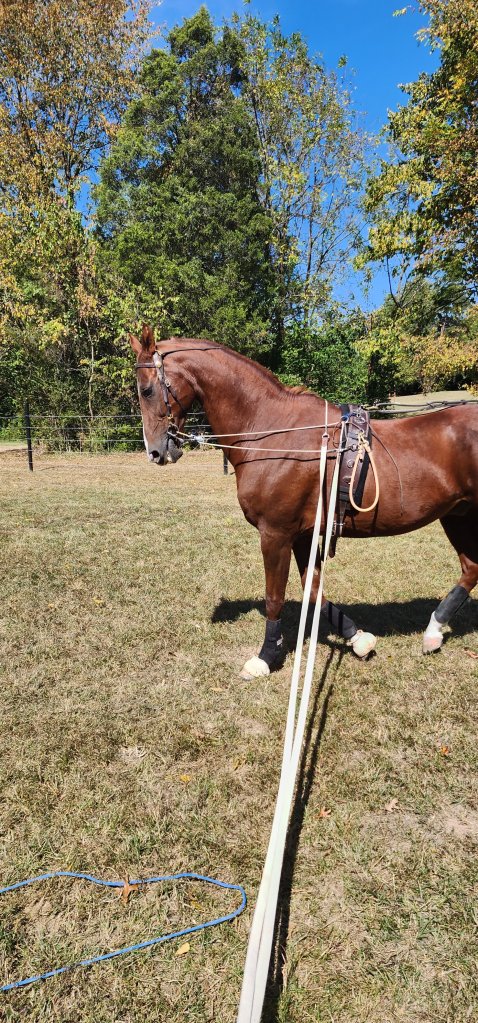

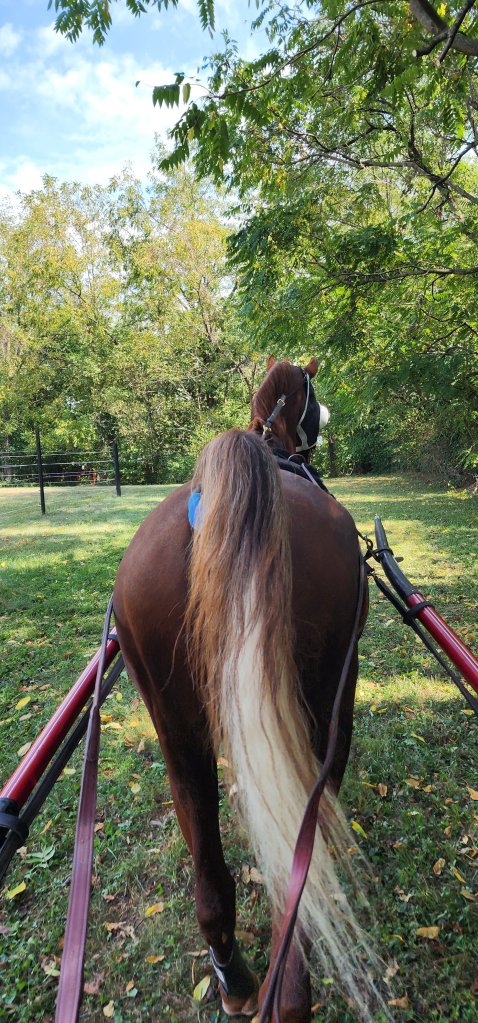
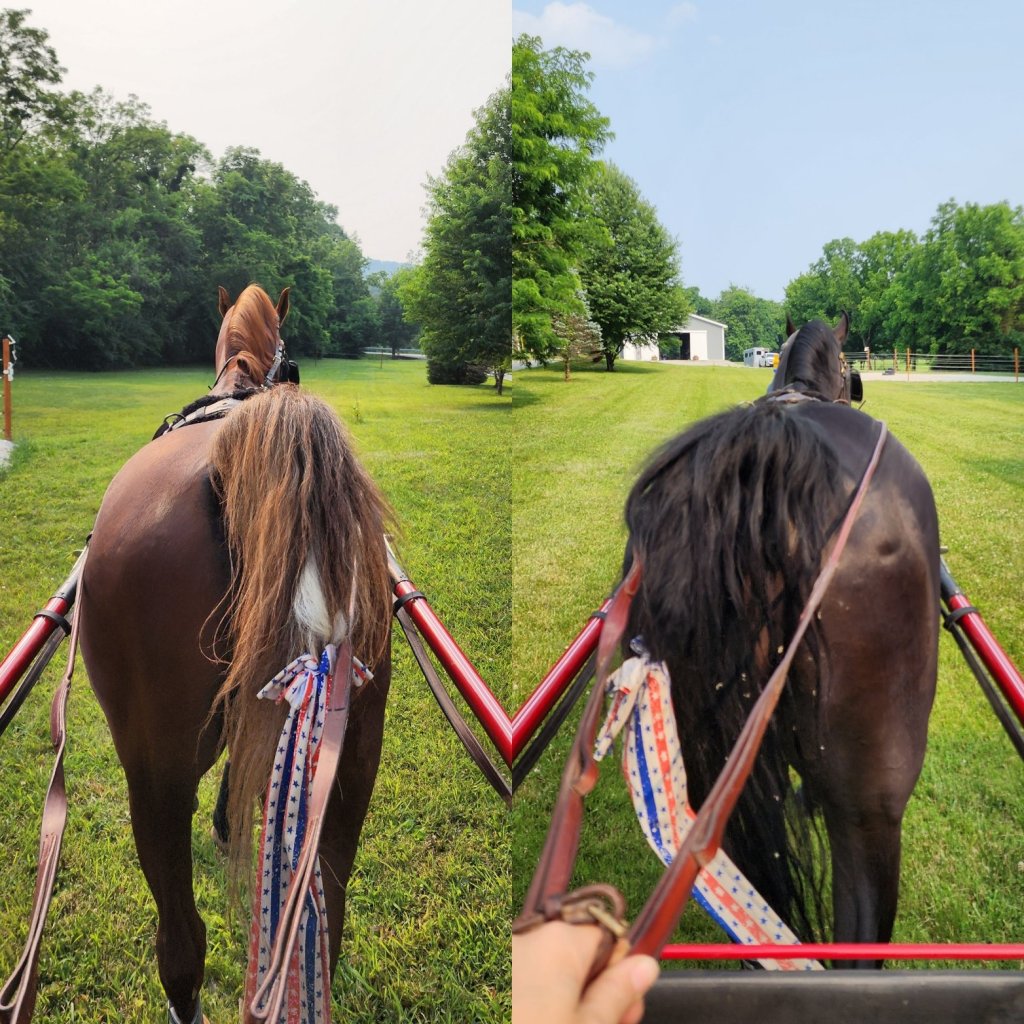
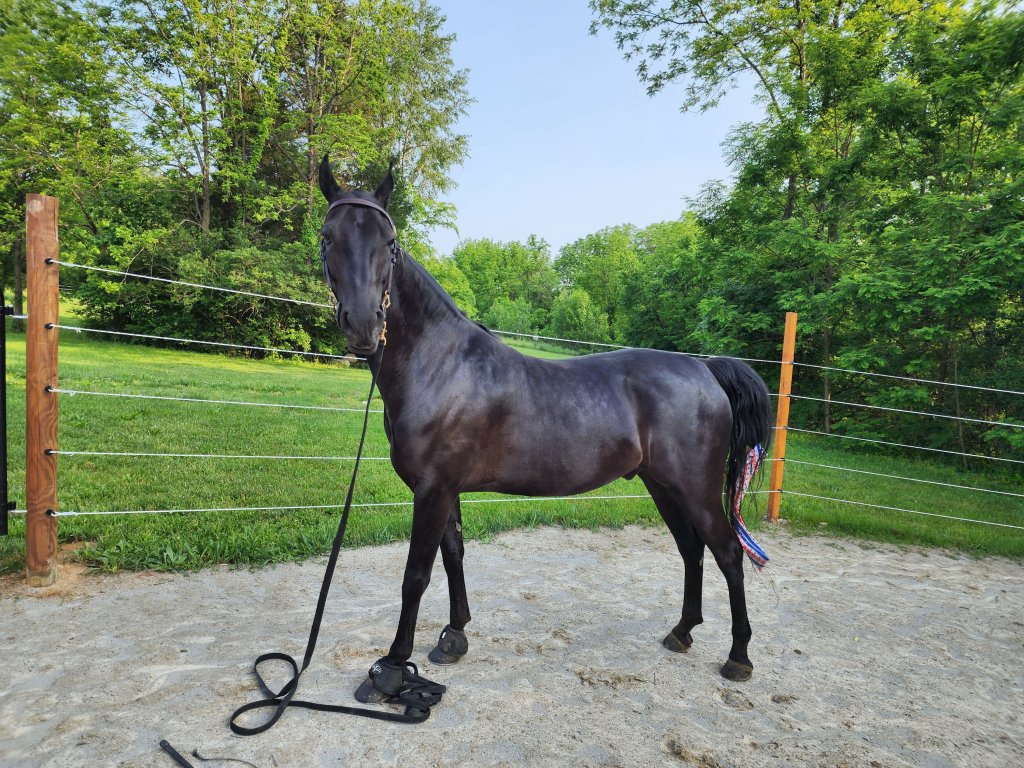
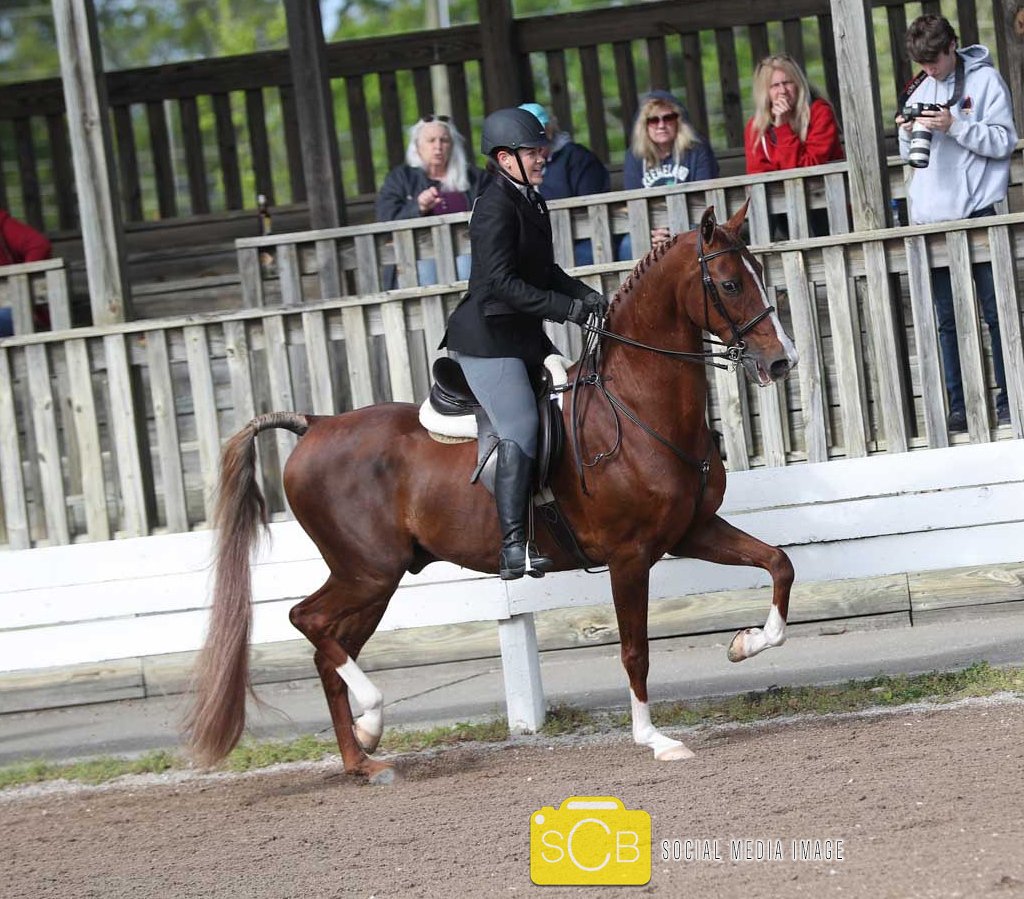

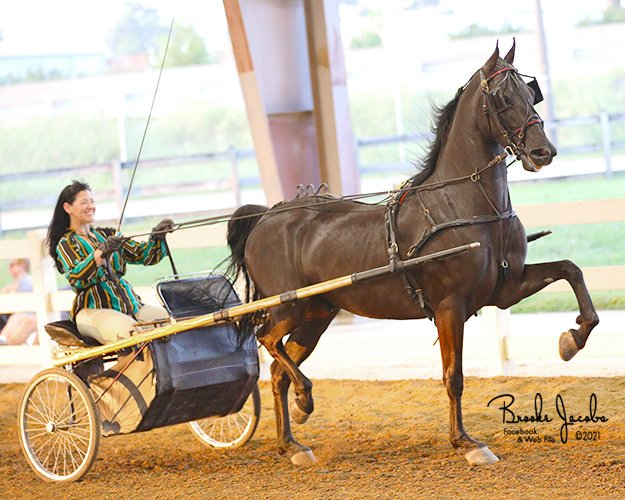
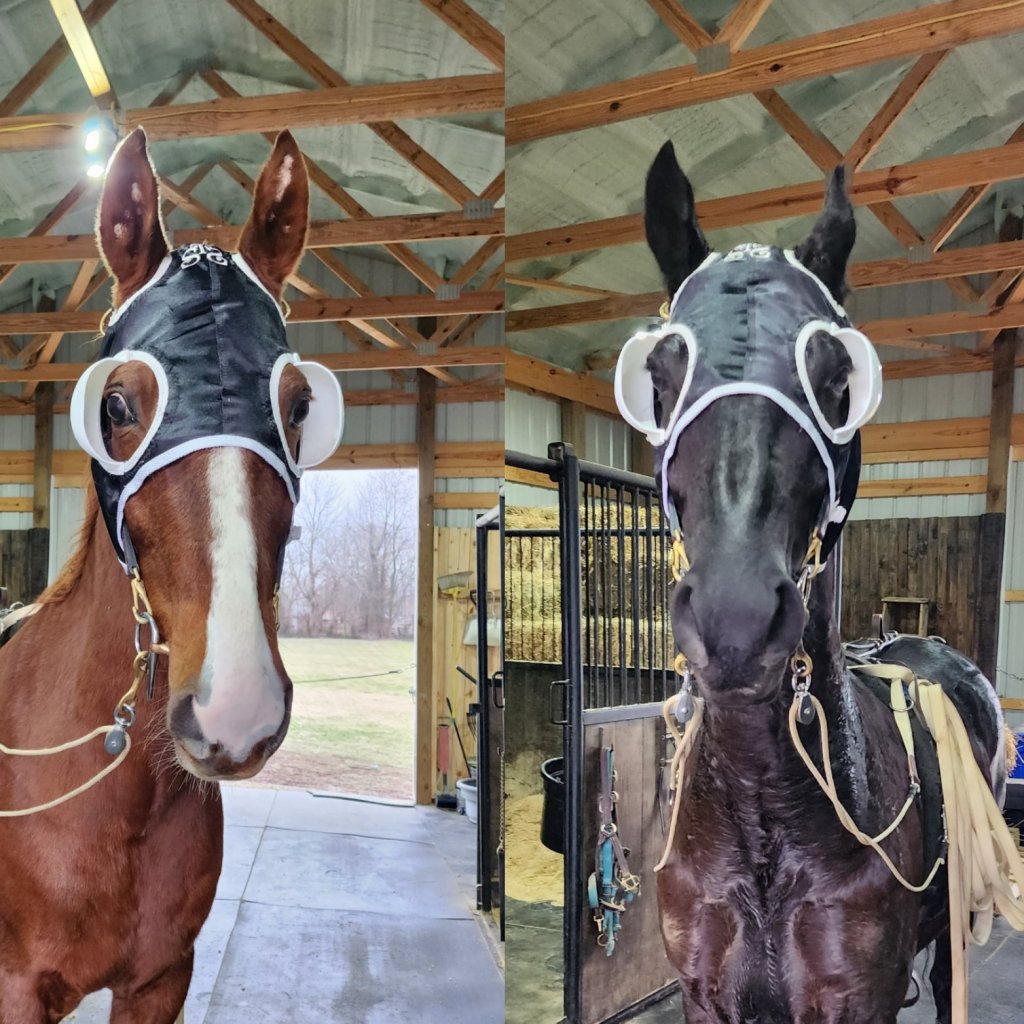
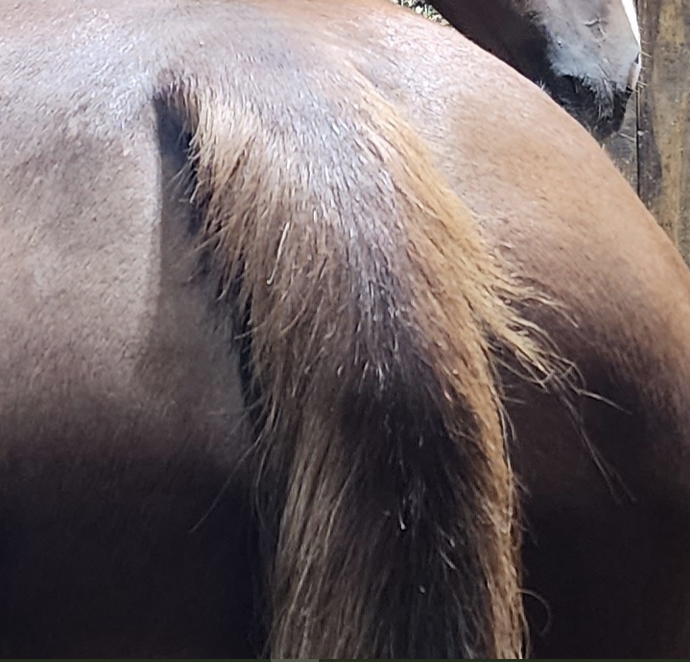


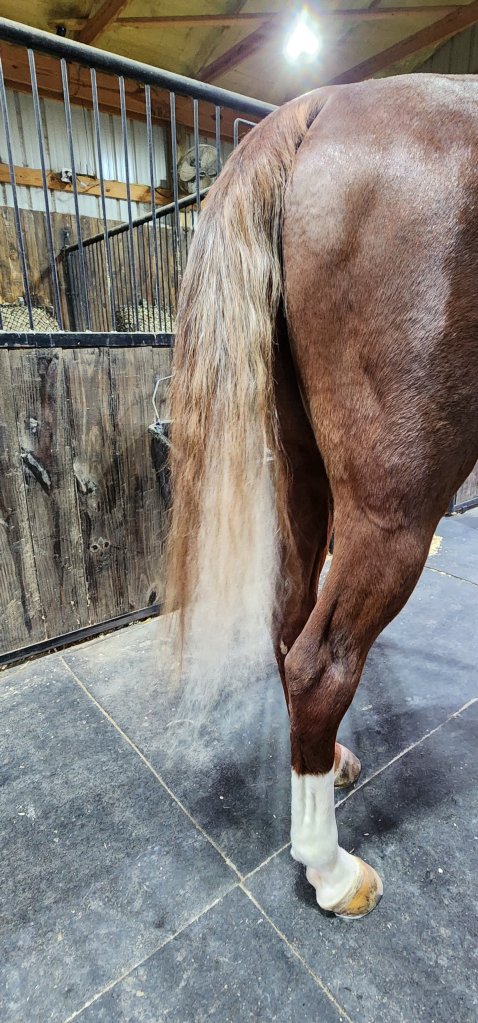
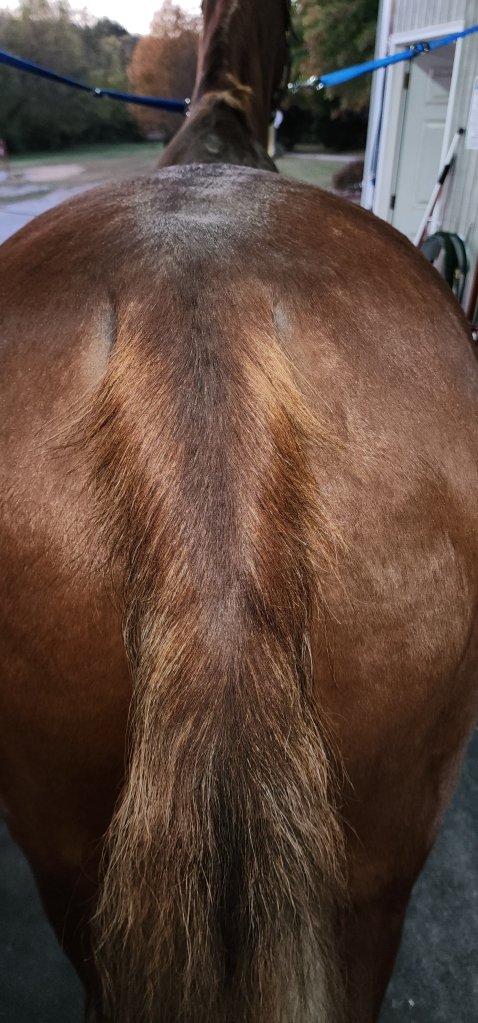


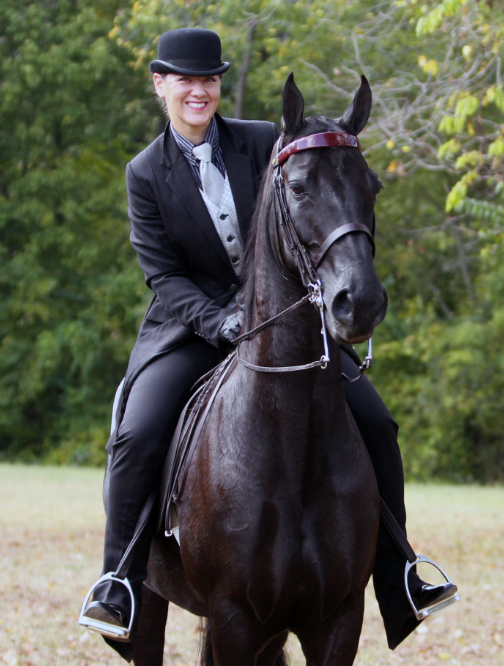

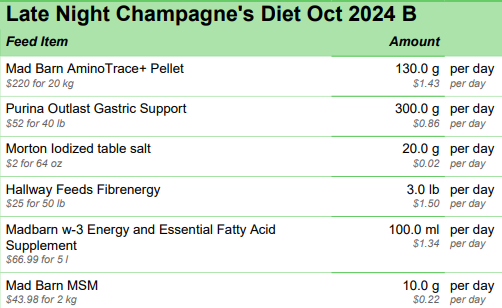

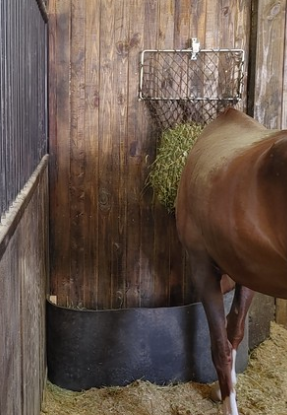


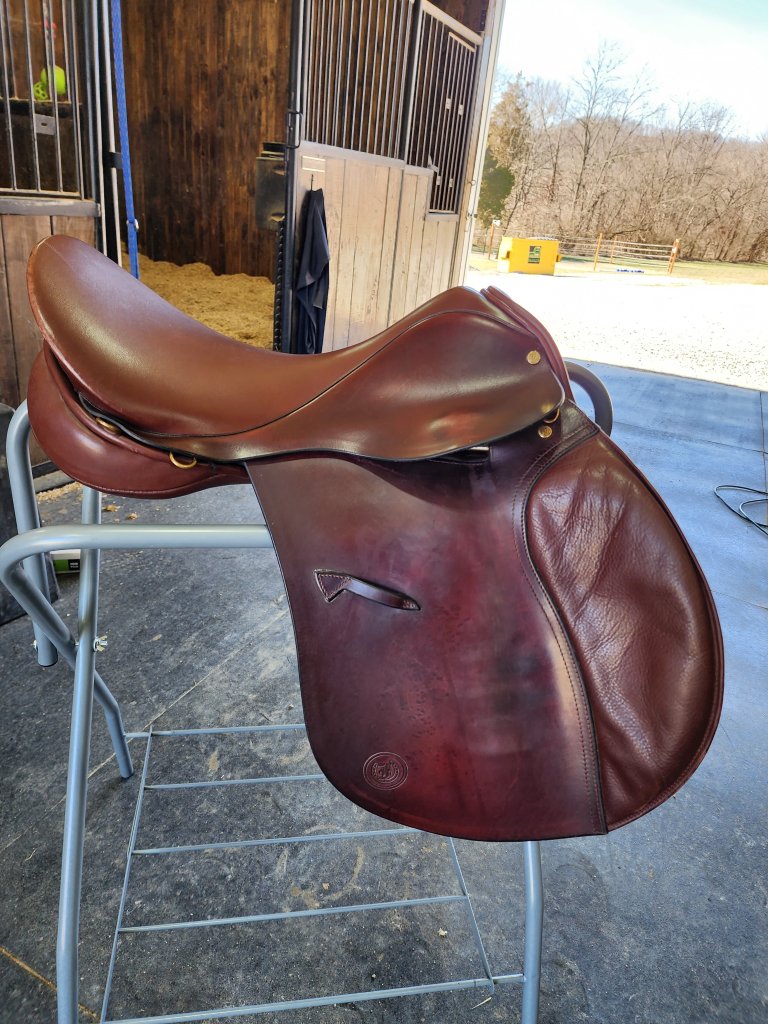


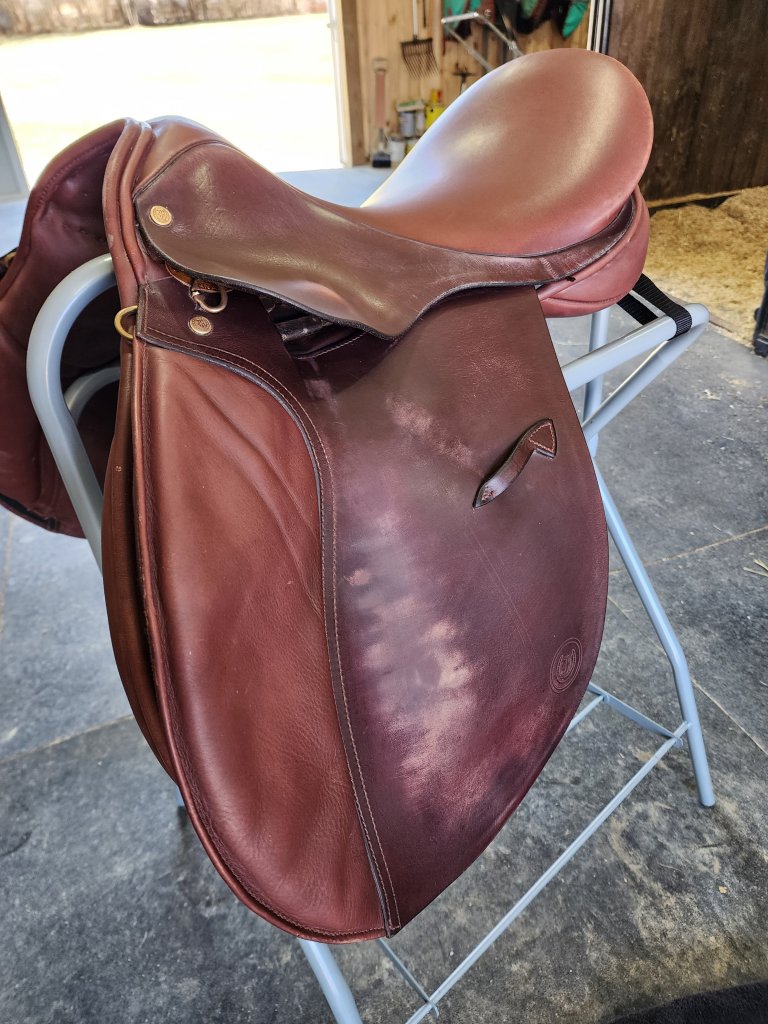


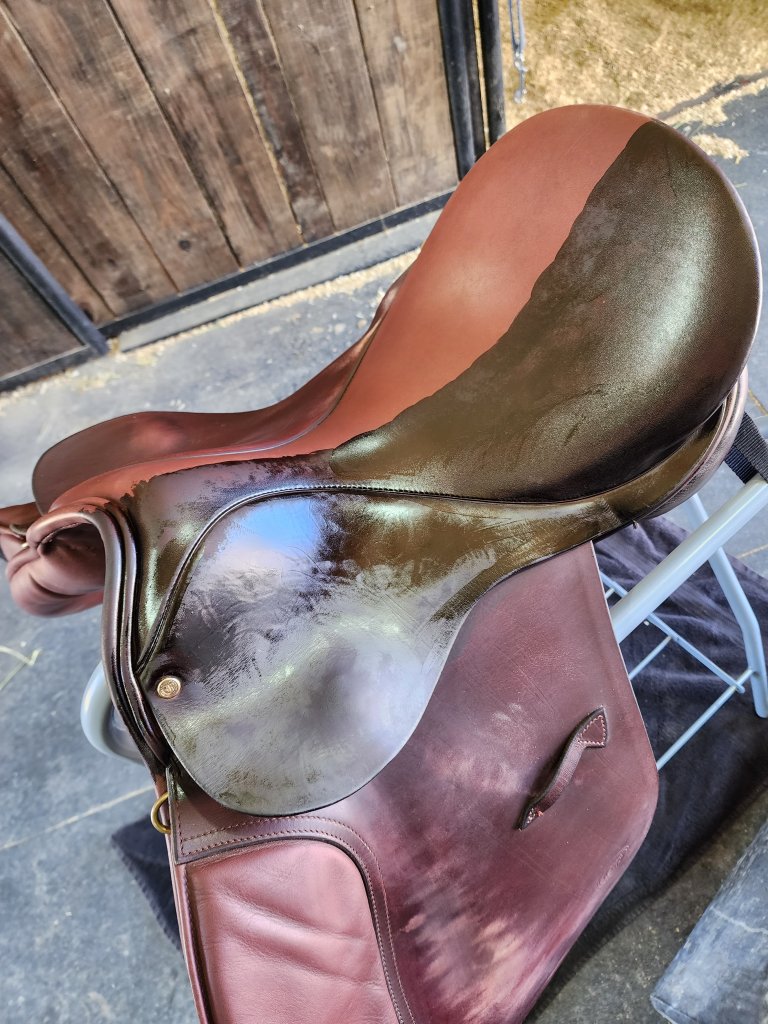
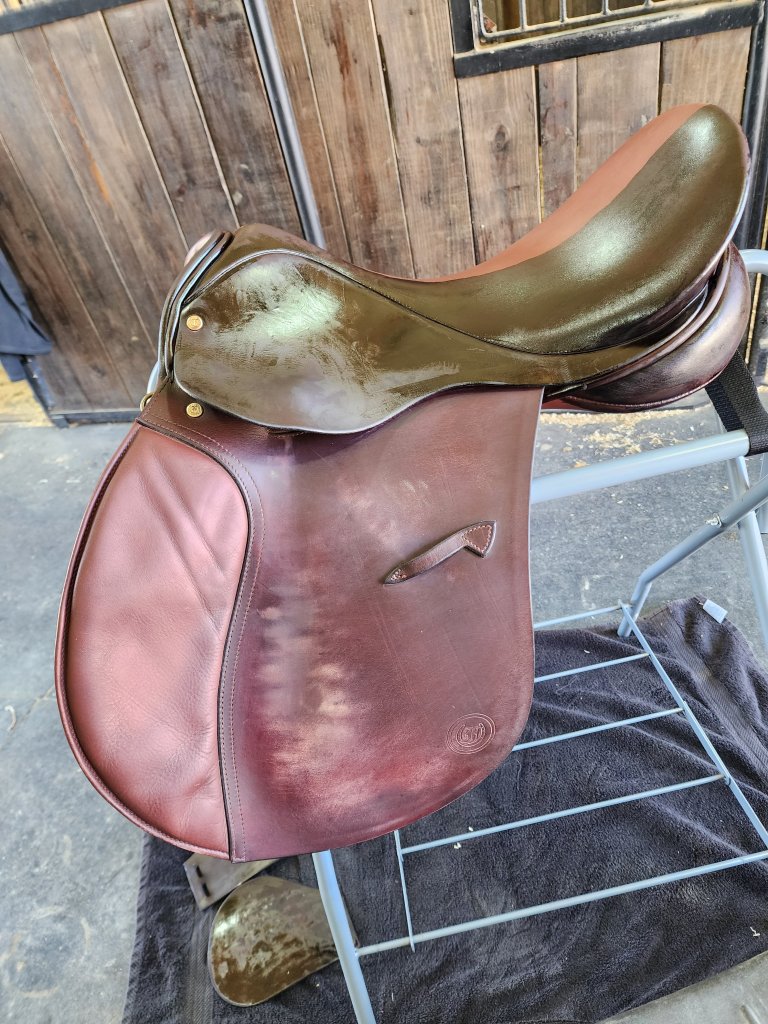


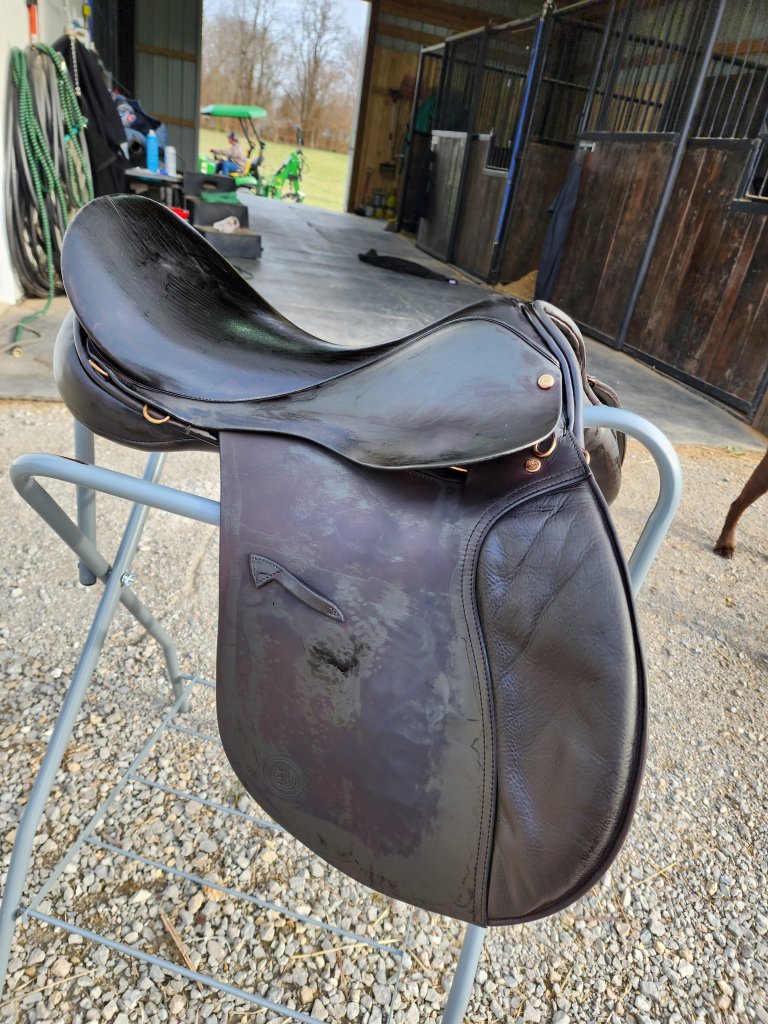
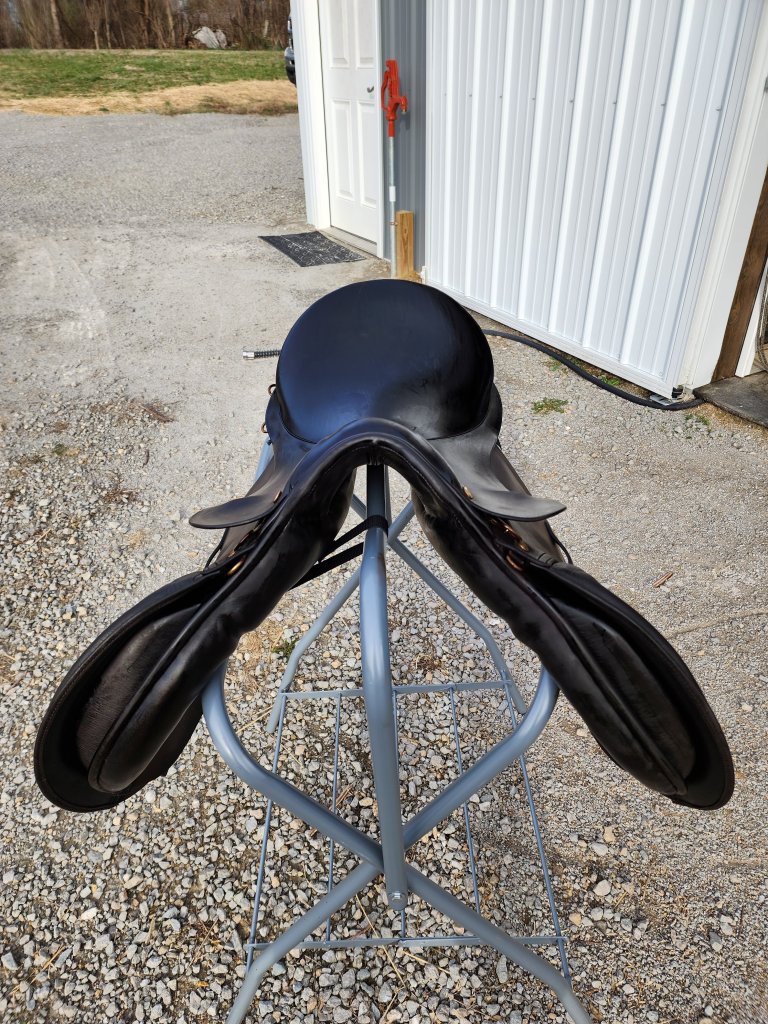

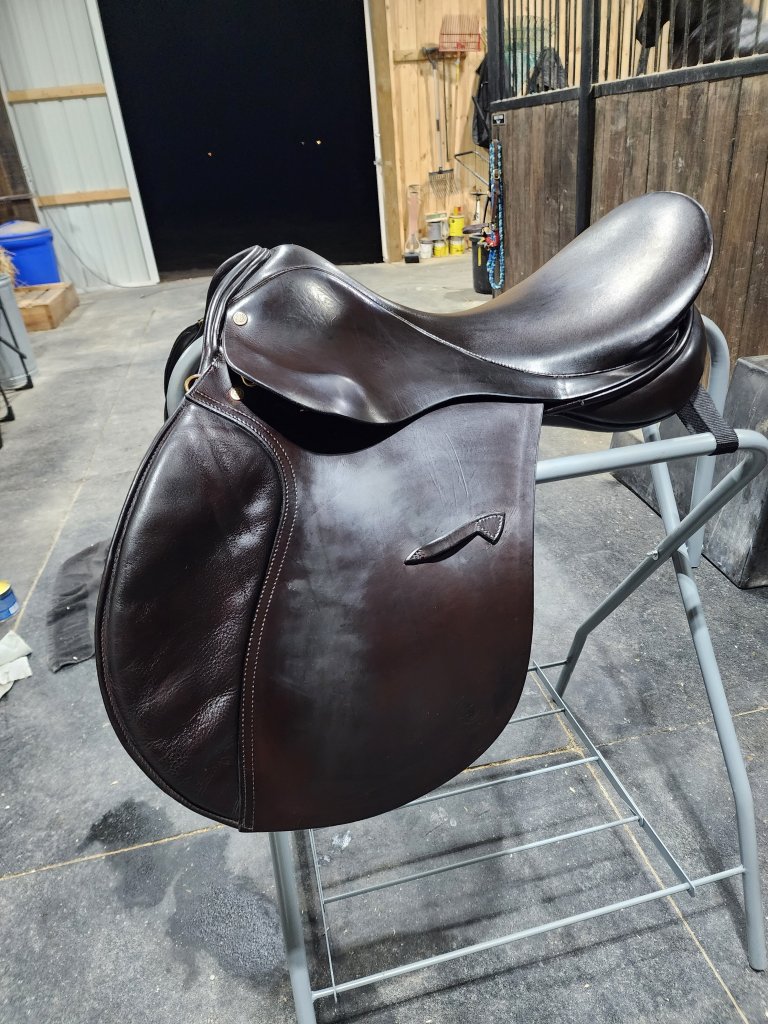



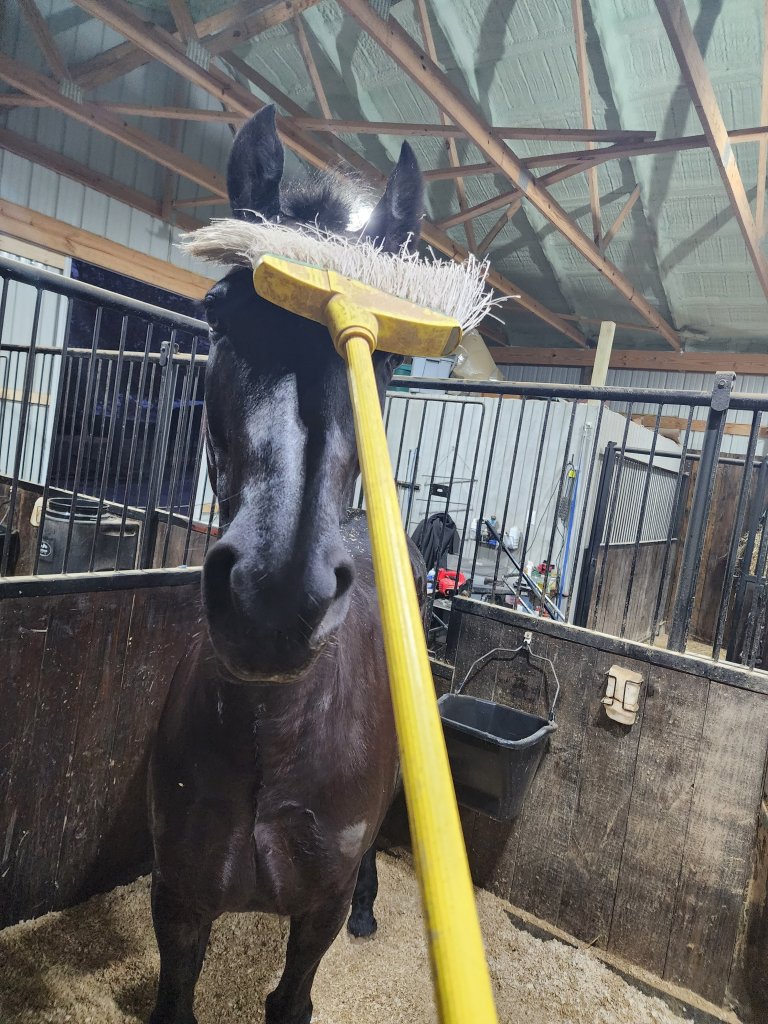

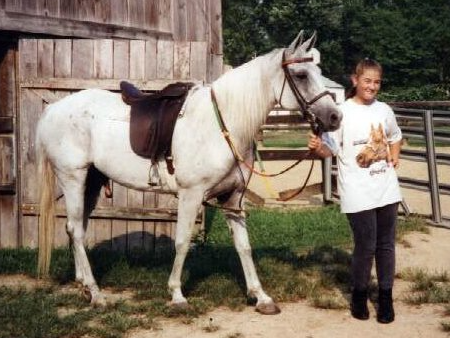


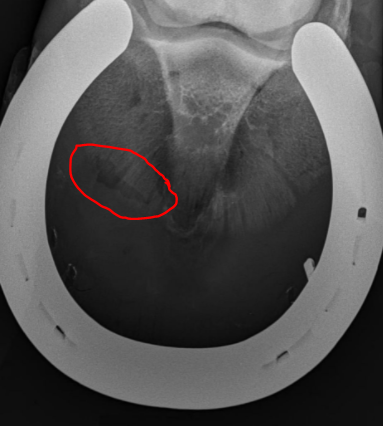

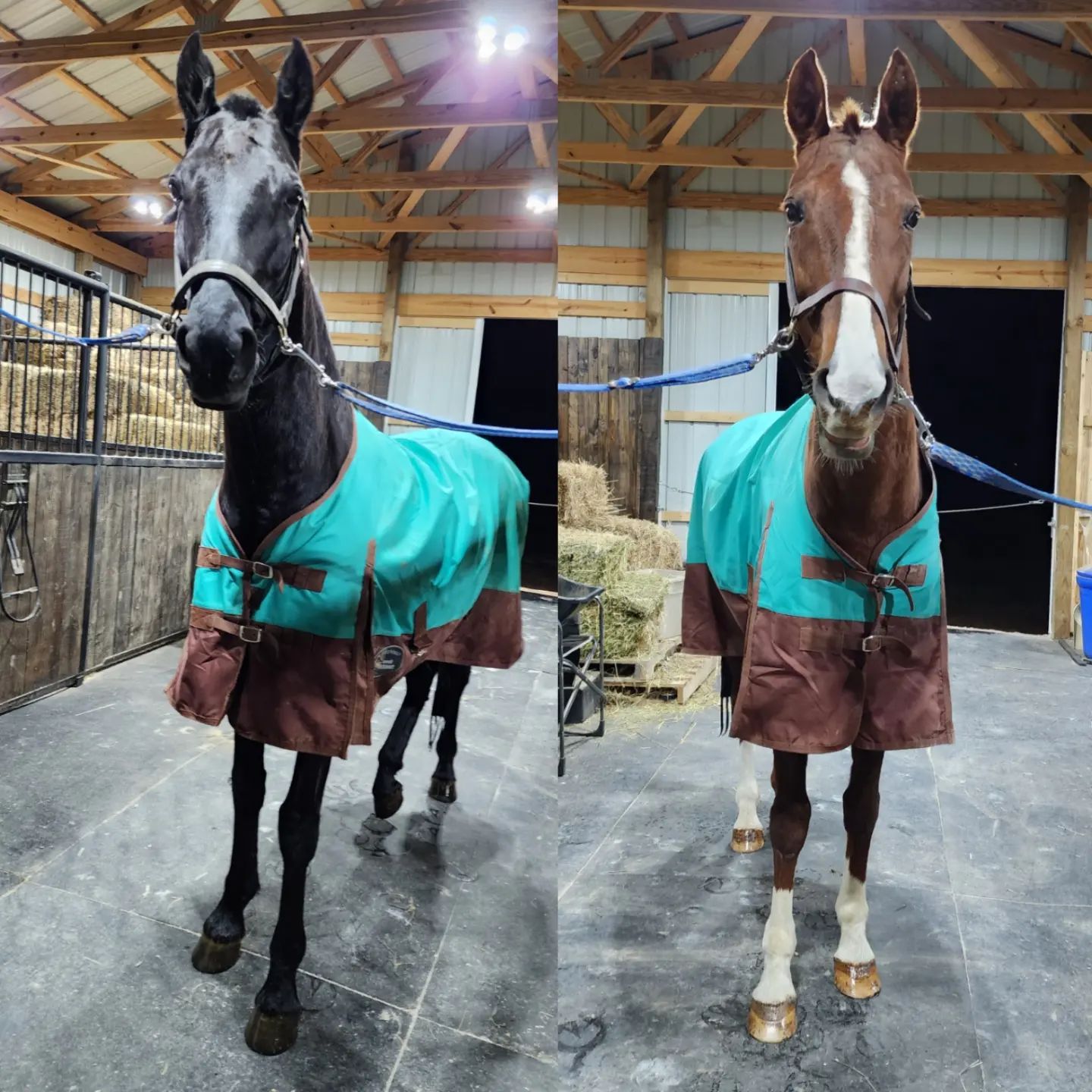


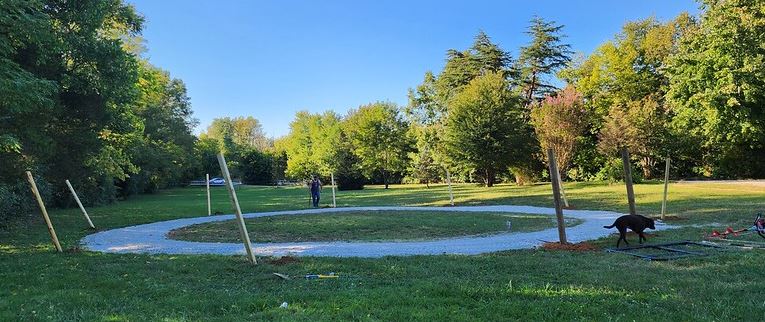
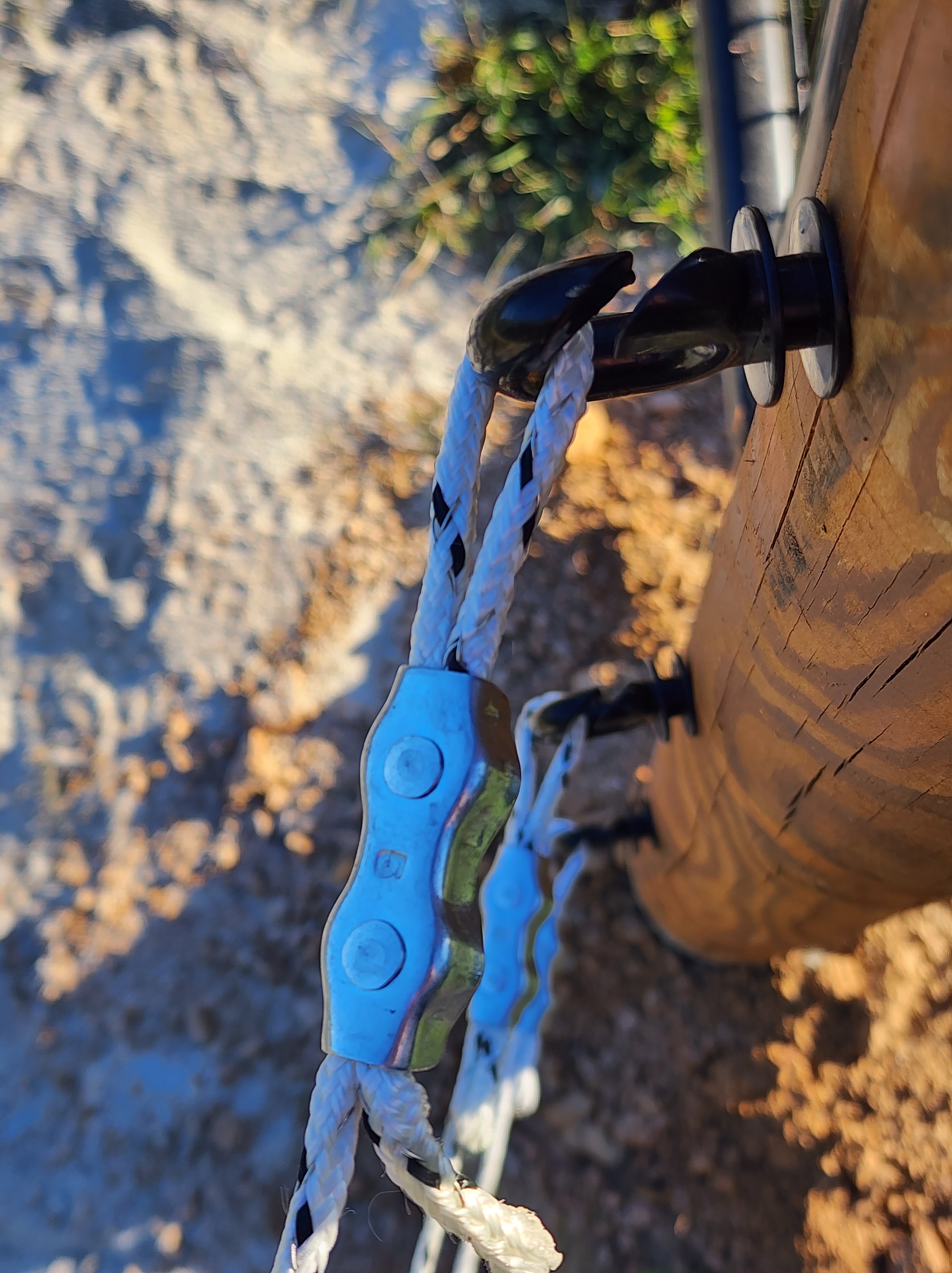

 Twisted Sisters Saddlebreds