Horse training

Comparison is the Thief of Joy

Do you ever look at your horses and think “you could have been so much more, if you weren’t just stuck with me?” Do you ever compare where you and your horses are to where other people and their horses are and think “we aren’t doing enough” and get a little upset at that?

So many times I flip through magazines and I see all these people and horses in tip top shape doing all these big things and I get a little down. I lose motivation and I lose some faith at times. I look at my knowledge and skill level for training, I look at the talent and natural ability of my horses and I think, they could have really gone to the top. I look at them in awe of their natural abilities, in awe of their tolerance and forgiveness for me, and I wonder what they could have done under a compassionate, more skilled teacher. I look at other horses that maybe aren’t as naturally talented working and showing under very talented trainers and doing big things and I think “that could have been my horses” if it weren’t for me. If only I had more money to pay someone to help them, to help me. If only I had more skill, more talent, more, more, more. It is so easy to feel guilty in the horse world, to feel like you’re not enough, you don’t have enough, aren’t doing enough. It’s so easy to downplay your accomplishments because you are too busy judging them against others.

But, isn’t that part of the problem with the horse world anyway? Isn’t this supposed to be FUN? Sometimes I have to force myself to take a step back. Maybe even a lot of steps back and look at my horses; Horses no one wanted because they were labeled “problematic” among other things, due to being under the direction of people who didn’t believe in them, pushed them too hard, had expectations beyond the horses skills, didn’t have enough time for them due to other responsibilities, etc. I have to look, I mean really look at how far they’ve come with only an amateur to teach them. I have to look at myself, where I started to where I am now and the skills I didn’t have in the beginning that I have learned over the years. When I really look at all I have learned since I began my AOT journey, not only out of necessity but also out of sheer determination, then I can see my horses have overcome so many hurdles and proved so many things people have said about them wrong. I have done the same myself. These horses have excelled because I have not given up on them when others did. I have made it a point to learn from anyone I can, find answers any way I can, and I have kept that “try, try again” attitude through setbacks, through failures, through all the highs and lows that come with working with horses. I have to meet them where they are, praise them as they stand, and be proud of how much we have done with so little.

At the end of the day, the horses don’t care. They are happy to stand in a field and eat grass and hay and they are happy to be loved and fed and cared for. THey could care less if we go to a horse show. They could care less what anyone thinks. They are happy to have someone kind to help them learn skills they didn’t even know they needed. They are truly and honestly GOOD boys who try so hard. So what if they could have done more? Others with more skills than myself could have done more for them, but they didn’t. They could have ended up in bad situations but instead, they landed with me: The determined amateur. And I won’t stand for ANYONE to talk poorly of my good boys, even if we accomplish absolutely NOTHING. So, why would I stand for myself looking poorly upon our accomplishments? I need to learn to use that at motivation as we ramp up into show season. There’s always things to learn and always fun to be had.

Comparison is the thief of joy. Learn to be happy as you are, and if you want more, go WORK FOR IT!

Back to Work

Before I started on my AOT journey many years ago now, I didn’t know all the details surrounding actually working a horse. I understood things like ground work, long lining, driving, riding, etc. But I didn’t know a lot about when to do what and how much was enough, or when was too much. Since having my horses at home, I’ve walked the fine line and in the end, the horses always tell you what they need. At least if you have opinionated dragons like mine! I have also made it a point to give them some down time after show season is over. This gives them time to be a horse, to get dirty, to play, to have fun, to rest, and many things that I feel are good for their bodies and brains. We may do a little ride here or there, a trail ride thrown in on a random weekend. Some fun stuff, but no serious work. 

Now that it’s the new year, and the icepocalypse and snowmageddon that beat us down the first part of January is finally starting to melt, it’s time to start thinking about our upcoming show season. For us will probably start in April or May. When you’re starting a horse back to work, you can’t just go full blast back the way you were at the end of last season if they’ve had a lot of down time. Think about your own athletic ability. Say you run 6 days a week for 8 months (Feb-Sept), then decide to take 4 months off (Oct-Jan) and enjoy your extra lavish holiday meals with minimum exercise. How do you think you’re going to feel when you pick running back up again at the end of that 4 month hiatus? You’re not going to have the same stamina you had after all those months of running consistently, right? The same applies for your horse(s). You have to build them back up slowly when bringing them back to work. Otherwise, you risk injury, among other things, causing setbacks you don’t want or need. 

So, how do you do that? It’s easy. Same as you would do for yourself. Take the things you want to do, and start slowly by doing shorter, easier works at first. Gradually increase time and intensity as the days and weeks progress. Now, each horse will be different, the same as people. It could take one horse 2 weeks to get “back in shape” while another takes 2 months or even longer. Age, diet, attitude, and how they are kept day to day all play a role in how long it will take them and you have to treat each one as an individual. I like to start by doing mostly walk, a little bit of trot works on the lunge line for the first few days to get them back into the routine of doing something, but give them something that isn’t very hard to do at first. Next, I will add in long lines and work on bending, steering, body awareness, and contact. Once they are going nicely in lines and listening well to basic commands, I bump up the intensity and length of the sessions. Then I will add jogging with a cart to the mix a day or two a week (more on that below). Lastly, I will mix in full training sessions in the saddle once I feel they have built back up a nice amount of stamina and strength. I may saddle them up before that and try to do a light work, or a trail ride, but it’s not going to be intense 3 gait training.

Once they are going under saddle again, I like to remind them of leg aids and voice commands. My horses know these things, but it’s easy for them to forget when they haven’t been doing them consistently every day for months, so they deserve a little leniency when they don’t respond immediately, or they respond incorrectly and need a reminder of what the aid means. Practicing kindness and understanding goes a long way with the rapport you share with your mount. Rest assured, they will remember, you just have to give them a chance. It may not be on the first try, or the tenth, or the 50th, but keep your consistency and they will come around. My guys usually take several weeks of “reminders” to get back to what I consider appropriate responses and times.

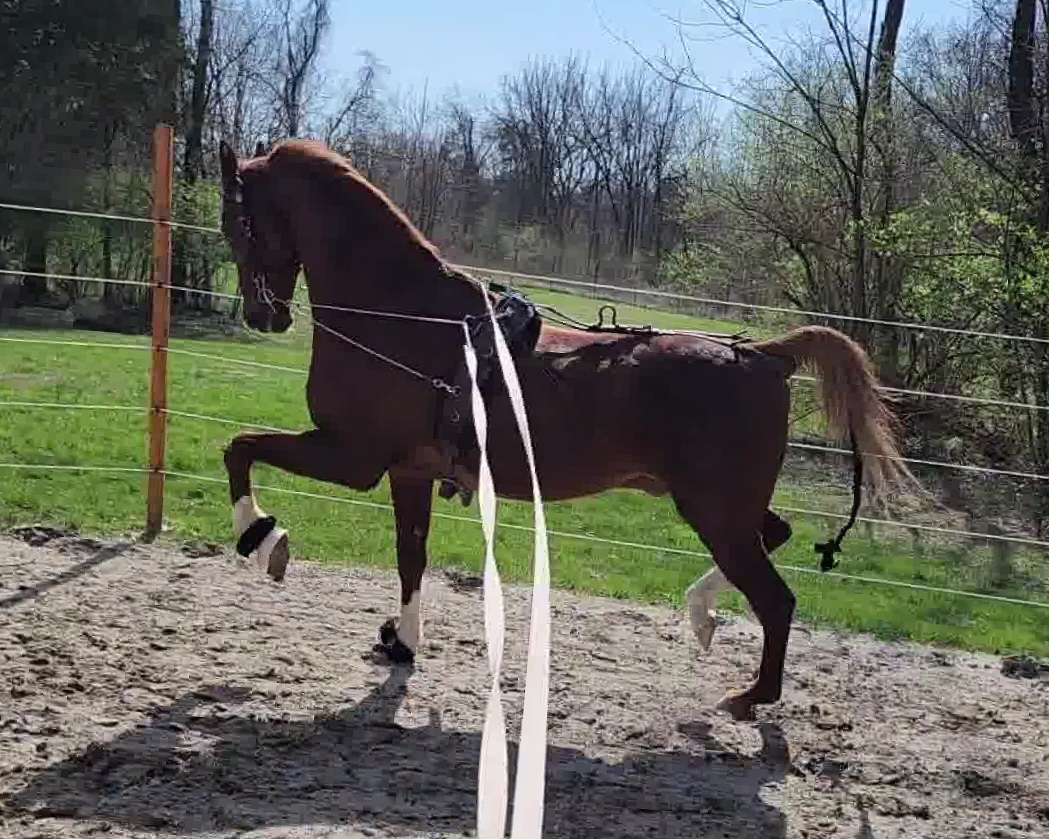
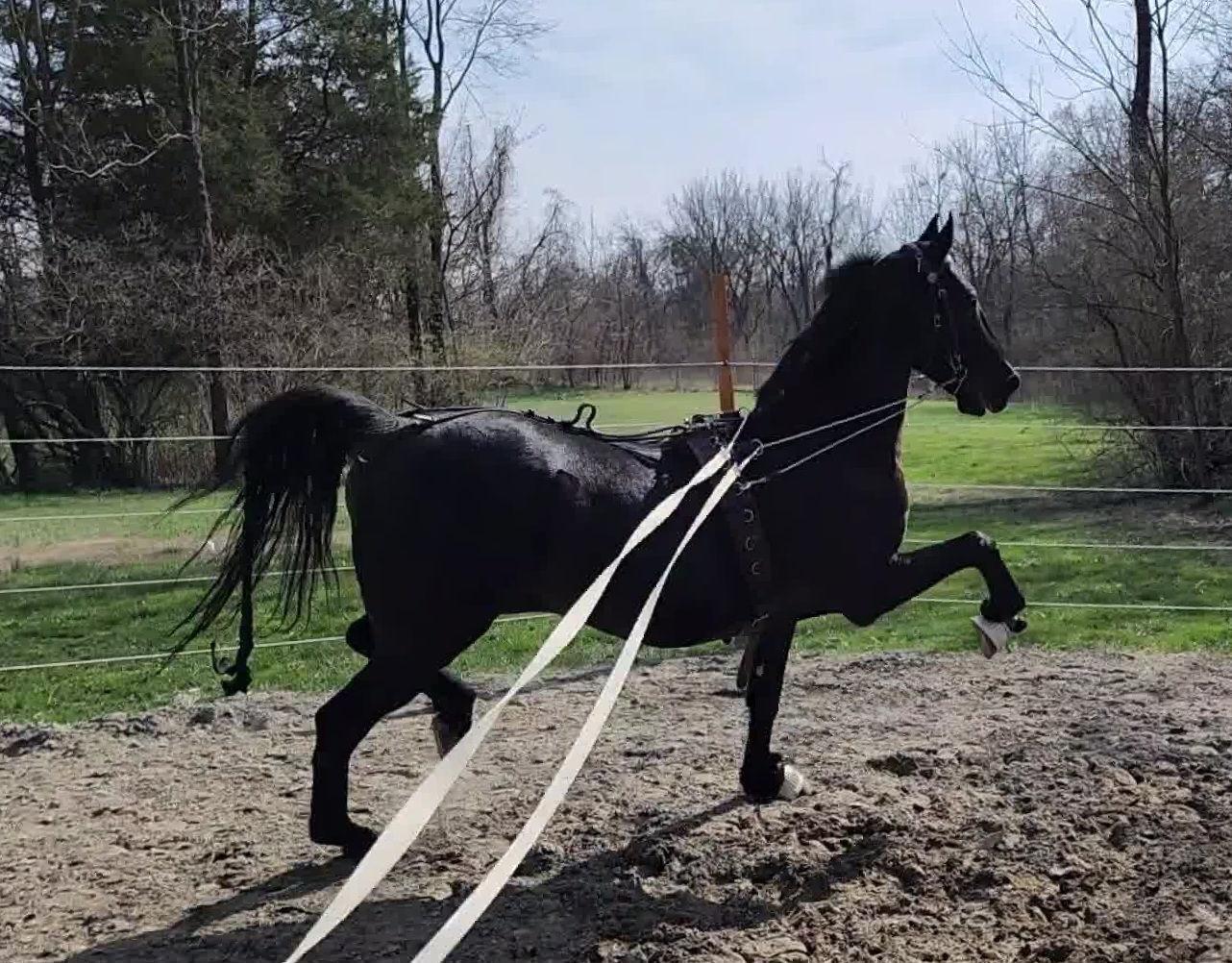
I will also add in ground poles (at the walk) and trot work (on their aids) and do lots of transition work between walking/trotting, poles, and backing up. If you have access to hills, those are great at building strength and stamina and promoting proper movement, even if all you’re doing is hand walking them. I like to long line all around my property and the various terrain, as it gives my horses AND me a workout. Let’s face it, I could stand to have some exercise too after the holiday season and all the snacks my Mom made and I was forced to eat. Ok, fine, forced may be a little bit exaggerated but they were there and I just couldn’t let all her hard work or delicious treats go to waste, OK? Don’t judge me! 

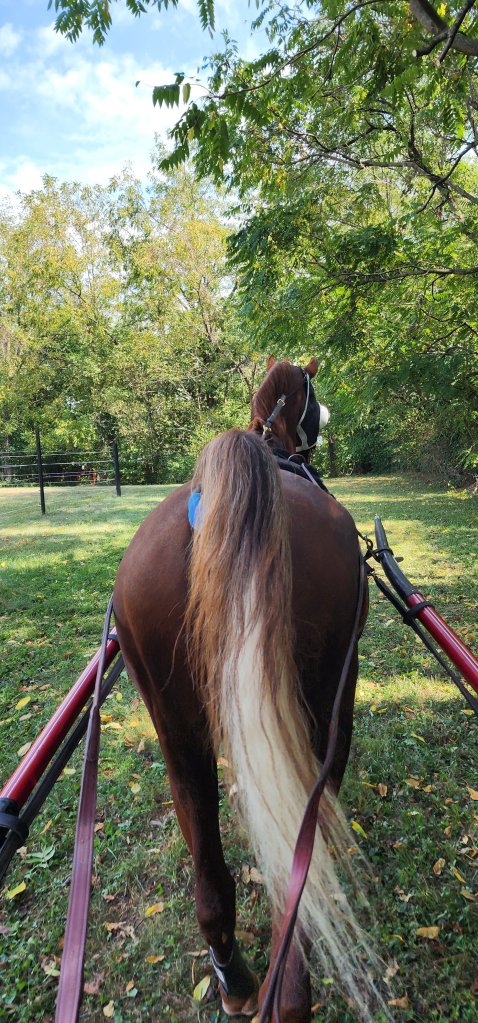
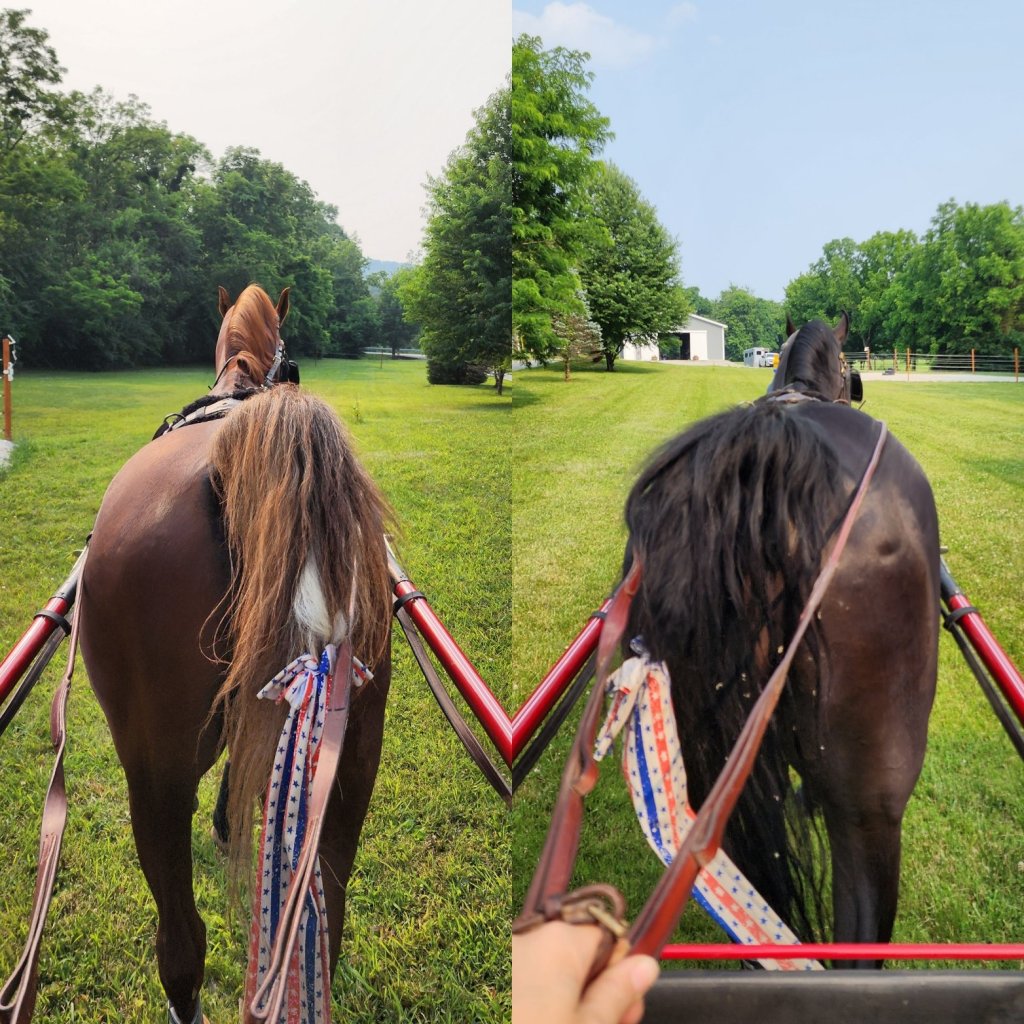
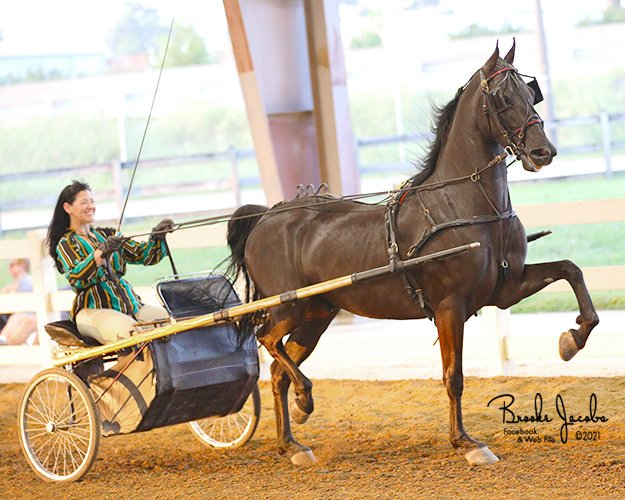
If you have access to a jog cart and you and your horses know how to drive, pulling a cart is excellent for fitness and maneuverability. Plus, it helps to save their backs from so much riding, which I like. When my horses are in full work, I do drive them multiple times a week. Fizz knows how to canter pulling a cart, and it’s really helpful for him to still practice it without the weight of a rider. At the end of last season, I started teaching Duke, but then show season ended and they were turned out so I guess I’ll pick back up when we go back to work this year! My horses do prefer less riding sessions and more of other work, so I try to stick to their rules so that they are also enjoying our sessions. Fizz in particular gets really angry if all you do is ride. Duke is less particular, and will accept more days riding, but not until he’s been fully reminded of everything he knows via lunging, lining, and driving otherwise he will make your life a living hell.

Overall, I like to give them at least 60 days of consistent work to get back “in shape” before taking them to a show. Consistent work meaning 4-6 days a week. Now, sometimes this is possible and sometimes not, but that’s my goal.

Don’t Tell Us We Can’t

I’m not sure who is more stubborn, me, or the horses. I have heard so many “you can’t” do this or that with show horses, with my horses specifically, etc. You can’t turn them out during show season, you can’t work them twice a day, you can’t get on from the correct side or from a mounting block (Duke), you can’t ride him bareback, you can’t ride him just in a halter, you can’t run barrels, you can’t trail ride show horses, especially saddlebreds, they’re too spooky. Excuse me, what? No. We can do anything we want. Don’t tempt me with a good time trying (even if we fail). Which we won’t. Because we’re awesome. And we’re too stubborn to stop trying until we figure it out. Saddlebreds are smart, resilient, brave, and versatile. Despite what people think, they ARE multi purpose. At least mine are. I don’t really give them a choice not to be. 

Many years ago when Fizz first came into my life, I was determined to give him a well rounded education. What I didn’t know is that I would be educating myself along the way. Over the years, I have learned many things outside of the saddleseat background that I grew up in. The key is to take knowledge from any and all places, no matter if you agree or disagree or like or dislike the discipline. There are principles of training in literally every discipline that you can use to make your horse better. Contrary to popular belief, I don’t believe that teaching them things outside of their intended use is going to make them less good at their primary job. 

From saddleseat to dressage, to jumping, to reining, to barrels, to trail riding and everything in between, there’s something in each and every one that can help build your horse. I do the same exact job every working day and it makes me bored as all hell. What makes us think our horses don’t like variety? I know from my experience the happiest my horses are, is when they aren’t asked to do the exact same things every single day. The least happy they are (or at least Fizz was) is when I was doing the same thing day in and day out hoping to make a saddleseat horse out of him in the very beginning. That is all I knew. The best thing I ever did for him and for me is to open my eyes and learn. Most importantly, HAVE FUN.

Am I saying you have to trail ride if you don’t want to? No. Am I saying you have to take lessons in dressage? No. Am I saying you should run out and set up jumps and jump them? Absolutely not. But certainly don’t discount the training principles of the disciplines other than yours and give some solid thought to the ideas behind them, how they can help your horse(s). You have the option to try, and if you don’t like it or it doesn’t seem to work well for you, the beauty of life is that you can choose to discontinue doing something whenever you want. True that consistency and repetition is how horses learn, but once the basics are covered I am a FIRM believer in that horses adapt very easily to different things. The consistency comes in your handling. You keep your contact the same in their mouth, your cues stay the same no matter what job they are doing, you have the same basic rules and they can adapt to any task at hand. It’s OK for them to question it but at the end of the day, they should rely on you and trust you to support them in the same ways you always do and they can overcome any obstacle.  

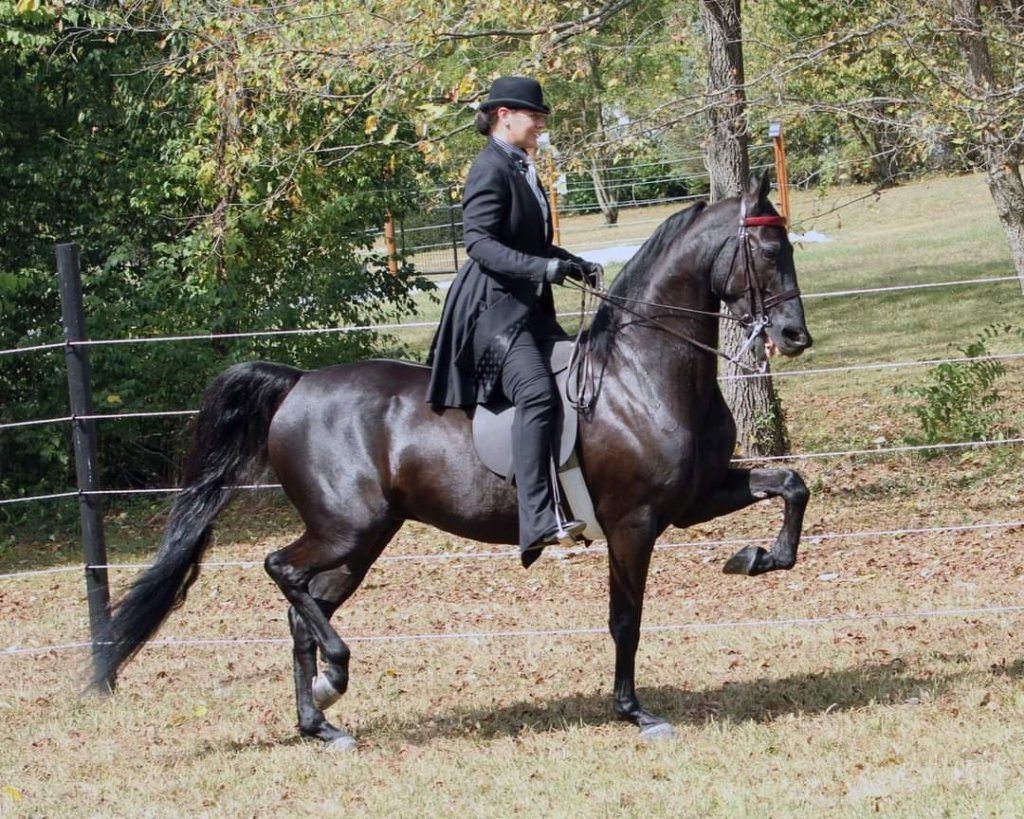
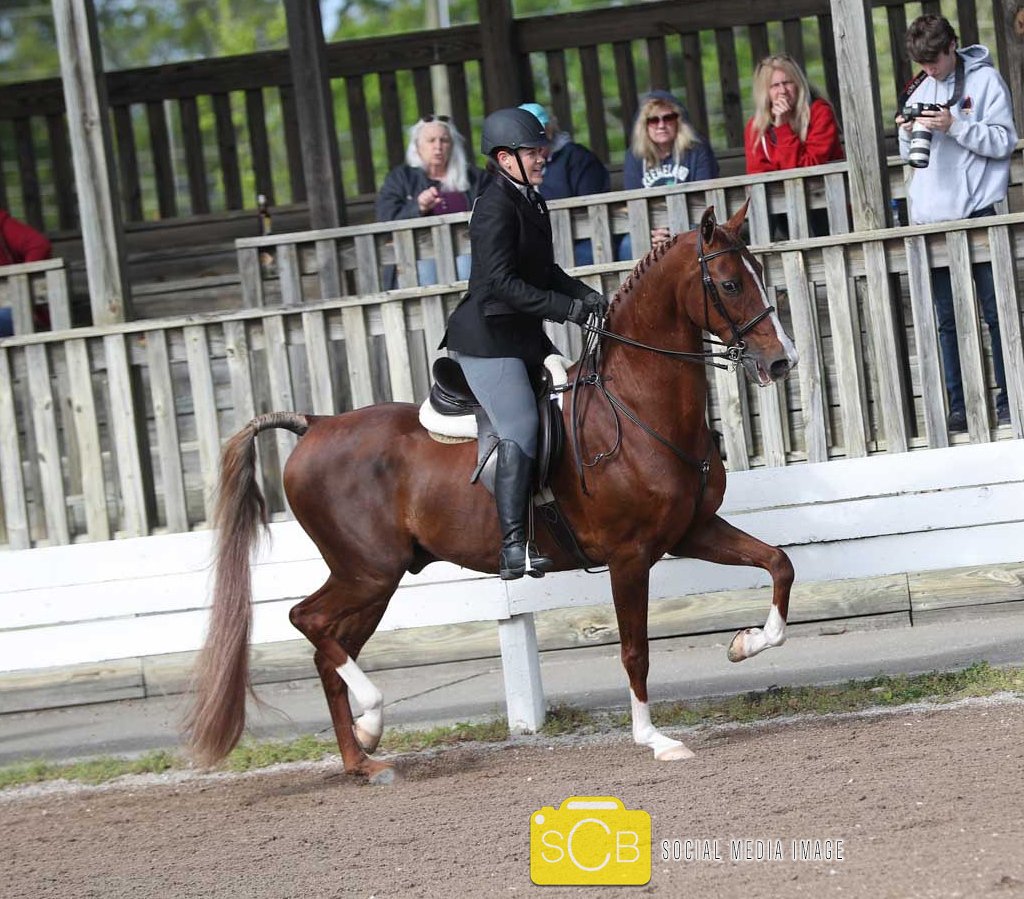
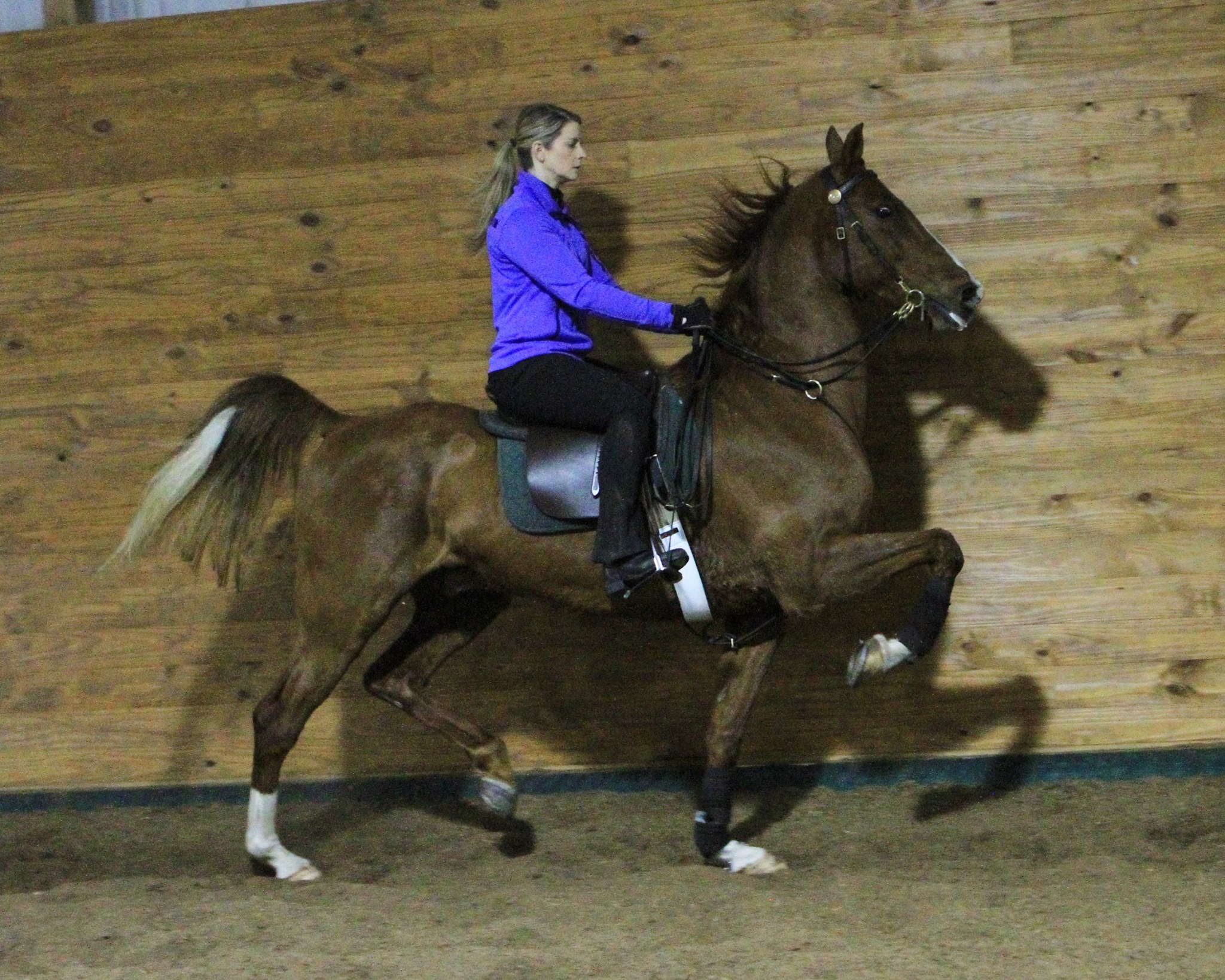
Enjoy these photos of the boys doing many different things. SUCCESSFULLY. 

No One Sees the Magic

There are good days and bad days working horses.  It’s always the great days that no one sees and there’s no evidence of.  I am beyond lucky to have 2 very special, talented horses to work even if no one sees their best days but me. Ideally, their best days would be at a show, in front of God and Country and everyone else, but alas, we are rarely that lucky.

As an AOT,  it’s been a very difficult road (with a stint somewhere in the middle where I just about gave up) but I have learned a lot in 10 years. People have asked me how I do it.  Well, honestly, I didn’t know I had another choice. I can’t afford $2,000-$3,000 a month for professional training (the going rate here in KY is between 1,000 and $1,500 per horse). This doesn’t include any farrier, vet, or other needs. It’s also well above what we pay for our mortgage so… yeah. We are not in a financial position to pay more for horse training than we do for a home to live in.

When you don’t have money but you have work ethic and an undying stubbornness inside of you that refuses to give up, you can create your own 5 figure horses out of next to nothing. Granted, they may not be the best of the best, they may not ever be world champions, they won’t win every class they are entered in, but they are FUN. They are (Mostly) SAFE. They are talented. And if I were to go out and purchase horses of this quality at their current training levels, they would NOT be cheap. Even with their quirks.

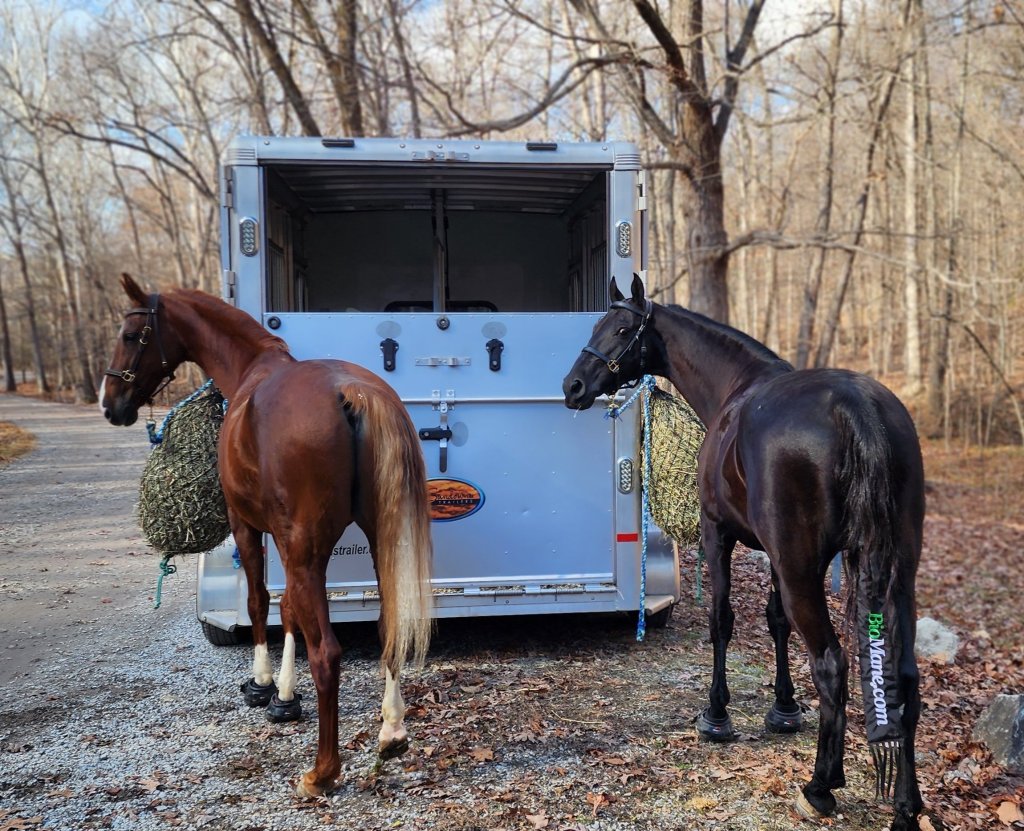
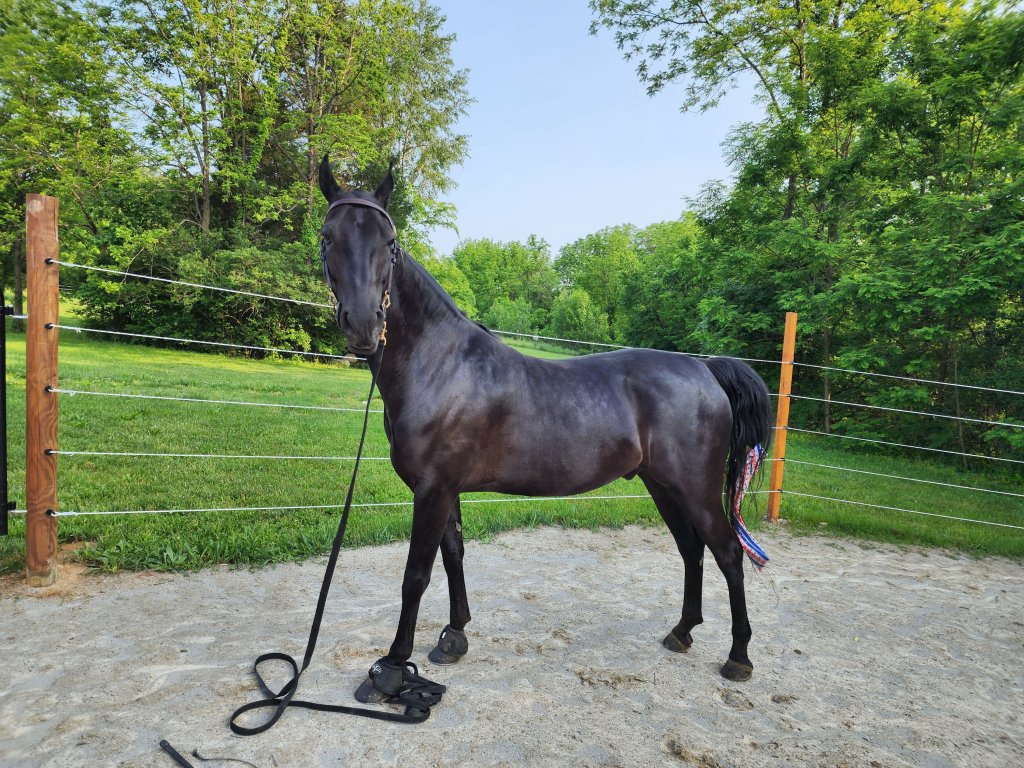
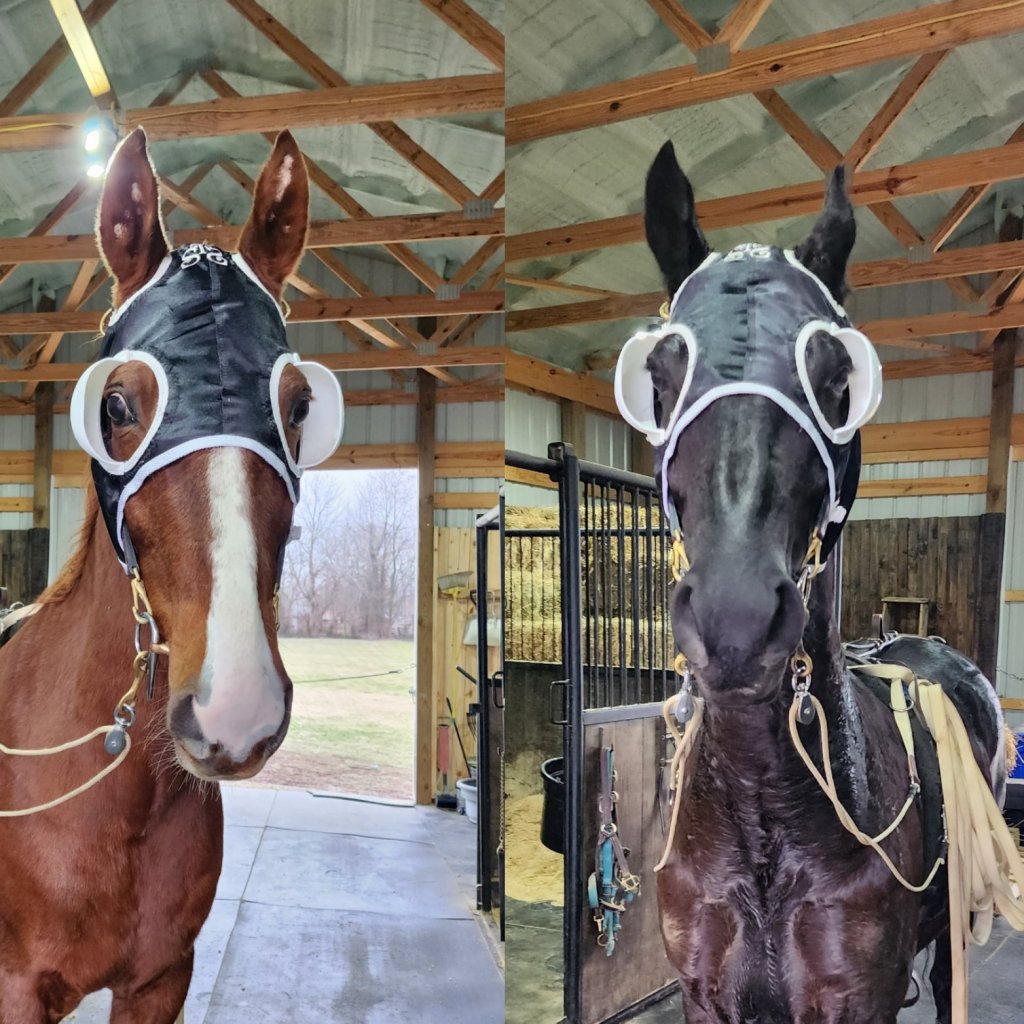
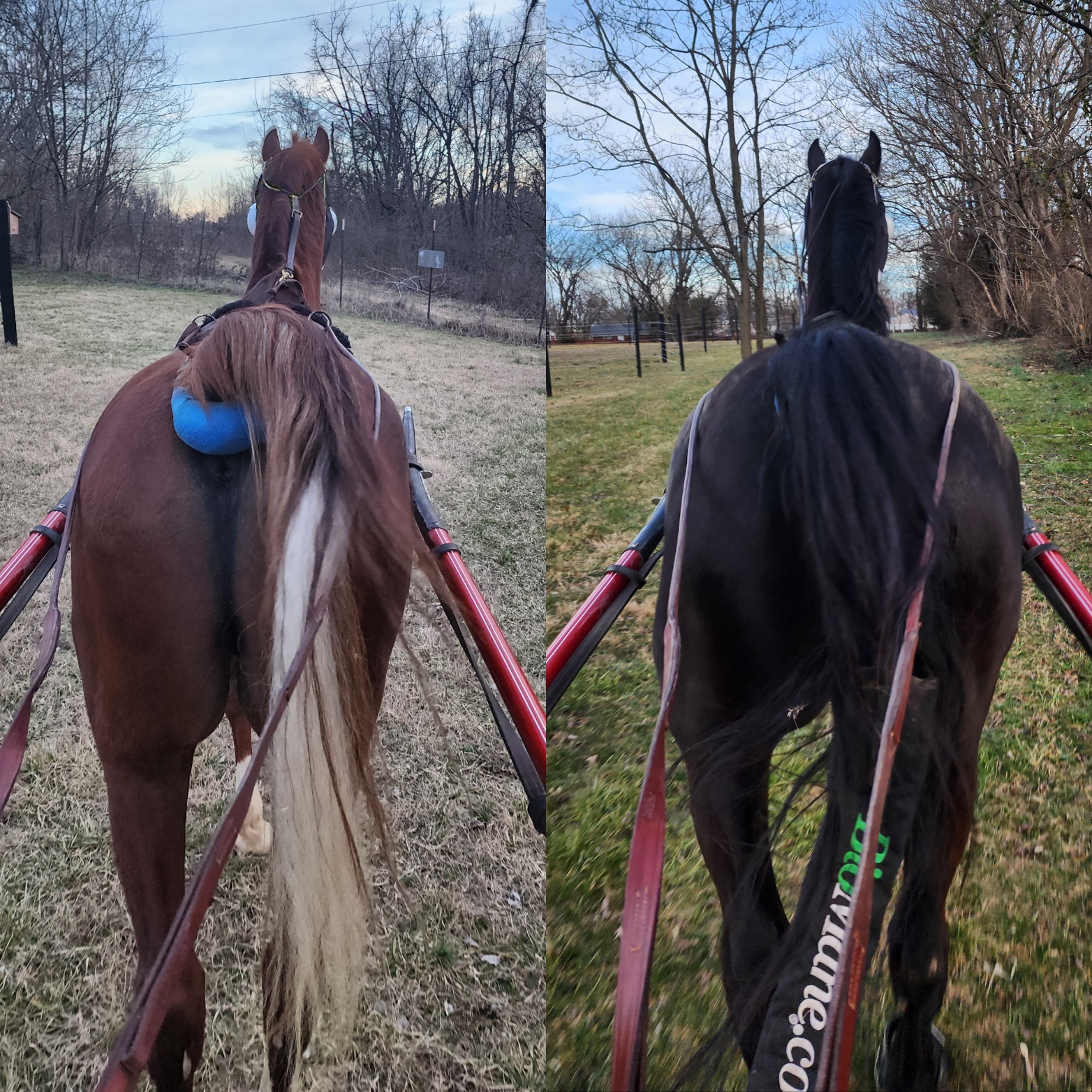
$500 horse on left, “free” horse on right. However, just because they didn’t cost much up front doesn’t mean they haven’t cost. They have both had a LOT invested into them. They are worth every ounce of frustration, financial hardship, time, and sanity that I have invested into them.

It’s Hard to See the Forest Through the Trees

Do you ever get that feeling like you’re just missing something? Maybe it’s right in front of your face and you just can’t see it? Yeah, me too. Since Duke got here in July, and even before that, my goal with him has been to get us to a (real) show, under saddle, IN A SUIT, all up in front of the public and NOT embarrass ourselves. We have hit roadblock after roadblock (he had an abscess that took forever to heal, I had surgery that put me off for 6 weeks, WINTER, mud, etc). It’s so easy to become frustrated and sit back and say we’ve gotten no where. The wheels of progress turn so slow, and the winds of change are barely blowing.

However, I cannot in all honesty say we have not made any progress. While the progress sitting in the saddle isn’t as noticeable as I wish it were, and we still have quite a way to go to be ready to hit the show ring, there are other areas where the level of progression is much more noticeable. On the ground, he is a different horse. I can put a brush to his face without him running backwards. I can put a blanket on without him running sideways. I can work around him without fear his teeth will take a chunk out of me when I’m not paying attention. I can use a mounting block. He still hates anything being sprayed on him, but we are working on it. He might squat a little but he no longe3r becomes a crash test dummy who would slam himself into anything around just to try and get away.

I have never dealt with such an incredibly sensitive horse in my life. So, what do you do when you have a horse that is so (over) reactive to literally every move you make? You just don’t react. You keep going. You take it slow, but you make it a point to continue on. Don’t panic when they panic, just keep going like nothing is happening. It’s just not your turn to have a meltdown. And it probably never will be.

I can’t say this is the way to go with ALL horses, but with Duke it has proven to work. After MONTHS of flailing my hands around his face, dropping things on purpose, kicking things all around him, touching him with any oddball thing I may be walking through the barn with (a broom, a rake, a pitchfork, a feed bag, a shavings bag, a giant rolling magnet, you get the point) he finally just stands and looks at me like I’m the most ridiculous human on earth with most things. He doesn’t shake in fear, he doesn’t run backwards or sideways or anything else. If I happen to drop something next to him, I don’t have to worry he might take me out on the way to getting the hell out of there, or that he will break the crossties trying to escape his fate. He stands there, 98% of the time. None of us are perfect, I’ll take 98%.

I go by the rule that if you spook at it, you get to wear it or be by it or look at it so you can realize it isn’t scary. It may take a few days of seeing it, being touched by it, etc. Some people might think this is cruel, and to those people I ask: how else are you desensitizing your horses? How are they supposed to understand something isn’t going to hurt them if they aren’t exposed to it? If they are not physically shown there is no harm to come from being “brushed” with a broom or “ridden” by a bag? Or whatever else. Please. Enlighten me. I’m always open to new ideas. Everyone has good ones, and I’m ready to hear them. However, this is what is working so far on my extremely sensitive guy, and he’s no worse for wear. Until a better alternative is offered up or discovered, I will stay the course with this. Do I annoy him? Probably. Is he safer to work around (and even ride) because of it? Absolutely. Does Fizz look at me like I’m a horrible human for “torturing” his brother? Nope. Been there done that is probably laughing from the other side of the divider.

Anyway, just because you can’t see progress every single day doesn’t mean progress isn’t getting made. When you feel you’re in a rut, take a look back at where you were a month ago, 6 months ago, a year ago. Don’t focus on today, yesterday, and the frustrations you may feel in each moment. Don’t look at your end goal and think about how far you have to go still. It can make it seem hopeless, believe me, I get it. Instead, focus on where you came from, where you are, and where you want to be. Adjust along the way if necessary. Look at the big picture. See the whole forest (all the little hurdles you’re jumping on the way), not just one tree (your end goal). It’s OK to trip. It’s OK to stand still and evaluate. It’s OK to proceed with caution. As long as you’re not going backwards, you’re doing all right.

I’m Afraid of my Pizza Cutter

You read that right. I’m afraid of my pizza cutter. Laugh all you want, but you’ll understand the relevance if you keep reading. Years ago, I got a fancy new Pampered Chef pizza cutter. One of the first times I used it, I made a mistake in taking the cover off and it sliced the bejeesus out of my finger. I maybe should have gotten stitches, but I’m a stubborn fool and pretty much felt like since the finger was still attached, it was fine. It took weeks to heal, kept busting back open and bleeding-fingers are the worst place to have cuts. I think about that literally every time I use the stupid thing now though, and it’s been probably over 10 years. I think about how it cut me, but I still use it. I have come to understand my mistake and that if I use it correctly it won’t cut me anymore. I learned from my past experience. I moved on.

Now, I know what you’re thinking. This is a blog about horses, why is this lunatic telling me about a stupid pizza cutter? I’m not here to read about how she doesn’t know how to appropriately use kitchen tools. Well, my misguided use of kitchen tools isn’t really the point here. The point is, fear from past experience is a real thing. When you are afraid of something, it affects your decision making and it alters your future choices. Sometimes permanently. Horses are not different in that regard. Helping your horses learn to move past or work through the things that “cut” them in the past, the things they fear in the present, or both, is what training horses is all about. Help them to learn. Help them to move on. We just have to try our best to maintain good judgement and hope we do not become a thing that “cuts” them too.

Horses are inherently flight or fight animals. They have an instinct built in that tells them if something is scary, to just run away as a first resort. If they can’t run away, their next instinct is to fight. The hurdle for us as trainers (or in my case, an amateur just trying to do what I can) is that we must find a way to teach horses that the things they think are scary, are actually not. To build a rapport with that animal so that they know you are not asking them to do things that will put them in danger. My opinion may not be the most highly sought after opinion on horse training, but I think this starts with trust. If your horse does not trust you, how can you expect it to “walk through fire” simply because you asked it to?

Exhibit A, I offer you Duke. He is absolutely not the bravest creature that ever walked this earth. Bless his heart he’s afraid of his own farts. I do think he is very talented and very special, and because of that, he was pushed to be something great before he was ready. Since he has a very high flight instinct, he was labeled a jerk, a no count asshole, difficult, and those are the nicer terms. He was not given the time he needed to mature, and some horses just take longer (cough cough FIZZ). Since he has arrived at my house, I have spent quite a bit of time offering him love, patience, and understanding. I have spent time learning his favorite places to be scratched, rubbing on him, telling him he’s a good boy, and making him feel safe just being around me. It’s been more than a month and we still have good days and bad and I expect that will continue. Possibly always. However, I did this with Fizz when he first came into my life and that horse WOULD walk through fire for me if I asked him to. Back then, I was just so happy to have a horse of my own that I enjoyed spending time “hanging out” with him, I didn’t realize this would be invaluable to our relationship as horse/human. So, I feel this is an important step to take with Duke also.

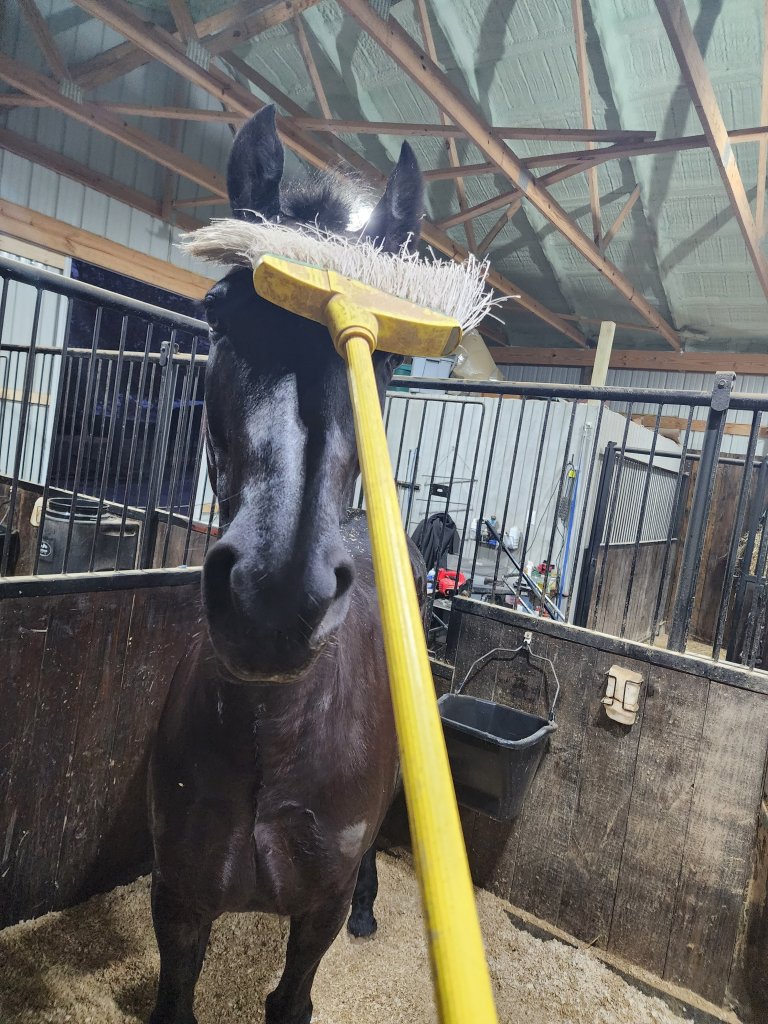
I can tell his attitude is slowly changing. This isn’t to say that he wasn’t ever offered love or understanding, but having someone spend that extra time just being near him, working around him in a way that shows them your intentions don’t need to be questioned, maybe doing things that are not quite “normal” just to give a reference point for trust. You may not think so, but that is also training. For example, I have “brushed” Duke with a broom several times. At first he thought I was coming to beat him to a bloody pulp. Now, he thinks it’s fun and tries to eat the broom. I drop things around him on purpose. He has stopped reacting to this now. I put strange things near where we work on purpose. He eventually stops snorting and running sideways. I am not gentle in the way I move around him, I am clumsy and flail things around and make a lot of noise simply to show him noise isn’t the enemy. Does he still react? Yes, but it is a simple head raise and ears pricked forward and maybe a slight body twitch as opposed to a running backwards or sideways, into whatever is in the way or over whoever is in the way like it used to be.

Yesterday, we did ground poles in long lines. I walked him back and forth and he walked right over them with me beside him on the first try. Not even a slight side step. Then I left his side, went into lining him as I normally would, and asked him to move over them without me. You would have thought the things grew legs and were standing up ready to take him down. So I went back to his side and we did it together. We had to keep going over and over them, with me gradually moving away each pass. By the end, he was going over them on his own. I wouldn’t say gracefully… but give him a break, it was his first try. He did good enough, he tried and that’s all I can ask of him. But it showed me something, he trusts me. He thinks if I am there doing it, he is OK to be doing it too (at least from the ground). It showed me that I need to work on his confidence, and that if I am asking him to do something alone, it is still OK to do even if I’m not right there.

Horses do talk to you. You just have to know how to listen.

A lesson in Bit Converters

When you’re an AOT, you should always, and I do mean ALWAYS be open to learning new things and to hearing others opinions and experiences.  Not everything works for everyone, and not everything works for every horse.  But having an arsenal of different things to try is definitely a good thing.  I feel blessed to know a few trainers who are willing to help me when I have questions.  This past weekend, I had the opportunity to go watch and learn from one of them.  Trainer Blair Cecil of Phoenix Farms, my AOT hat goes off to you and your awesomeness!

The lesson?  Bit converters. I confess, I bought a pair of these in August 2017 and I haven’t so much as snapped them to a single thing.  Yes, that’s been 5 months ago. No, I’m not afraid to admit my lack of confidence on things I know nothing about. Hence why I started asking questions, to learn from others!

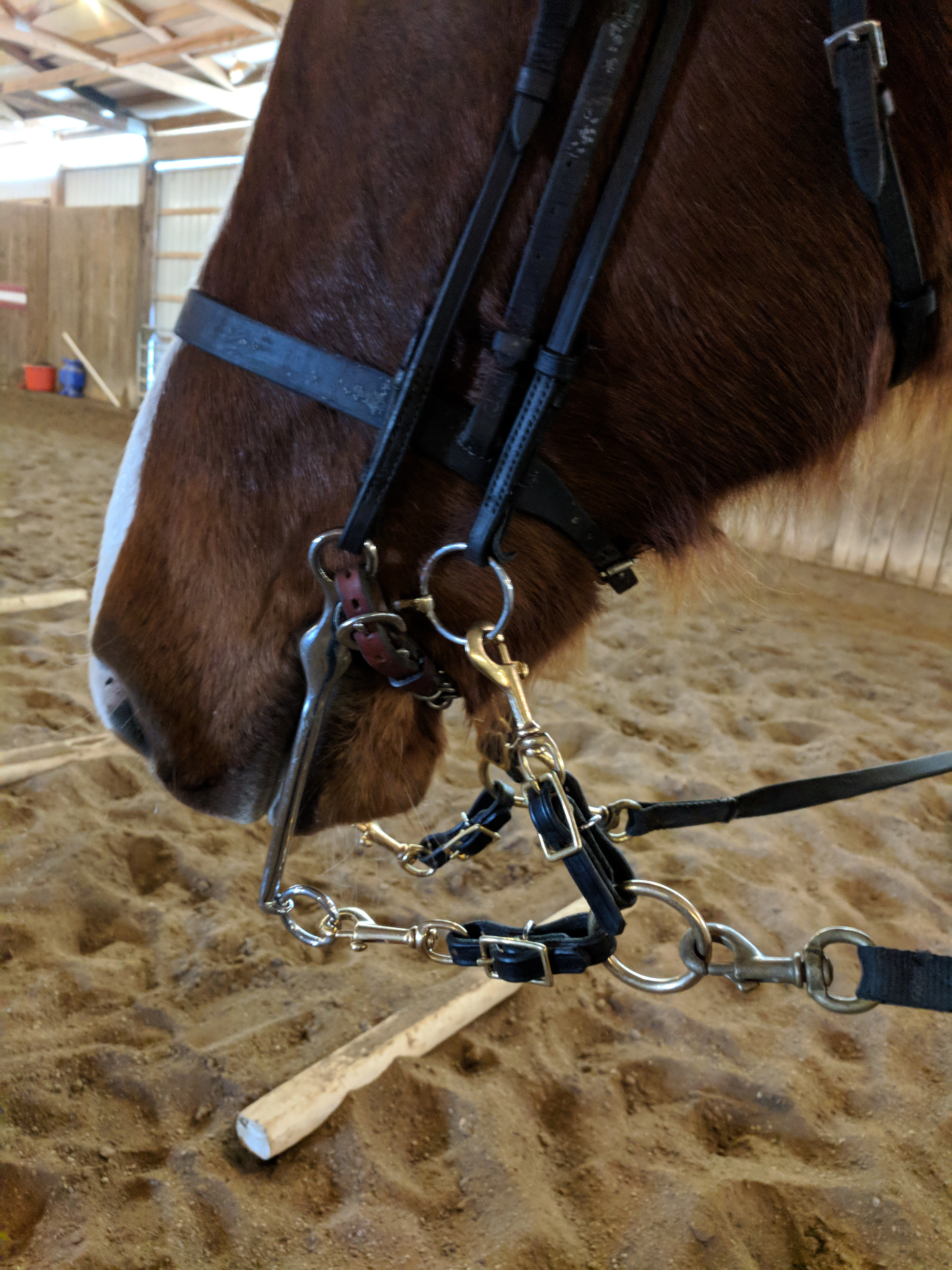
What is a Bit Converter?  A bit converter is, as the name states, a contraption that “converts” two bits into one.  It allows you to line/jog a horse in a full bridle (two bits) using just one set of lines, making 2 bits usable as one.  The photo shows this on a short shank pelham bit, not a 2 bit weymouth style that we normally use in saddleseat, but the same general concept applies.

Bit Converter

Why do this?  My horse, like many others, is SO much happier when only ridden one, maybe two times a week.  He loves to jog, which is terrific for his back end, building muscle, and conditioning.  BUT, when you can only ride a few times a week, it’s difficult to log much time in a full bridle.  Without wearing a full bridle often, it’s difficult to get them completely comfortable wearing it.  As explained to me by Blair, using the converters in a lining/jogging situation is a lot more forgiving than riding.  Here’s why:  When you ride, there’s a lot more going on.  Your seat, how you shift your weight, your leg aids, how good your hands are, how much you’re in or not in their mouth, how you hold two sets of reins, and what kind of pressure you put on each.  Not to mention the stress on their backs from carrying a rider every single day on top of everything going on in their mouth.  All of that is removed when you line/jog using these bit converters.  The horse gets used to wearing the bits without all the stress from every day riding.

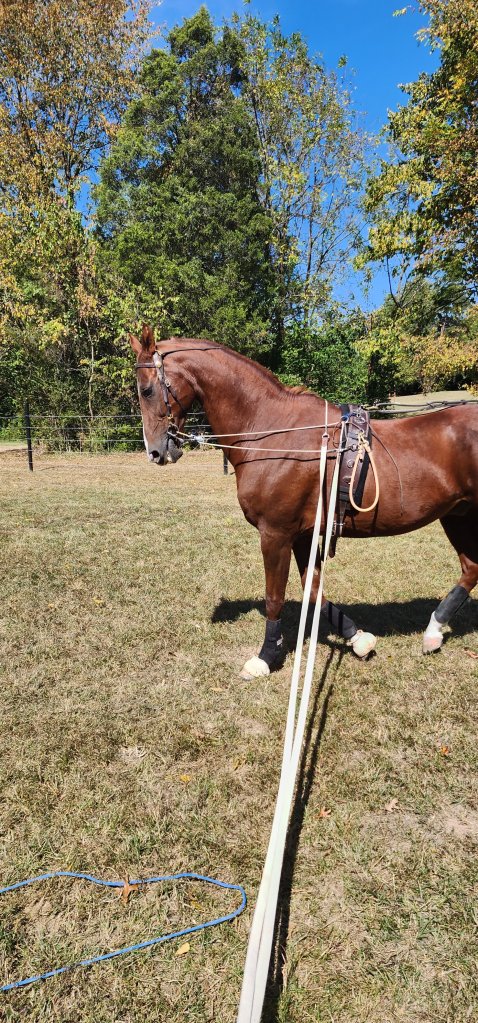
Equipment Needed:  Surcingle (with or without crupper), martingale (optional), full bridle (use the bridle/bits your horse is used to wearing), long lines, and 1 set of bit converters.  Oh, and if you use a lunge whip for lining, that too!

How to:  I wish I would have taken pictures.  When I attempt this with Fiz, I’ll definitely update.  Until then, I’ll do the best I can to describe everything.  So here goes. (NOW UPDATED WITH PICS!!! Yayyyyyyy!!!!)

Apply all the equipment as usual.  Tie reins for the bridle in a knot and attach them to the top of the surcingle using string, a double ended snap, whatever you’ve got, so they don’t just flop all around and get tangled in the rest of the equipment.  Or I guess you could remove them if you wanted to, your choice. To attach the bit converters, attach one snap to each bit on both sides of the bridle.  Running your lines:  Here’s where you’ll find there are different configuration options, which I never even thought of before visiting Blair! I promise to update with photos once it’s not so frozen outside and I can start working Fiz again!

  1. Run the lines through the converter ring and to the snaffle. This is where you should start with introducing your horse to the converter and lining in a full bridle.  The curb will be in their mouth, but basically it’s just there, with no pressure on it.IMG_20180121_1352572.  Run the lines through the converter and attach it to the curb. This puts pressure only on the curb bit. This seems better suited for a horse who is BROKE to the curb. IMG_20180121_140318.jpg
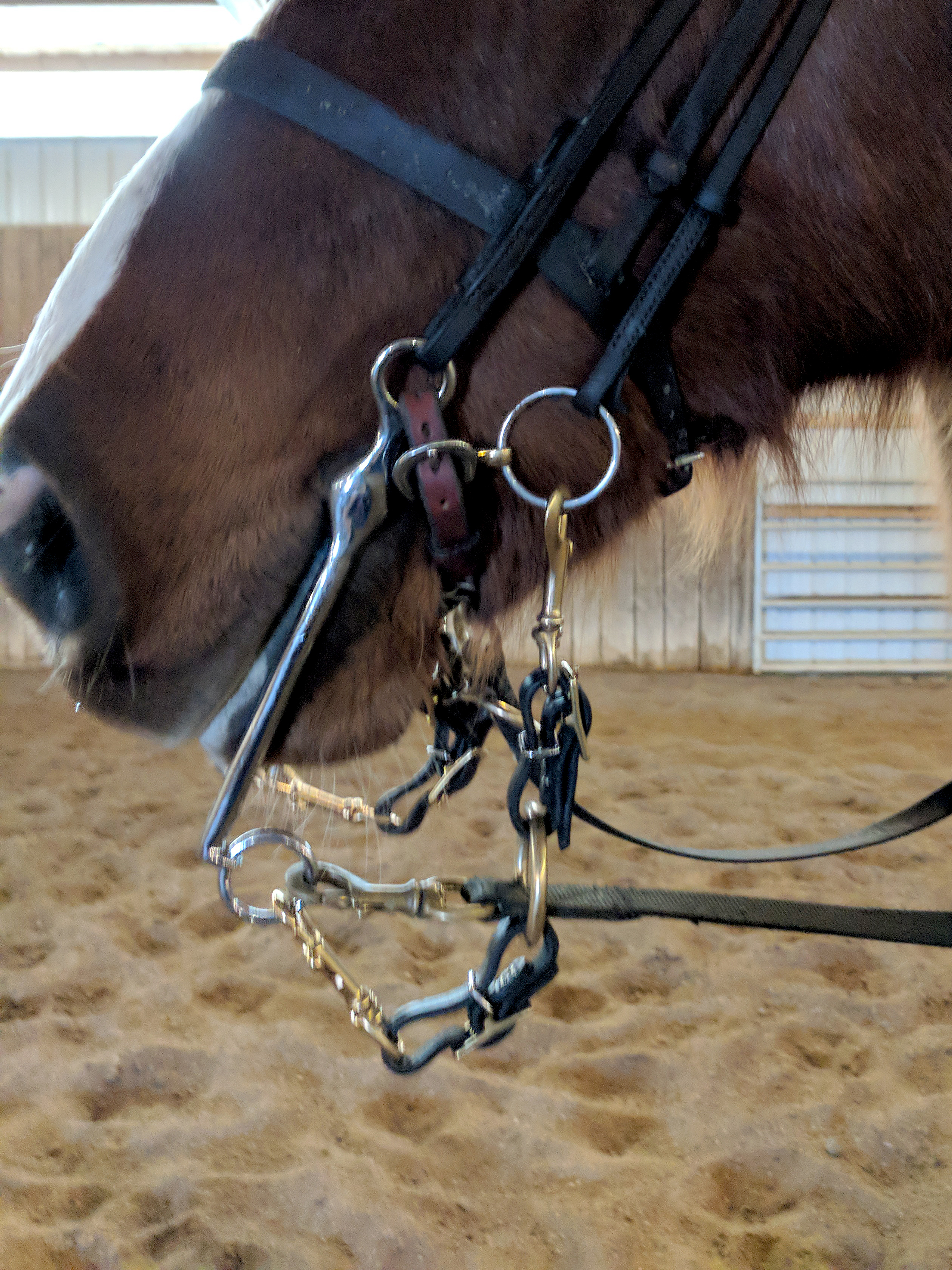
  2. Run the lines and attach to the ring on the converter. This puts pressure on both bits.                                                                IMG_20180121_140403
  3. All of the above configurations can be done running the lines through a martingale or not using a martingale. It’s up to your preference and what you and your horse are used to using.
    1. Adjusting the converter: If you have purchased a set of bit converters, they should come with some kind of adjustment holes, so you can adjust how much pressure goes to each bit.  Naturally, if you want even pressure, adjust them to the same length.  If you want more pressure on the snaffle for example, loosen the end going to the curb.  Proper adjustment for the horse you are working is the key to success.

Here’s a video of me lining Fizzy in the first configuration.

Fizzy Long Lining – Full Bridle


Update on Fiz’s training!

Fiz has been at a professional trainer since March 25th. He’s there almost through the end of April. There have been some big changes in his life during this time period. He is used to living in a pasture, and only coming in to work, then going back out. He lives in a stall the majority of the time at the trainers place. He is used to being worked only about 4 days a week. He is getting worked 6 days a week at the trainer. He’s used to amateurs who fly by the seat of their pants and lack professional training knowledge. Now he’s being worked by a professional who has a clearly defined training method and structure.

Today, April 14th, he’s been with the trainer for about 2.5 weeks. I got to ride him for the first time since he has been there. Cindy rode him on Saturday, and had a really great ride. I would like to talk about some of the things I noticed with her ride, and some of the things I learned during mine. I will also talk about some of the training advice we have gotten and how it differs from the ideas we previously had.

First, let me say this. He is much improved in several areas. Below, I’ll take you through the gaits and what advice has been offered for each.

#1, The Walk
Flat, straight, and patient. Make him walk straight up into the corners and make the arena square. Make his shoulders and his hips walk inline with each other, and make sure as you are walking to push him up to the bridle so he has to take ahold of it. Do not pull. Hands steady, and in the same spot. When he takes hold, give. Just a small release of your fingers, but keep pushing with your leg making him walk up to the bit.

#2, The Trot
A country pleasure horse needs 2 trots. The pleasure trot and extended trot. We knew this, but previously Fiz would get mad when he was asked to go faster and he would break into a canter without ever actually going faster. It’s better to have only one speed than have to break, so that’s what we used to do.  A pleasure trot needs to have energy, it needs to cover ground, but it also needs to save room for max trotting speed at the extended trot. Same principles apply as the walk, use a lot of leg, push him to the bridle and make him take hold as he moves forward. Music to my non-equitation body type and mind frame was, let your legs hit him in the sides and even flop around on him some. Apply pressure, keep him moving forward and pushing from the hind end. He is expected to move from the back to the front, pushing off his hind to give his front momentum. Always keep the whip right against his shoulder.

When you ask for the extended trot, cluck, then squeeze (don’t kick) and if he doesn’t move on, give a slight tap with the whip on his shoulder. Not a whack, a TAP. If that doesn’t do it, growl at him and tap again. He has learned that he has to move on and not break into the canter. That doesn’t mean he will never break. If he does, don’t stop! Keep cantering. Teach him that it’s more work to do the wrong thing than the right. Rest assured, he will find his trot after enough of making him go and go, and you will find the sweet spot where you have hit max trotting speed before he has to canter. If you really want to find good separation, work him at a pleasure trot, then extended trot, and bring him back down to a pleasure trot. Even if just for one rail, you try to find that max speed, really ask him to step up, then come back down to the pleasure trot. Keep the energy and the go forward all the time. Do not forget about contact with his mouth (keep this in mind at all gaits) and do not forget that reward of giving when he takes a hold on his bridle and moves on forward. Always give him that reward.

#3, The Canter.
His canter cues are more clearly defined and he is learning the expectation for getting and keeping the correct lead both directions of the ring. Previously, we thought each time he took it wrong, we should stop and ask again until he got it right. This method had taught him if he does it wrong, he gets to quit. The new method is, no matter which way he takes it, do not let him stop. Make him GO. And go, and go some more. Teach him that just because he does something wrong, he does not get to stop and quit. He’s working no matter what he does, and again, it’s going to be harder when he does it wrong.

The canter cue needs to be very clear. A slight turn of the head (bring the rail rein straight back and at the same time give with the inside rein with a release of your fingers), rail leg, and SPEAK the word “Canter” to him. Speak the word EVERY TIME you ask for the canter. Do not be afraid to be vocal. IF he runs sideways when you turn to canter, DO NOT let him canter. This is unacceptable behavior that will be punished by forcing him back to the rail and to walk straight, and patiently, until he is asked again for the canter with the clear signal. This could mean setting him up to canter multiple times, but never allowing him to actually take off. Set up to canter and then go back to straight walking forward on the rail until he doesn’t get all sideways and crooked. Then maybe trot. Do anything else so he loses the train of thought to anticipate cantering.

When cantering, he is capable of cantering SLOW.  Take back on the upward motion, and give on the downward motion.  Give and take, constantly.  And still, SAY the word CANTER, or make a “kiss” sound to him.  Make him canter straight, and do not let him swing his back end to the middle, because this makes it easier for him to swap leads.  If anything, turn his head more toward the middle so it makes it more difficult for him to swap leads or fall out of the canter.  When he does it right, don’t push the issue or make him keep on going. Maybe one or two trips around is good, then quit on a good note.  Remember, make it EASIER to do the RIGHT thing.

12140048_10154166158764444_2067037096436532418_o

Bottom line is, he’s going to make mistakes. The most important thing is to teach him that it’s easier on him to do right than to do wrong. Bad behavior is punished by harder work. Good behavior is rewarded by giving (releasing your fingers) in the bridle and getting to be finished sooner because he did everything you asked and he did it correctly.

Always ask yourself the question: “Am I training or am I un-training?” and if you are not certain, it’s probably the latter. If you can answer that you are training, follow up with “What is this teaching him?” and as long as you are happy with what it is teaching, stick with it. If you’re not, change it up. Think ahead, have a plan, and execute that plan.
Another thing we’ve been taught is that he needs to jog. And jog, and jog, and jog. The more fit he is (which is accomplished by miles and miles in the jog cart) the easier it is going to be for him to do the right things, the easier it will be for him to be able to willingly go forward and move on. We can’t ask him to run a marathon when he’s been working as a sprinter.

Check out this video clip after his first week of training.

A Short Video from Professional Training