After over a year of hard work and dedication towards our ultimate goal of showing Fizzy, we FINALLY made it happen! We are super excited to report that we SURVIVED the madness. Our eyes have been opened to a lot of the shortcomings and issues, and we are going to work as hard as we can the next 3 weeks before our next show to try and fix these. We did not leave disappointed, and we definitely left the show having learned a multitude of things. Such as: Preparing for a show is HARD WORK, packing crap to and from the barns is a pain in the behind, whoever invented electricity and electric fans is a Godsend because without them we’d sweat ourselves to death, and most of all, we’re not quite sure how we would ever survive a horse show without each other!! I mean seriously, if it weren’t for having both of us, how would we do this??? It really does take an army to raise a child, I mean, horse!!! He is like our child, our special needs child. Anyway, enough of my babbling. Enjoy these pictures from our debut show!
Author: KaylaMarie


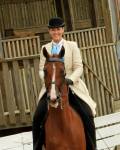


Photo Shoot
We had a photo shoot, and here are our best shots! Ok, so maybe I’ve watched a little too much Americas Next Top Model. Forgive me. Thanks to our photographer Eric (Kayla’s husband) who captured these fabulous images!


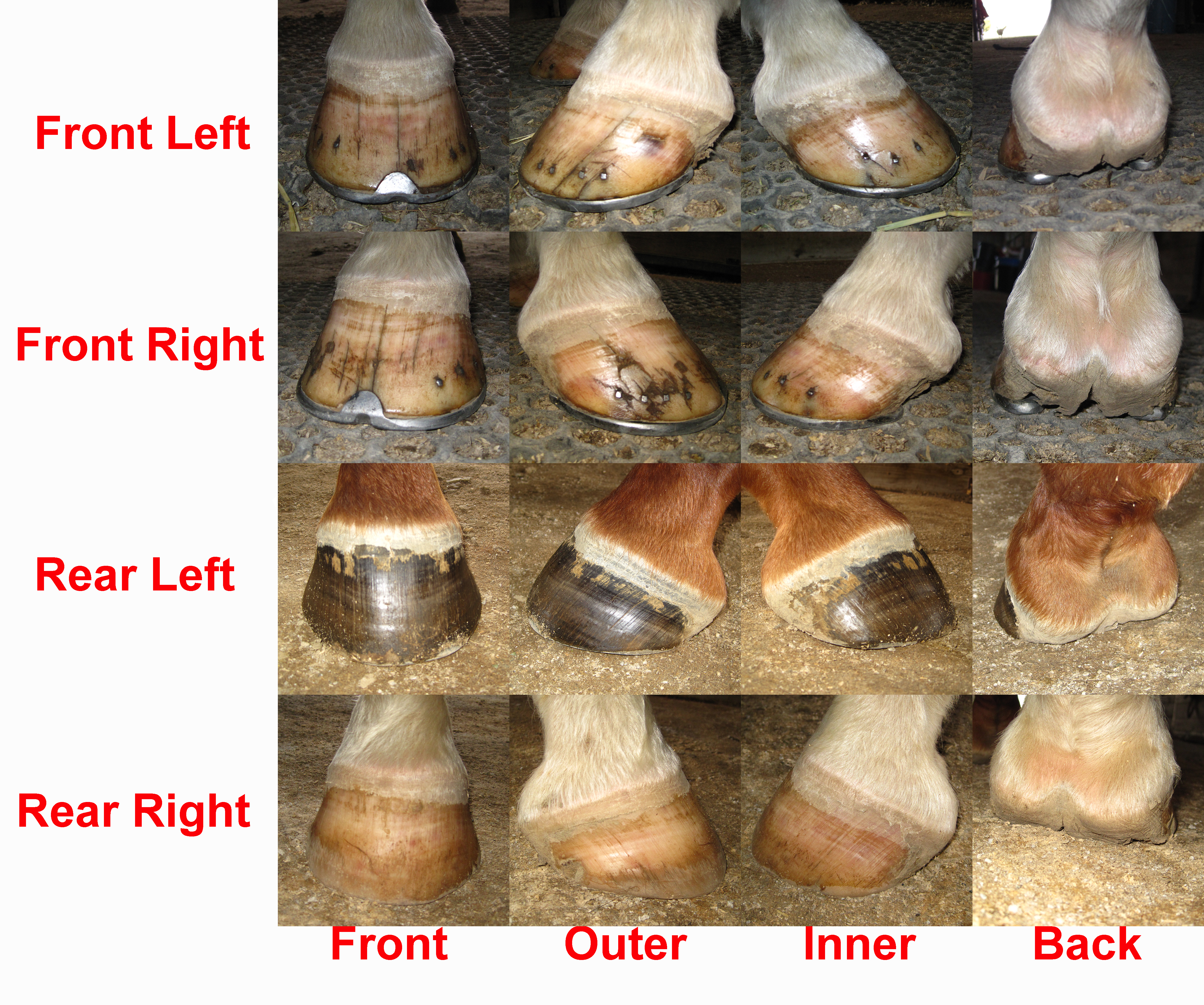
Hoof Comparison 4-11-14 to 6-13-14
Just a picture to compare hoof quality from 4-10-14 to 6-13-14. Fiz now has rear shoes and the damage on the front right hoof has grown out considerably. The farrier is happy with the way his feet are coming along, but says we still have a way to go. As you can see, we definitely need more heel, but it seems to grow much less slowly than the toe. That’s OK though… we are doing our best to be patient. I mean, we are forced to be patient because we have no other choice. I wish we could just snap our fingers and *POOF*… Perfect hooves. However, neither Cindy nor I is a magician, so no magic tricks here.

HAPPY ONE YEAR!!
I realize this is about a month late, however, we were waiting on a good weekend to do our “One Year” photo shoot, and that weekend finally came. We got some wonderful pictures made with our boy and we finally finished the video tribute as well. It seems like yesterday when we picked up our skinny little colt who was scared to death, but he is that colt no longer. He’s our big, handsome, spunky, full of personality Fizzy that we adore. A year can make a world of difference, and Fizzy is living proof that given the right environment, proper care, and lots of love, a horse who everyone seemed to have given up on at such a young age can just thrive. We will let the video speak for us on the rest. Enjoy!
Hoof Quality Check
Now that Fizzy has been on Farrier’s Formula for one month, and we have been using Keratex Hoof Hardner for one month, we needed to do a check in on the quality if his hooves. We can definitely see small improvements since shoeing, and HUGE improvements since before he was shod. I wish I had pictures from each angle immediately after he was shod to compare them to now, but I don’t we will have to do our best to judge. Overall, they are looking better. In the below pictures they were clean with Keratex applied, which explains the difference in color near the coronary band (dull) to the hoof wall (shiny-where Keratex has been applied). So please ignore that.
We are evaluating overall hoof quality since being barefoot, then shod (February 25th) to now. It’s almost time for a reset! Next month, I will take the same pictures as below, so we have a definite comparison rather than just a guessing comparison. However, I think it’s clear there has been growth and improvement. We are going to stay on course with the Farrier’s Formula and Keratex and keep our fingers crossed that the quality continues to improve! Afterall, no hooves, no horse, right?
Show Ring Beautiful (for the RIDER!)
There are so many things out there to tell you how to get your horse ready for a horse show. There are products upon products that people recommend and there are books and blogs and reviews covering every single angle of how you should groom your horse. However, there isn’t that much out there telling you how to present yourself at a horse show. Here, I will cover a few things from makeup to clothing for the show ring for a saddleseat show. Please defer to the rule book on ASHA’s site for a complete list of appropriate attire, as it varies from class to class. Some require day suits and derbies, some formals and top hats. I have always shown pleasure, so day suits have always been appropriate for me.
I will start with makeup and share some of the tricks I use. First, if you have never shown before, you should be warned that it gets REALLY hot in those long sleeve wool habits (suits) in the summer. You WILL sweat. You will feel gross. It’s going to happen. Get over it! That said, how are we women supposed to keep our makeup on and our faces looking as perfect as our horses when it’s 100+ degrees out and we’re wearing wool long sleeved suits and sweating like pigs? Well let me tell you my secrets.
MAKEUP:
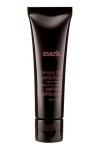
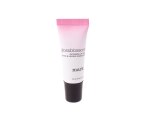
Start with a bare face, and apply a face primer all over, like a lotion. I use Avon’s “primed for perfection” from their Mark collection, and it has worked wonders for me. Actually I use all Avon products in my make-up regime, with the exception of one, which I will talk about in a minute. I get Avon from my Mom (http://rosewebb.avonrepresentative.com/).
After applying the face primer to your entire face, you are ready to apply the foundation/powder of your choice. I use Avon’s BB cream, and/or Mineral Powder. Then I apply a little bit of blush.
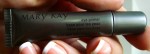
After you have your foundation/powder/blush looking perfect, you can start on your eyes. Here is where I stray from Avon, simply because they do not make a product like this. I use Mary Kay’s Eye Primer. It is essentially a thick version of the face primer, but it works better on eyes than just the face primer. Smear this all over your eyelids, and wherever you will be applying eye makeup. Let it dry, or don’t let it dry, it works about the same either way. Apply your preferred eyeshadow, eyeliner, and mascara as normal.
Last comes lips. I’ll share another secret weapon with you here… Avon’s Lip Marker. This stuff is one of the most awesome makeup inventions ever! It doesn’t smudge, smear, or wipe off. It’s a stain, so it stains your lips to be that color. I use this as a base, and apply Avon’s Glossblossom lipgloss and my lips are perfect for the entire show, if I choose for them to be!
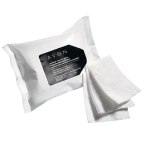
Now, if you’re like me, you don’t wear this much makeup on the daily. When I come out of my last class in the show ring, I don’t want to have all that makeup on anymore. No worries, because I use Avon’s makeup remover wipes to remove it all!!
Products:



HAIR
If you are an AOT (like we are) and you are just starting out on your own (like we are) and you have no one to do your hair, you will bow down to this wonderful lady who posted a video on Youtube on how to do your own horse show bun. I have tried this, sitting in front of my computer by myself, and my hair turned out pretty good! I think I am prepared to try again and do it for a show!! So, check this out on how to get your hair into that perfect show bun all by yourself!!
JEWELRY
You want to wear classy, attractive jewelry, and nothing super gawdy.
Earrings: Generally, you should not wear anything dangly. I like a nice size CZ or Swarovski Crystal Stud-nothing expensive that may fall out of my ears and get lost on the show ring-made that mistake once with some real diamonds, never again!!!
Lapel Pin: I wear a simple small magnetic horse shoe. You can find plenty of these online, in consignment stores or specialty stores. I have seen people wear a letter pin with an initial or something significant to them, or something else “horsey” looking. As long as it’s not too huge and gawdy, it’s OK to wear. It is usually worn on the left side of the lapel on your coat.
Tie Bar: Usually saddleseat shirts will have holes in the collar for the tie bar to go. There are so many options here from plain to sparkly, silver, gold, etc. I have both plain and sparkly swarovski crystal ones. There are clip on tie bars available for shirts that do not have tie bar holes. I also own one of these with little saddlebred horses on it, even though I don’t own a shirt that doesn’t have tie bar holes!
Number Magnets: You NEED these. No one likes a number flopping around, and lets all be honest here pinning the number usually ends up looking like crap. Plus, poking holes all in expensive clothes makes me cringe! I got a set of 4 swarovski crystal adorned ones from a consignment shop for $20.
Button Covers: I use 2 swarovski crystal clip on button covers on each sleeve of my show shirt buttons for a finished look.
CLOTHING
I don’t even know where to begin here, as there are so so many options to put together a good looking habit, so I will just share with you what I’ve got, and what I paid for it. You can go spend 2-6 grand on a custom made suit, sure, if you have that much money. You can also hit up consignment stores and still spend anywhere from $500 on up on a 2 piece suit with only a coat and pants. I however, do not have that kind of money… so I pieced together separates, and still manage to make myself look presentable. If I, the fashionably challenged, can do it, so can you. So here goes:
Day Coat: I got a “Snooty Fox” daycoat (Made by Carl Meyers-it’s their “economy” line, but SUPER nice in my opinion) on markdown from Hartmeyer. I paid $250 for the coat brand new.
Vest: I actually have 2 vests. One I got for $50 from a consignment store, and the other I had custom made by the Lady in Yellow, and it is reversible. I paid $90 shipped, and essentially got two vests and the quality is lovely.
Shirt: I have 2 shirts, one purchased new from Hartmeyer’s for $45 and one from a consignment store for $30.
Jodphurs: I have a brown pair and a black pair of Hartmeyer’s “Lucky” Jods, paid $100 each on special at their KY State Fair booth.
Derby Hat: I have 2 derbies, one brown, one black, so that I have one for each pair of pants. One I bought used for $25, and the other I got new from Hartmeyer’s for $60.
Boots and Gloves: I got my black patent boots, and long leather show gloves for Christmas, but those both came from Hartmeyer’s also. The gloves were $40 and the boots were $70.
Ties: Ok, so I have to admit I have somewhat of a weird obsession with neck ties. My Mom gets them at consignment stores and I fix them up by applying my own “bling” to them. I have regular ones and bling ones, depending on my moods or the show. I’m more inclined to bling it up if it’s a night show, or a championship. The qualifiers and day shows I go a little less blingy. I’d say all of my ties all together have cost less than $100 and I have about 50 of them.
Cost to piece together a suit with one daycoat, 3 vests, 2 shirts, 2 pairs of jods, 2 derbies, show gloves, and patent boots: $660. Which is a LOT less than I would have spent on a custom suit, custom shirts, vests, and all that jazz. I am ready to show for under a grand-given the cost of jewelry/accessories. This considering all of my things were purchased on sale or special, or from consignment stores, and they were all purchased several years ago. Good thing these habits don’t really go “out of style” very often!!! Also consider that if I just got one vest, one shirt, one pair of jods, and one derby, it would cost even less!!! So you CAN show and look nice for a reasonable amount of money. That said, this habit would probably not be quality enough to go to the world championships, but it has been faithful to me through shows like the prestigious Rock Creek Horse Show more than once!
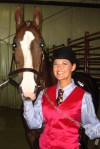
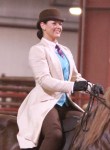
These are all pictures taken of me while showing, or before showing:
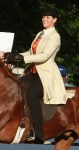


Please visit our LINKS page to find a list of Clothing and Accessory stores for new apparel and consignment apparel.
If Horses Were People
Disclaimer, this video has nothing to do with training or AOT, but the videos at the bottom are pretty hilarious!
Fiz is very strange and has a lot of weird quirks. We as horse owners overlook these weird things because well, we love Fiz. But when you think about it, he really does do a lot of weird things.
1. The strange head toss thing. We’ve posted pictures and video of this before, so you can see what we are talking about in another post.
2. He begs for food like a dog. He searches you for it. Literally, will take his nose and “nose” around your clothing to see if he can catch a whiff of something that maybe you forgot to give him.
3. He unzips your zippers and plays with your clothing. On several occasions, he has unzipped Cindy’s jacket. He has been known to pull hats off heads, too.
4. After eating his treats, he will nod his head in approval. This comes right before he begins to search (harass) you for more food.
5. He paws. I hate it when he paws but he still does it. Most annoying habit ever.
6. He snorts at objects he doesn’t approve of.
7. He considers it proper etiquette for him to eat with food hanging out of his mouth.
8. Banging his head around in his food bowl is his way of demanding more food. We’re pretty sure he’d eat almost anything.
I’m sure those are just a few of the weird quirks in the overall picture, but after watching the below videos, I am certain our horse’s “person” would be just as obnoxious!!
Fiz Gets a New Ride
We figure, with the upcoming show season and wanting to go a lot of places, we really do need to have our own trailer, so for the last 2 months we have been looking and finally made a purchase! We are very happy with it (as you can see below, haha), and we hope Fiz will be too!! 🙂 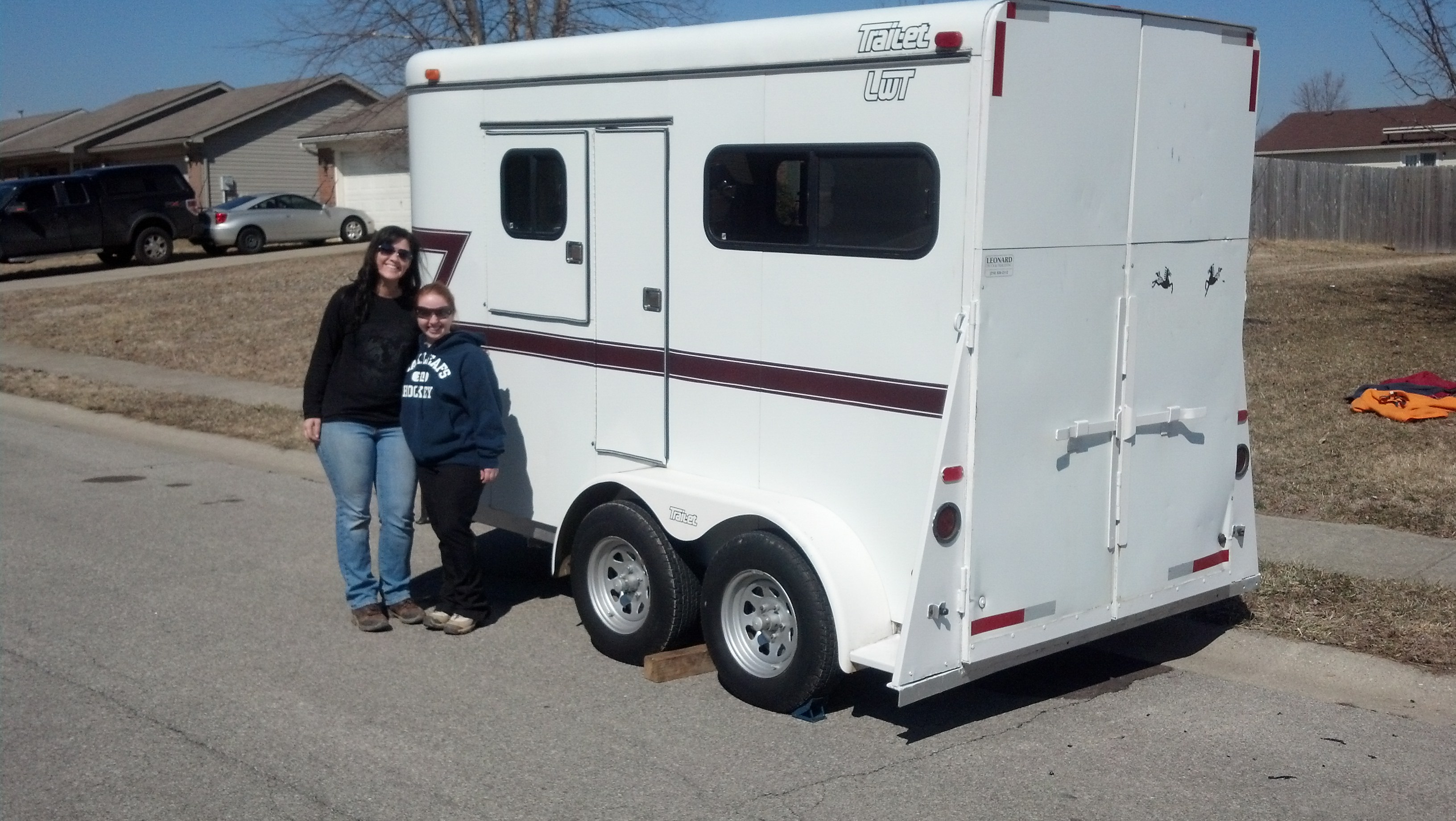
Happy Tails
Looking toward show season, we have been slowly but surely gathering goods and products to help us properly groom Fiz for shows. There is a plethora of products on the market to help people properly turn out a horse, and we have already acquired many of those things. However, no matter how many products we buy and apply, his tail is not going to miraculously grow to drag the ground overnight. While we grow out Fiz’s real tail, we decided to give him a little help, so we got him a tail switch, or “extensions” for those of you unfamiliar. Check out how it looks!! We think it’s perfect.

Fizzy Gets A Pedicure
Our last post, we added some pictures of Fiz’s barefoot feet (and how awful they were looking) and talked about our hoof goals leading up to show season. Today, Fiz had an appointment with his farrier, Bobby Ordner, who made and custom fit shoes for his front feet. Back feet will likely be done next time around. Bobby gave us a “progress report” on Fiz’s hooves, and was VERY informative and helpful. He worked for nearly 2 hours custom making shoes, and he also hot fitted them so they would be a perfect fit. Fiz didn’t mind, he stood nicely for almost 2 hours while the shoes were being made even, and didn’t even flinch at all the tools being used, the smoke from the hot shoes, nothing! Bobby says he’d like to see the back feet be a little more hard, more growth in the heels of all 4, and just a bit more toe all around and we will be where we need to be. He said the farriers formula and the Keratex (which we just ordered today) is a good game plan and will have us where we want to be definitely by the time we want to show.
Anyway, here is the end result.


The American Saddlebred
I just wanted to take a minute and share this wonderful video about the versatility of the American Saddlebred breed with everyone. Fiz is proof of this versatility, as he can do all sorts of things! He rides saddleseat, western, bareback, and I bet he’d jump if someone ever tried to teach him (so NOT going to be me!) He drives as well. He has been in the show ring and on trail rides. He does his best to please no matter what we ask of him. Take a few minutes to watch this video about the special American Saddlebred, the horse America made.
Training Aids
Lets talk about training aids. There’s been a lot of activity on this page lately, so I’ve updated a few things to be a little more clear. I want to make sure and stress that the use of any of these aids should in no way damage the horse. If you have ill fitting equipment, or something you’re using causes any cuts, bruises, scrapes, burns, rubs, or anything else unnatural, you need to inspect and re-fit the equipment until it no longer causes these issues or discontinue it’s use. No training aid or method is worth your horse being uncomfortable, or harmed in any way that can be prevented.
There is a LOT of controversy and a lot of misconception from people outside the saddlebred industry on training aids and practices that may or may not be harmful to the horse. Now, I have been around the Saddlebred world for a long time, at risk of aging myself it’s been about 27 years. I know there are a lot of people out there who think we are snobby, and that we “force” our horses to have their animated motion and high head carriage, among other things. While I can’t speak for every horse trainer out there, I can speak for those I have been around and consider to be knowledgeable and professional, on top of being considerate and respectful of the animal. I can say that the training aids I have seen used and personally use are not harmful to the horse in any way at all. I am going to talk here about a few of the common training aids that I have used, and explain as best I can my experience and knowledge.
Number one: Action Chains
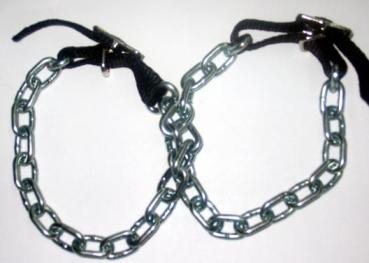
Purpose: To aid in what’s called proprioception, or a horses awareness of body positioning and movement. This aid helps with stride, causes the horse to think about the steps it takes with each foot and help it stride more evenly. They can be used only on the front or only on the rear, or on all four, depending on what you are trying to teach your horse. For example, if your horse forges with it’s back end (overreaches, hits the front feet with the back feet) you can apply a light chain to teach the horse to step more upward rather than forward, and over time this can change their way of movement to eliminate that problem. Chains alone aren’t going to cure irregular movement, however. There are other factors such as how the horse wears it’s bridle, how effective a rider is on the horse, shoeing, etc. But the chains can aid in training, hence why they are called an aid and not a solution. Think about how a horse moves when you apply shipping boots. They tend to step more upward because the item applied to the leg makes them more aware of their leg movements due to being conscious of the item applied to the leg. Chains work in a similar manner.
Chains can also be used to imitate the weight of a shoe in barefoot horses, or to work similarly to “ankle weights” that humans use. Helps with exercising the horse using it’s full range of motion and increases conditioning. Used properly, these “bracelets” are no more damaging to a horse than that shiny bangle or cuff you see on the fashionistas of the world. I have never used or seen any action chains used that were more than 10 ounces each, and most of the ones I have seen were 2- 6 ounces, which is basically nothing when you consider the sheer weight of the animal it’s being applied to. I use these minimally, because if used excessively they tend to lose their effect. In my personal opinion, I have seen these be helpful to more horses than I have harmful, and they are only harmful if used improperly. That said, just about anything can be harmful if used improperly.
Chains and/or ankle weights can also be used during rehabilitation. During the study (linked below) it was found that light ankle weights facilitate muscle toning and range of motion during exercise. Read more on this here: Proprioception During Rehabilitation
What to make sure of:
1) Make sure your chains are tight enough to rest above the coronary band, and that they can freely move so that they do not get stuck. This could cause discomfort to your horse and an undesired affect.
2) Make sure they are not so tight that they would rub or cause other discomfort to the horse. When I work a horse in chains, I also have them wear rubber bell boots so that they don’t do either of the above unwanted things. I have even seen bell boots that come with chains attached, though I do not own any.
3) Only ONE set should be used at a time. You should not have multiple sets of chains on the same leg at the same time. If you’re going to use them, one on each desired leg works just fine. You may choose to only use them on the front feet, or only on the back feet, depending on the needs of the horse and what you’re intending to teach them.
3) There should NEVER, in any way, shape, or form, EVER be any sort of chemical or substance applied to the chain (or the legs/feet/body/mouth, etc of the horse-unless instructed/approved by a veterinarian and for therapeutic or medicinal purposes). I hear this is prevalent in the training of some saddleseat type horses (Tennessee Walkers come to mind) but I have never had any experience or knowledge on how this is even done, nor what it accomplishes, but I feel the need to stress that this should never be done. To me, it goes without saying, but evidently it’s a practice that someone out there thought was a good one. We in the Saddlebred industry do not use this method.
Number Two: “Stretchies” (Two fleece covered shackle cuffs with surgical tubing snapped to each one to connect them)
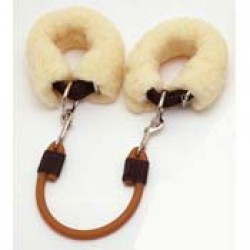
Purpose: To help training with stride, coordination, balance, and muscle toning. I read a blog where a professional, successful horseman explained that your intent should be specific with each horse, and that each horse should have a length of surgical tubing custom fitted to the horse, it’s stride, and your intent of end result. Think about resistance bands that people use when they work out. This training aid works very similarly to resistance bands in the way of building muscle. It also aids in opening up the shoulders and chest so that they move more freely. It also controls the stride, only allowing the horse to step so far, teaching them to step evenly and consistently. It has been explained to me that the surgical tubing causes the horse to think about each and every step, giving a consistent cadence. When they wear them, they have to adjust their stride length accordingly, and when you ask a horse to step up into it’s bridle, push from it’s hind end, and yet, only allow a certain stride length, the only place the horses leg can go is up, rather than out on front, making them bring their knees higher, and working the muscles that wouldn’t otherwise be worked. This will provide the horse the muscle tone to use it’s legs to the best of it’s ability when they are not being worn. (I hope that makes sense). These should not be used in excess, but only for a limited amount of time. I usually trot each direction of the ring for about 5-8 minutes, walking in between for about 5 minutes, then remove after the second direction trot. I also do not use these every workout, but maybe once a week.
What to make sure of:
1) NEVER, EVER use the stretchies on the back legs. Only use these on the front. Using them on the back legs is a dangerous practice that can cause serious injury to horse and rider.
2) Secondly, never use stretchies when you canter. They are not designed for the uneven beat of the canter. They should only be used when doing “even beat” gaits. These include the walk, trot, slow gait, and rack. The canter is a 3 beat gait, and it is not safe for your horse to canter using stretchies.
3) Make sure the shackle cuffs are properly fitted. A lot of them come with adjustments, but if they don’t you need to make sure they fit properly. Like chains, they should be tight enough that they do not get stuck, and that they can move freely. They should also be loose enough that they do not rub or cause discomfort to the horse.
4) Make sure you use a surgical tubing length that is correct for the stride of your horse. Obviously, if you are working a 13hh pony, your tubing would not be as long as it would be for a 16hh horse. On the other hand, you would not want to use the short tubing you would on the pony for the tall horse.
5) Be careful to pay attention when you are using stretchies so that you will notice if they break. If they do break, stop and remove them before continuing. Working a horse in broken stretchers could cause the horse discomfort by the tubing hitting it in the legs as it moves.
6. NEVER snap the “stretchies” directly to chains. Make sure proper fleece covered shackle cuffs are used. The fleece padding is designed to protect the legs and keep the horse comfortable.
7. These should not be used for an extended period of time. As with any aid, keep it to a minimum to produce maximum effects. You don’t want to overexert your horse. Think of how you feel when training with resistance bands. It takes a lot of focus and effort, so keep that in mind when using these on your horse. I usually do warm up including walking and sitting trot before applying these, then about 2 trips around each way of the arena with them on (you will have to modify this for your arena size) and after that take them off.
Number Three: Blinders
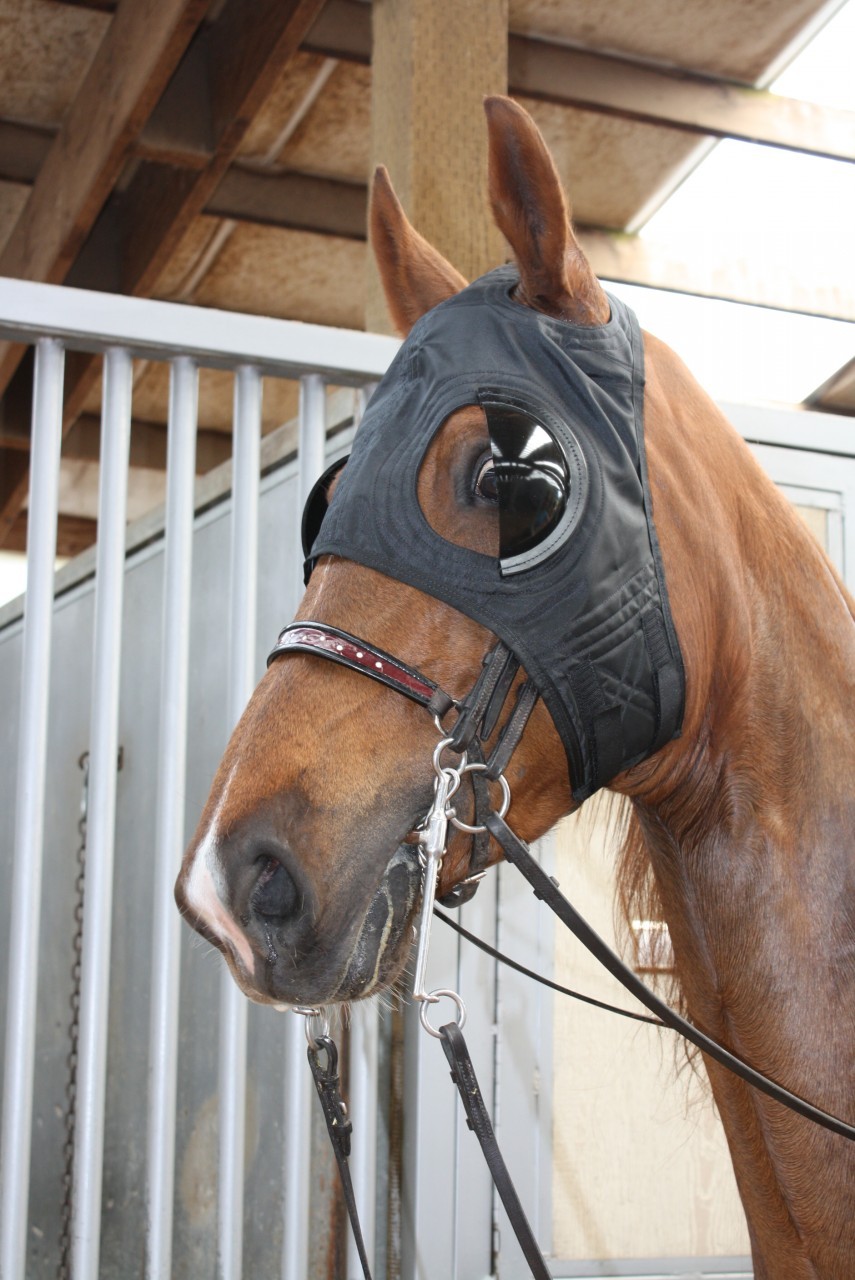
Purpose: To keep the horses eyes focused forward, and to keep them from seeing distractions that are all around. Since a horse can see nearly 360 degrees, there are many disctractions that can be happening that the human will not see. Blinders help the horse focus on what is in front of it, causing it to give more attention to the tasks being asked of it by the handler. Also used to help a horse learn to use it’s ears (forward is always preferred over all else). If a horse can’t see, but it can hear, it will perk it’s ears forward so as to hear more of what is going on. Have you ever heard of how if you lose one sense, all the rest get stronger? For example, if you lose your sight, your sense of hearing, taste, smell, touch, etc all get stronger to compensate. If the horse loses it’s range of vision (normally they can see nearly 360 degrees, with the exception of directly in front of and directly behind them) Blinders are also used in driving, so that the horse does not see the cart attached and does not get startled by the cart traveling behind them. Blinders are a typical feature on a harness.
What to watch for:
1) Make sure your blinders are not too far up or down on the horses face if using them with a harness. There should be adjustments to allow the middle of blinders to be positioned about at the middle of your horses eye.
2) The blinders should be far enough away from the horses eye so as not to rub the horses eye or eyelashes. Most harnesses are sized with this in mind for the average horse/pony/draft. Make sure your equipment is made for your type of horse.
3) If you are using a blinker hood (a fabric “face mask” that has eye holes with blinder cups attached at the sides) then you need to make sure this is also made for the size of your horse and that the holes are positioned correctly and the closure of the hood is not too tight.
Number Four: Bell Boots
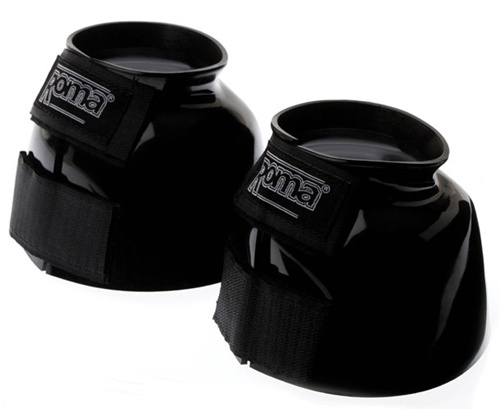
Purpose: To protect a horse’s feet from various things, but mainly overreaching with the hind feet which can cause them to pull the front shoes by stepping on themselves, or damage to the front legs or feet. If your horse has a tendency to forge, or overreach with its hind legs, bell boots are a good idea to use during workouts just as a safeguard. You need to be aware that there are different sizes, and that you need to purchase the correct size for your horses hooves. You want them be fitted, but not tight around the ankle and large enough to cover the horses hooves. In other words, don’t use a size “small” on a draft horse, or a size “large” on a pony.
I know there is a plethora of training aids out there, and I have only covered a few common ones used in training the saddleseat type horse (Saddlebred, Morgan, Arabian, National Show Horse, etc) here. I want to point out that no matter what discipline you are in, the number one rule is to make sure your equipment fits properly, is adjusted properly, and is in good working condition. This is to ensure the safety of both you and your horse. You want to make sure nothing you put on your horse is causing rubbing, chafing, or is too tight, too loose, or otherwise poorly applied or ill fitting.
Remember, you WANT to make sure you’re not doing anything that will harm your horse (cuts, rubs, burns, etc) because any good horseman or horsewoman knows that an unhappy horse does not perform as desired. The happier they are, the more willing they are to please you, work hard for you, and try to do what you are asking. When a horse/human bonds (the horse TRUSTS the human not to put it in danger or harm it) the team will perform worlds better than a forced submission. The difference is clear. The more uncomfortable they are, the more unwilling they are to work which causes you a whole set of problems you’re not going to want.
That’s all I have on this subject for now. Maybe later I will revisit, and have more to add. Happy riding folks!
Hooves
A lot of you may know that we have not had shoes on Fiz at all during the time we have owned him. We have had him trimmed a few times but his feet just do not seem to grow!! Since we will be getting shoes put on him within this month, we have also decided that we are going to put him on the Farrier’s Formula supplement that SmartPak offers. We have heard a lot of wonderful things about how this supplement does wonders for horses hooves in the way of new growth, less cracking, and overall hoof health.
Since we plan to show in less than 6 months, and it’s getting close to spring (when hooves can start growing faster due to warmer weather) we feel now is the time to begin this supplement. We do not have experience with it, and we are eager to see how using it will help his hoof quality. In order to document the improvement we hope to see by using this formula and putting Fiz in a set of shoes, we have taken pictures of the current condition of his bare feet and we have also taken measurements of his toe and heel on the fronts. His front right toe is about 3 inches long, and front left about 3.5. While his heel bulbs are not quite touching the ground, the hoof wall at the heel is not measurable at this time. It is nearly non-existent, which makes us sad! He really needs to have good hoof wall growth in this area to be able to move like we suspect he is capable of. We cannot wait to get his feet in shoes, growing better, and overall healthier. When the farrier puts his shoes on, we will talk about options for showing later on down the road. Exciting stuff!!
Also to note, Keratex Hoof Hardner comes highly recommended to us by a friend who uses it on his OTTB mare. Once it warms up, we may try this in addition to the supplement. Our friend says he has seen a big improvement in the quality of his mare’s hooves and how she is able to keep shoes on better since he began using this product.
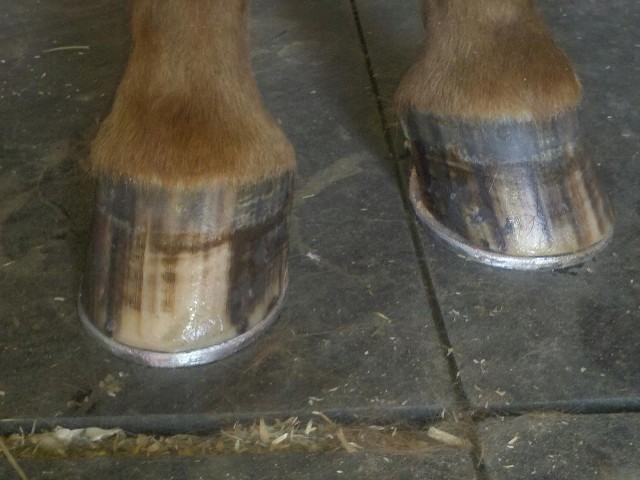
Anyway, here is what we have to document his current hoof condition, which we have analyzed as poor. His rear left hoof is in the best condition, followed by his rear right, the front left, and the front right being in the worst condition. He has a bad habit of pawing with his front feet, so we suspect that is what is causing his front feet to be in such poor condition. We really hope putting shoes on will help keep his feet from getting worn down like they are currently.

I realize that some of our readers may not know the difference between a good hoof and a bad hoof, so let me just show you what we are working toward. You can see Fiz’s hooves above, and compare them to these pictures below to see something similar to what our end goal is for his feet.

“Let me tell ya bout my best friend”
He’s a warm hearted horse, who’ll love me til the end… Ok, I’ll stop singing now and get on with my point. Fiz had a big day today. It was 60 degrees outside and we had plans to work him and wash his tail. He long lined wonderfully, then he got his crusty disgusting tail washed and braided up. We are glad it’s clean and dandruff free now, and hope it stayed that way for longer than the 30 minutes we watched him in the field before we left the farm this afternoon. We did discover another thing to add to the list of stuff Fiz thinks is going to kill him. A hair dryer. So for now, we have on that list: stationary mounds of gravel, clippers near his ears, and hair dryers. Kayla coming up off the ground throwing sand in the air is pretty scary too.
Now for the biggest news of the day, Fiz got to meet his new friend and hopefully long term pasture mate, a thoroughbred named Thunder. Thunder has just moved here from Michigan and we are happy he’s a chill guy with a good attitude. They seemed to get along really well and we are so pleased he will no longer be alone in the pasture! After all, horses are meant to be in herds, even if it’s just a herd of two, we don’t want him to be lonely! We really hope they become great friends and have a lot of fun together. Of course, in typical Twisted Sisters fashion, we documented the meeting via cell phone photos, so here they are!


*********************UPDATE********************
As much as we had hoped Fiz and Thunder were going to be good friends and pasture mates, unfortunately it did not happen. Apparently, Fiz does not play well with others!! The next day, he kept picking and picking at poor Thunder and try as he might to ignore it, Thunder got tired of being picked at and went after Fizzy but Fizzy just kept on picking until they had to be separated. I guess Fiz is just destined to be in a pasture by himself! Oh well. His choice!!
Pretty Art
Hey everyone, we are just here to share a piece of art that was made for us. We love this piece so much because it’s personalized by our friend, Emily, to depict Fizzy playing in the snow. We think she nailed it, and we didn’t know she had such artistic talent! Emily is a fellow horsewoman, member of the University of Louisville Saddleseat team, and Co-Owner of Mizmanagement. To visit the Mizmanagement site, click HERE. 
 Twisted Sisters Saddlebreds
